

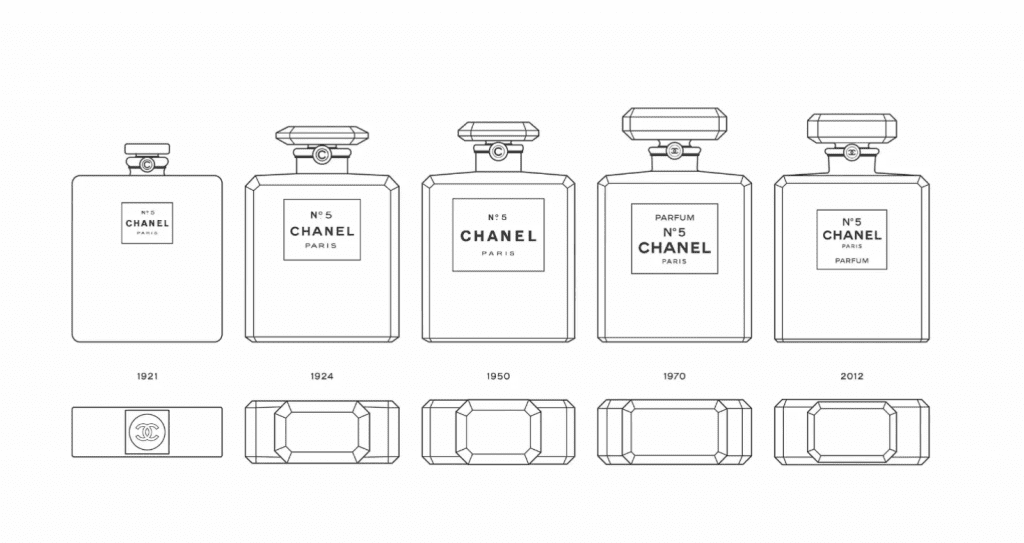
An enormous number of flowers go into each and every bottle of Chanel No. 5, the world-famous fragrance that the Gabrielle “Coco” Chanel, the founder of Chanel, created and released in the early 1920’s with the help of master perfumer, Ernest Beaux. Preserving that value has required far more than sourcing flowers from Grasse. It has involved decades of trademark enforcement, corporate maneuvering, and one of the defining ownership disputes in luxury history.
Over the course of decades, Chanel has aggressively protected No. 5 through trademark registrations, licensing strategies, and litigation involving both the fragrance’s name and the broader Chanel brand. Those disputes, however, pale in comparison to the battle over ownership of the perfume business itself.
The Battle for No. 5
The war over the rights to Chanel No. 5 dates back to 1924 when Ms. Chanel, herself, joined with French businessmen Pierre and Paul Wertheimer to expand the distribution of her fragrance business, which, at the time, was only available to clients who visited her Parisian atelier. With the help of the Wertheimers, Coco Chanel created a corporate entity, “Les Parfums Chanel,” and together, they set out to scale the reach of the perfume beyond France’s borders.
Théophile Bader, the founder of Galeries Lafayette, had introduced Chanel to the businessmen brothers; in exchange, he gained 20 percent of their new Les Perfums Chanel venture and a promise that Galeries Lafayette would be the first-ever department store to offer the exclusive fragrance. 70 percent of the newly-formed venture went to the Wertheimers, with the brothers agreeing to fully finance the production, marketing and distribution of Chanel No. 5. Mademoiselle Chanel took the remaining 10 percent, and bestowed upon Les Parfums Chanel the legal right to use her name.
The arrangement reflected a familiar tension in the luxury industry: creative founders often lacked the capital, manufacturing capabilities, and distribution networks needed to commercialize their ideas at scale, forcing them to exchange ownership for the financing and infrastructure required to build global businesses. Chanel’s agreement with the Wertheimers would become one of the earliest and most consequential examples of that dynamic.
The deal went south even more quickly than it was formed. As Dana Thomas wrote for the New York Times in 2002, “Feeling she had been cheated, [Coco] Chanel filed lawsuit after lawsuit, trying to get more control and more of the profits. By 1928 … the Wertheimers had a lawyer on their staff who dealt solely with [Ms.] Chanel.”
A Wartime Bid to Reclaim Chanel
That, however, was only the beginning of what would become a lengthy battle, and things took a significant turn in the spring of 1940 when the Nazis invaded France. It was then that Ms. Chanel sought to use the Vichy regime’s “Aryanization” policies to regain control of the company. As set forth by Haaretz (and before that, by Max Lakin, writing for Racked), “When the Vichy regime ordered the transfer of [all] Jewish-owned businesses to French-Aryan hands, Ms. Chanel realized that she could take back control of the company.”
Shortly after the Wertheimers – who were Jewish – fled to America to avoid Nazi persecution, Ms. Chanel identified her window of opportunity, and on May 15, 1941, penned a letter to Nazi party officials, making a case for her reinstatement as the majority owner of Chanel. In that letter, she stated, “Chanel is still the property of Jews … and has been legally ‘abandoned’ by the owners. I have an indisputable right of priority.” She was also sure to note, “The profits that I have received from my creations since the foundation of this business … are disproportionate.”
Ms. Chanel’s efforts to bank on the Nazi manipulation – or “Aryanization” – of German law to regain exclusive control of her brand were, however, fruitless. The Wertheimers had out-smarted her. Just days before the Nazi army occupied Paris and the brothers decamped to New York, they had transferred their ownership stake in the brand to a non-Jewish friend, Felix Amiot. By doing so, they effectively preserved control over the company’s most valuable assets, including the rights associated with Chanel No. 5, while preventing Chanel from using the Vichy regime’s “Aryanization” policies to seize the business.
But that was not all. To ensure that they would remain in true control of the company and its primary asset – Chanel No. 5 – the Wertheimers took an additional step. They “sent an American emissary, H. Gregory Thomas, back to France with a mission: to get the formula for No. 5 and the main ingredients (essential oils of jasmine and tuberose) from Grasse,” where the fragrance was made, according to the Times. (Mr. Thomas would re-enter the picture later as president of Chanel in the New York).
The Settlement That Reshaped Chanel
While she may have been soundly defeated in her attempts to gain majority ownership of the fragrance venture, Mademoiselle Chanel did not tire in her quest to overthrow the Wertheimers and the Les Parfums Chanel venture. As Tilar J. Mazzeo would document in her book, The Secret of Chanel No. 5, upon relocating to Switzerland after a brush with the law thanks to her Nazi ties, Ms. Chanel “publicly declaimed [the] poor quality [of Chanel No. 5].”
“It is monstrous,” she said of the Wertheimers’ Chanel No. 5. “They produced it in Hoboken!,” she cried.
Ms. Chanel was not all talk, though; she coupled such publicly-facing exclamations with the creation of a competing fragrance line, one that bore the name Mademoiselle Chanel. And more than merely kicking up a fuss, she initiated legal proceedings yet again, this time filing a lawsuit in a French court, accusing the Wertheimers and Les Parfums Chanel of manufacturing and marketing subpar fragrances in violation of the terms of their initial agreement. As such, she demanded that she be granted full control of the venture.
The Wertheimers – who notoriously took steps to avoid the spotlight, including the press that was sure to come in connection with any public litigation – agreed to quietly settle the matter with Ms. Chanel. In accordance with a new deal, Mademoiselle Chanel agreed to relinquished “all rights to her business, and her name,” including her 10 percent ownership in Les Parfums Chanel, to the Wertheimers, whose grandsons, Alain and Gérard, currently hold all ownership rights in the house.
In exchange, she was granted, per Mazzeo, “a hefty annual income and the promise that [Pierre Wertheimer, who brokered the deal] would pay for anything she wanted – forever.”
The Enduring Lesson of Chanel No. 5
The dispute illustrates a recurring theme in the luxury industry: the creator of a brand is not necessarily its long-term owner. As brands mature into global businesses, the ownership of trademarks, formulas, and other intellectual property often becomes as strategically important as the creative vision that first gave rise to them. Chanel No. 5 remains one of the clearest examples of how control over IP – not merely authorship – can shape the future of a luxury house.
In 1952, almost ten years after the conclusion of World War II, the Wertheimers returned to France with the rights in Les Parfums Chanel back in their possession. Meanwhile, in the U.S., Marilyn Monroe, then just 26 years old, was being interviewed for Life magazine. One of the questions asked of the wildly famous “blonde bombshell”? “What do you wear to bed?” Her reply, was simply: “Only a few drops of Chanel No. 5.”
More than 70 years after Monroe’s famous endorsement – and more than a century after the fragrance’s debut – Chanel No. 5 remains one of the world’s most commercially successful perfumes. Its enduring success reflects not only the longevity of the scent itself, but also the extraordinary value of the intellectual property and ownership structure that survived one of luxury’s most remarkable corporate battles.
Share