

In a pair of high-stakes legal battles playing out in Sweden and Germany, the Court of Justice of the European Union has weighed in on when utilitarian objects, such as furniture, qualify for copyright protection under EU law. The court’s highly-anticipated guidance in Mio/konektra clarifies that the threshold for copyright in applied art is the same as that for any other creative work, setting an important precedent for brands operating in the design and furniture industries.
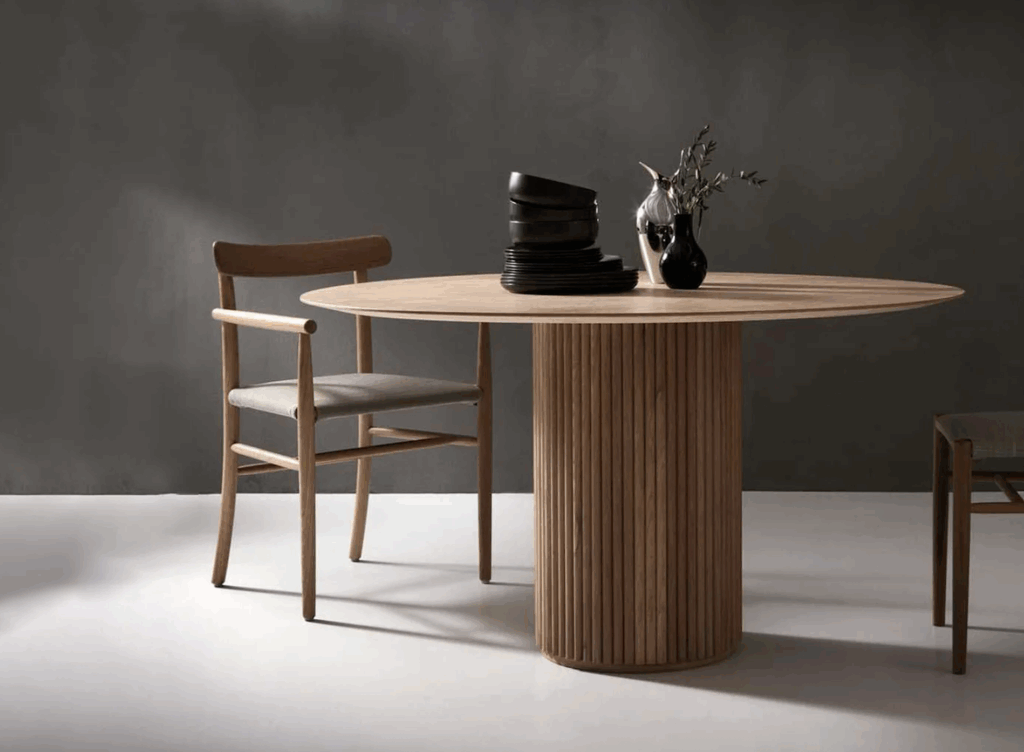
The Background in Brief: At the center of the Swedish case is manufacturer Galleri Mikael & Thomas Asplund, which claims that dining tables sold by local retail giant Mio bear striking similarities to its own designs. Asplund argues that its tables are not merely functional items, but “works of applied art” that reflect artistic expression and therefore merit copyright protection. Meanwhile, in Germany, Swiss design house USM U. Schärer Söhne alleges that online retailer konektra has copied its modular furniture system – again, claiming copyright in the design as a work of applied art.
Both cases prompted national courts, the Swedish Court of Appeal and the German Federal Court of Justice, to refer questions to the CJEU, asking under what conditions a utilitarian object, such as furniture, can be protected by copyright law.
The Standard for Applied Art
In its ruling on December 4, the CJEU confirmed a position that will resonate across the fashion and design industries: copyright protection does not discriminate between categories of works. In other words, applied art – designs that serve a functional purpose – can be protected in the same way as sculptures, paintings, or literary works, so long as they meet the core requirement of originality.
The court reaffirmed that originality means the work must be the result of the author’s own intellectual creation, reflecting their personality through free and creative choices. Where the design is dictated by technical constraints or purely functional considerations, those choices are not considered free or creative, and thus, the object would not meet the threshold for copyright protection.
Importantly, the court also pushed back on the idea that applied art must be more original (or more unique) than other types of works in order to qualify. There is no heightened standard. Nor is it necessary to prove that the work is recognized in professional design circles or that it was created with artistic intent. What matters is whether the design expresses the author’s creative freedom in a way that is both personal and identifiable.
In assessing infringement, the court focused on whether original elements of the protected work have been reproduced in a “recognizable manner.” Overall visual similarity or the degree of originality of the work is not the test; instead, it’s about copying specific creative features.
Implications for Furniture … and Fashion
Reflecting on the consequences of CJEU’s decision, Danish IP lawyer Johan Løje explains, “the test for protection of copyright and infringement of copyright should now be considered harmonized, which means that national regimes such as the Italian strict application of copyright protection (for example that protection requires display in a museum) should disappear.” Beyond that, he asserts that “the often-used argument that [a] subsequently-created design is a part of a trend, should also disappear.”
Finally, Løje says that while questions about the distinction between copyright and design protection have now been clarified, there is still room for discission, as the court “has not specifically defined neither when an element is considered creative nor when it reflects the personality of the originator.”
Looking beyond furniture, the court’s decision carries important implications for the fashion industry, where the line between functionality and artistic expression is often blurred. Much like furniture, fashion items serve utilitarian purposes while also embodying creative choices and brand identity.
The CJEU’s confirmation that applied art is not held to a higher originality standard could open the door for stronger copyright claims over fashion designs that go beyond mere functionality. For brands looking to protect their creative outputs in a competitive, fast-moving market where imitation is rampant, this ruling reinforces that their designs can enjoy robust legal protection, provided they reflect genuine creative authorship.
The cases are Mio AB, C-580/23 and konektra GmbH, C-795/23.
Share