

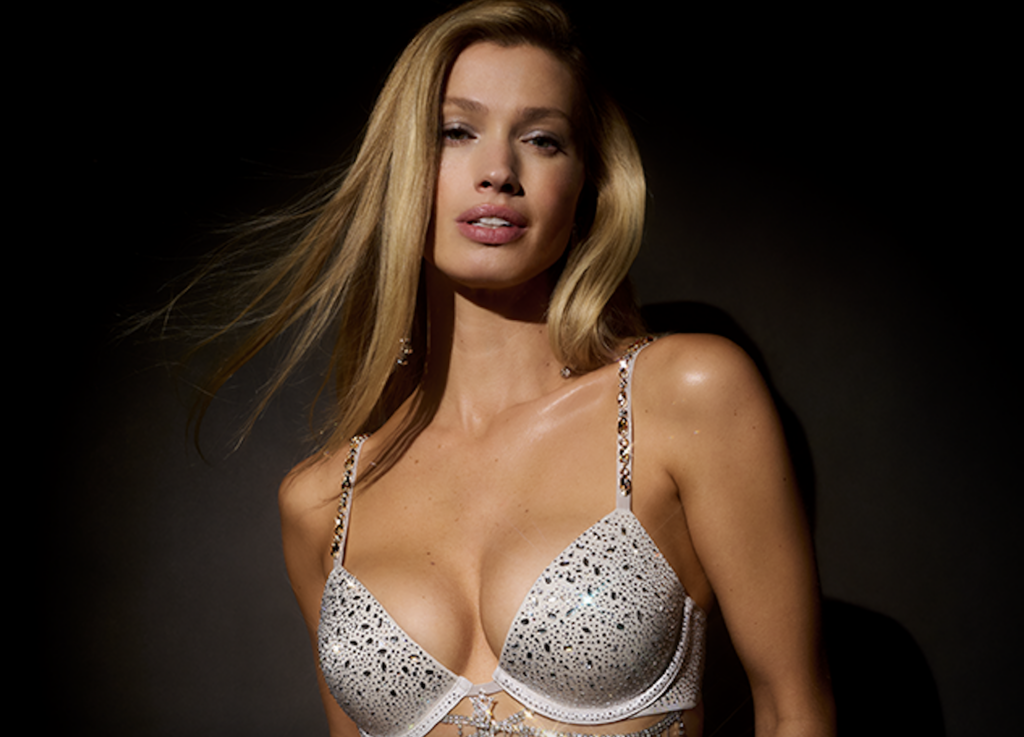
Victoria’s Secret staged its 2026 fashion show in Los Angeles on October 18, showcasing its latest lingerie collections on a runway filled with supermodels, elaborate wings, and musical performances. The highly publicized event – which the company revived in 2024 following a five-year hiatus – brought longtime “Angels” Adriana Lima, Alessandra Ambrosio, and Candice Swanepoel back to join a lineup of newer faces. Among them: Solange Omon, the company’s newest Angel, who earned a place on the runway after winning an IMG-affiliated casting competition.
The return of the Angels raises a question about what the designation is actually worth today, both to the models who wear the wings and to the company that made them famous. At its height, the Angel program was built around lucrative, often restrictive contracts with some of the world’s most recognizable models. Today, Victoria’s Secret is using the designation more broadly as it works to restore the cultural influence and commercial momentum that once made those deals so valuable.
The Original Angel Contract
In the Victoria’s Secret heyday, the “Angel” moniker was more than just a title reserved for a select group of models. It brought with it a coveted, high-paying contract with Victoria’s Secret that extended beyond appearances in the annual fashion show to encompass advertising campaigns, promotional appearances, and other company obligations throughout the year. Gisele Bündchen, Adriana Lima, Alessandra Ambrosio, Miranda Kerr, Heidi Klum, Tyra Banks, and Candice Swanepoel were among the big-name models who signed on to join the ranks of the Victoria’s Secret Angels.
More than simply securing models for advertising campaigns and runway appearances, the original Angel contracts reportedly imposed substantial time commitments and restrictions on competing work, reflecting the extensive obligations that came with representing the brand. In 2013, sources reported that Victoria’s Secret generally required Angels to devote approximately three months annually to the company. A separate 2015 report described commitments of at least 50 days per year, along with restrictions on appearing in certain competing fashion and fragrance campaigns, although the precise contractual provisions have not been publicly disclosed.
As for compensation, Bündchen was said to have signed a five-year, $25 million agreement in 2000, while a 2015 report, citing an unnamed source, valued some newer Angel contracts at approximately $100,000, substantially below the multimillion-dollar deals associated with the program’s biggest names.
For Victoria’s Secret, the contracts offered something beyond access to famous faces: a degree of control over how, where, and how often those models represented the brand. That consistency helped turn the Angels into a recognizable marketing asset, rather than a rotating cast of runway talent.
A New Generation for VS
Victoria’s Secret retired its traditional Angel program in 2021, replacing it with the VS Collective, before reviving its fashion show in 2024. The Angel designation has since returned, but it is no longer necessarily tied to an ongoing modeling contract with the company.
In an October 2025 interview, Victoria’s Secret creative chief Adam Selman described the original Angels as “contract girls,” explaining that the company continues to engage models for campaigns, store appearances, and other assignments – albeit without necessarily calling them Angels. The company does not disclose whether its newer agreements contain the same stringent exclusivity provisions, specific service commitments, or sizable compensation guarantees comparable to those in the original Angel deals in the late 1990s through the early 2010s. (Chances are, similarly demanding terms – and eye-watering compensation – seem less likely given the decline in the brand’s cultural influence and the diminished commercial significance of its annual runway show.)
In the latest evolution of the Angel program, Victoria’s Secret opened the designation to aspiring models through its 2026 “Angels Among Us’ competition. Developed in partnership with IMG Models, the competition awarded Solange Omon an exclusive modeling contract with the agency and a place on the runway at the October 18 show, where she was introduced as its newest Angel.
The Business Behind the Wings
The revived fashion show and evolving Angel lineup are part of Victoria’s Secret’s efforts to restore its cultural relevance and drive sales. In its 2025 annual report, the company credited the show with attracting customers and driving demand, noting that several shoppable styles sold out following the event. More recently, Victoria’s Secret reported a 10 percent increase in second-quarter 2026 sales amid increased marketing investment, including in the fashion show and its “Angels Among Us” competition.
The return of the Angels also reflects a shift in how Victoria’s Secret uses one of its most recognizable assets. Where the original program relied on lucrative, often exclusive contracts to establish a roster of high-profile brand ambassadors, the company now extends the designation through runway appearances, digital content, and talent-discovery initiatives. This allows Victoria’s Secret to capitalize on the Angels’ recognition without necessarily recreating the costly contractual structure of the original program. Whether that attention translates into sustained consumer demand, rather than interest surrounding the annual fashion show, will ultimately determine the wings’ value to the business.
Share