

Market conditions have rarely been more conducive to Moynat moving up the leather goods hierarchy. The nearly-180-year-old French accessories brand controlled by LVMH chairman and CEO Bernard Arnault’s family holding company, Financière Agache is navigating a rare confluence of forces that could elevate it from stalwart trunkmaker to genuine “it” bag contender. But whether it can actually seize that chance is yet to be seen.
Across the leather goods category, one of the most visible effects of luxury’s social media age is an influx of counterfeit goods and the embrace of “dupes.” Goyard’s once-elusive Goyardine canvas totes, for example, once a marker of insider knowledge, is now among the most widely replicated luxury bags. As replicas saturate social media feeds and marketplaces, alike, the visual codes that once signaled rarity can begin to feel ubiquitous. The same goes for Louis Vuitton’s Toile Monogram and Damier-printed Neverfull bags, which have inundated the market in both authentic and counterfeit capacities.
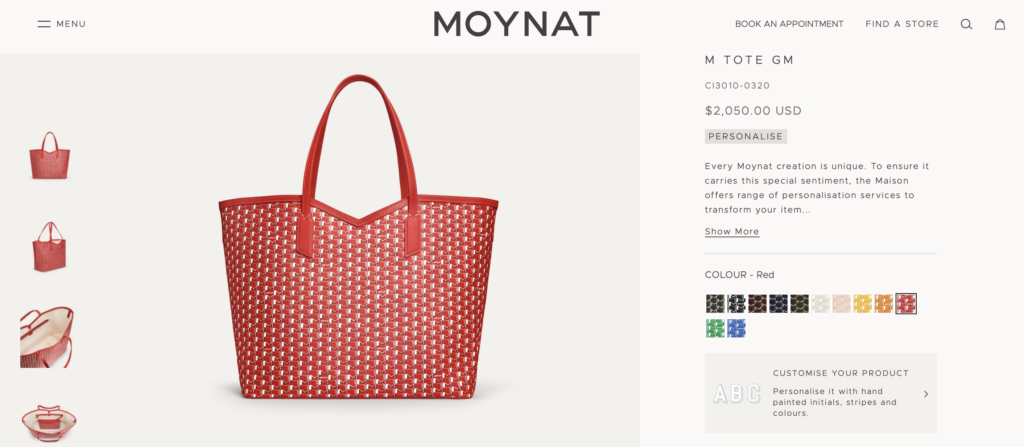
When exclusivity erodes for incumbent players, space opens in the category – and that is how lesser-scaled brands can move into competitive relevance. That creates a rare opportunity for Moynat. Its coated canvas bags, marked by the archival M monogram and rooted in trunk-making heritage, offer a visually distinctive alternative that has not (yet) been diluted by counterfeit noise or algorithmic saturation. For discerning luxury buyers seeking a less exposed alternative, Moynat’s canvas totes sit in a compelling position.
A Void in the Market?
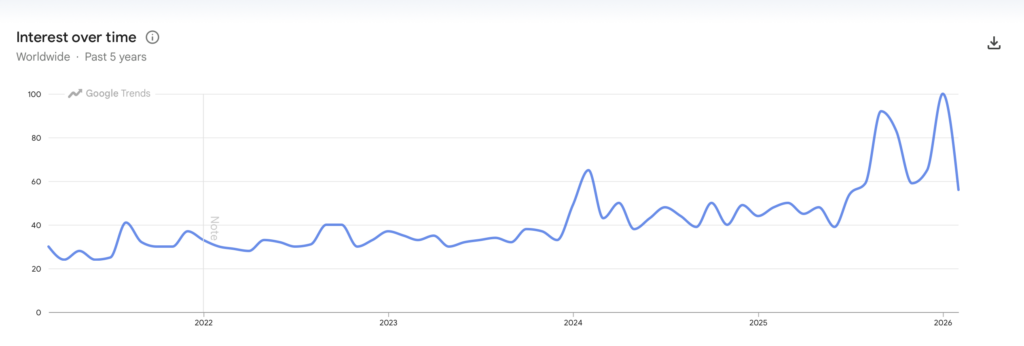
There are early indicators that Moynat may be gaining broader visibility beyond its traditional following of connoisseurs and quiet-luxury buyers. Anecdotal digital signals – including rising search interest and social conversation around the brand’s name, its collaborations, and its canvas silhouettes – suggest growing consumer curiosity. Google Trends data reinforces that shift: Moynat’s baseline search interest has risen meaningfully over the past five years, with 2025 delivering record-level spikes.
Rising search volume for the Moynat brand indicates expanding consumer consideration. The challenge is converting that attention into structural positioning within the coated canvas category.
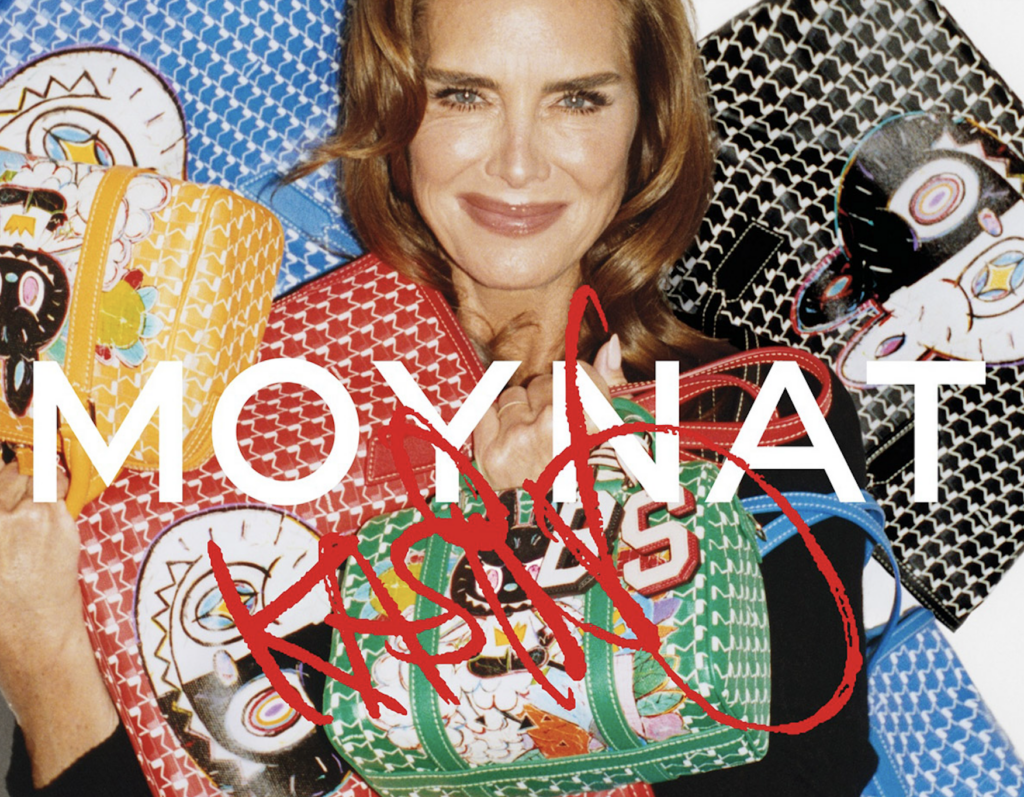
Much of Moynat’s recent lift likely stems from its pivot toward collaboration as a visibility engine. Its ongoing partnership with Kasing Lung’s Labubu characters has injected collectible culture into the brand’s coated canvas line, amplified by campaigns featuring figures like Martha Stewart, Michelle Yeoh, Brooke Shields, and Sarah Andelman. The capsules have traveled well across fashion media and social feeds, pushing Moynat into the broader cultural conversation. The brand has also localized its strategy in China. In 2024, Moynat launched its first China-focused creative collaboration for Qixi with celebrity stylist Lucia Liu, a limited-edition, high-saturation project aimed squarely at young, affluent consumers in the world’s largest luxury market.
Together, these initiatives have expanded Moynat’s reach beyond its traditional base of connoisseurs, introducing the house to younger and more digitally native audiences who may not have previously engaged with its heritage positioning. But collaborations of this kind are, by design, temporary and tethered to specific cultural moments. They generate spikes in attention; they do not automatically build durable product authority.
Product Gravity or Product Drift?
The clearest test for Moynat is not whether its collaborations generate attention, but whether the brand’s efforts reinforce its core proposition – or merely create episodic noise. That proposition ultimately rests on product. Moynat’s coated canvas bags, particularly those featuring the M monogram, represent its most credible route to long-term category relevance. They compete in the same functional territory as Goyard’s St. Louis or Louis Vuitton’s Neverfull: everyday canvas at a high-luxury price point – complete with equally attractive margins.
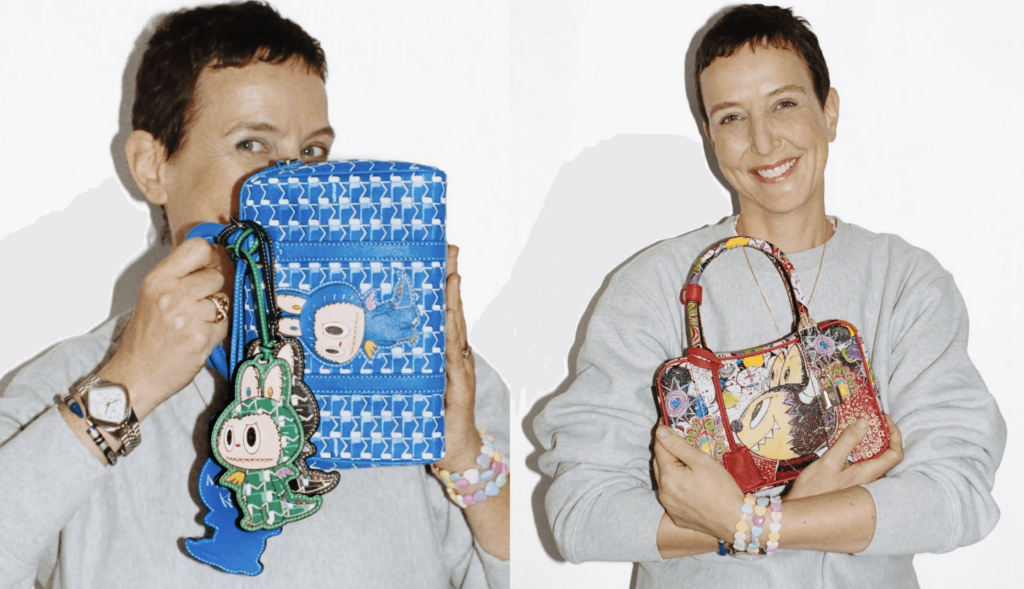
But it is difficult to rival a luxury incumbent by competing on novelty. Labubu capsules may generate traffic and social engagement, but they do not reposition Moynat to meaningfully compete in the luxury hierarchy. At the same time, over-reliance on collaboration carries a structural risk. When limited drops become the primary visibility driver, the brand’s center of gravity shifts toward episodic releases rather than a defining silhouette.
In a market already crowded with special editions and hype cycles, additional capsules do not build long-term competitive weight; they diffuse it.
THE BOTTOM LINE: The opportunity for Moynat is real. Whether it can capitalize on the counterfeit- and saturation-driven vacuum will depend on how it consolidates its positioning. A durable move up the category would likely require anchoring the brand around its core canvas line rather than continuing to rely on collectible extensions – elevating a defining silhouette, tightening distribution, and allowing scarcity to reinforce distinction. Absent that consolidation, rising search interest and social buzz risk remaining indicators of visibility rather than evidence of structural gain.
Share