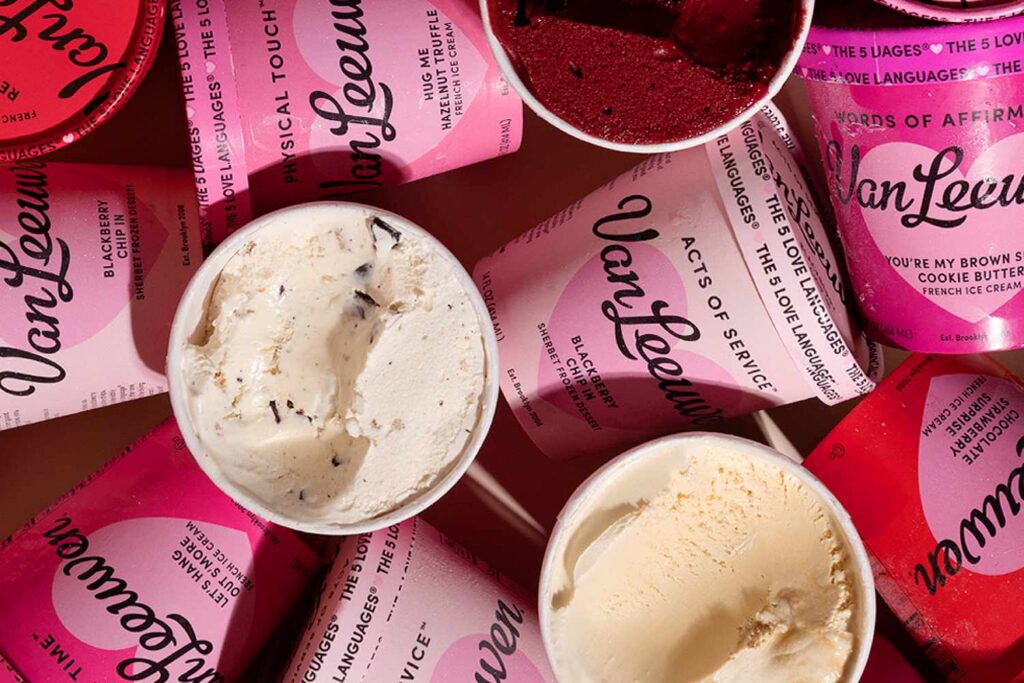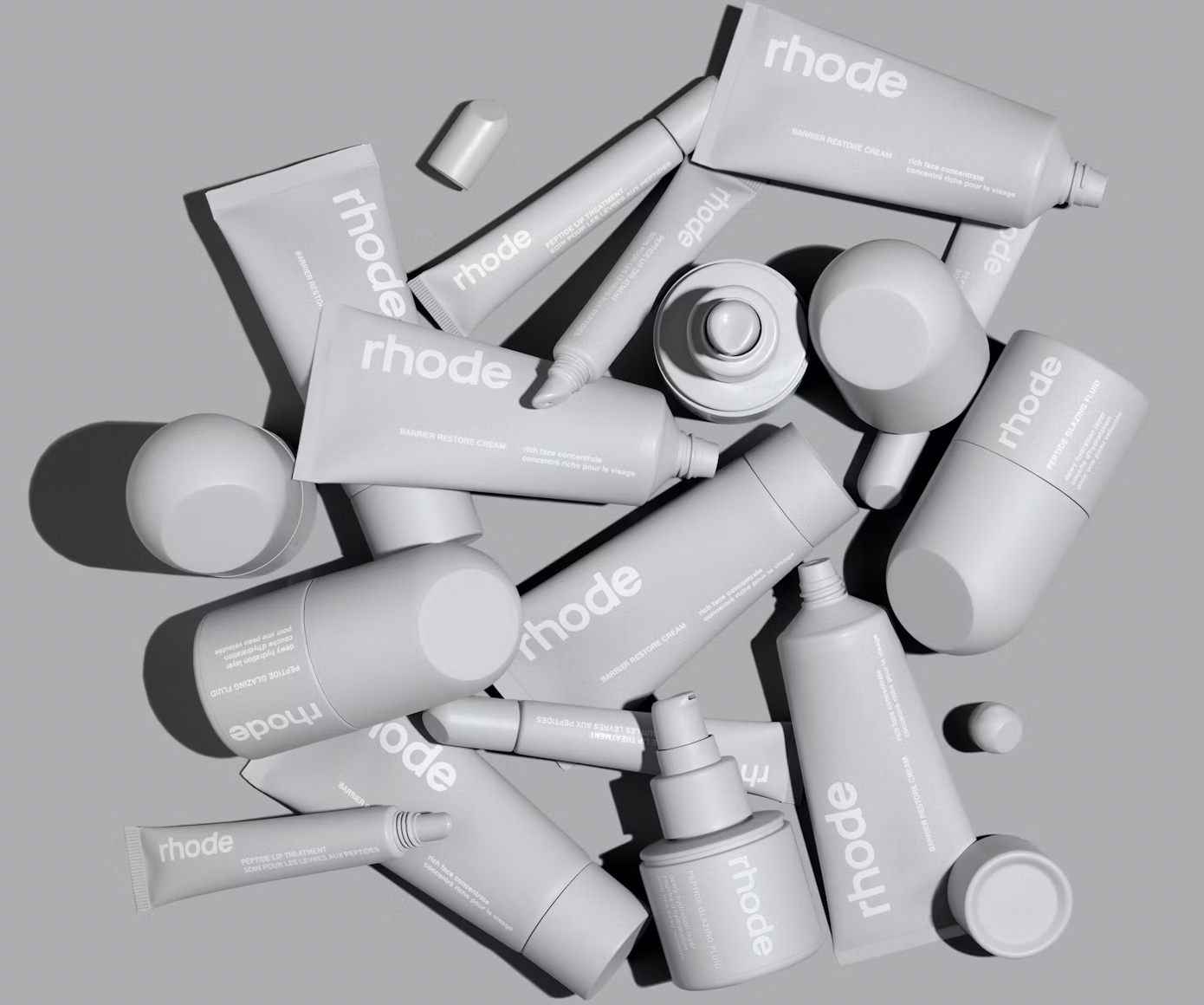
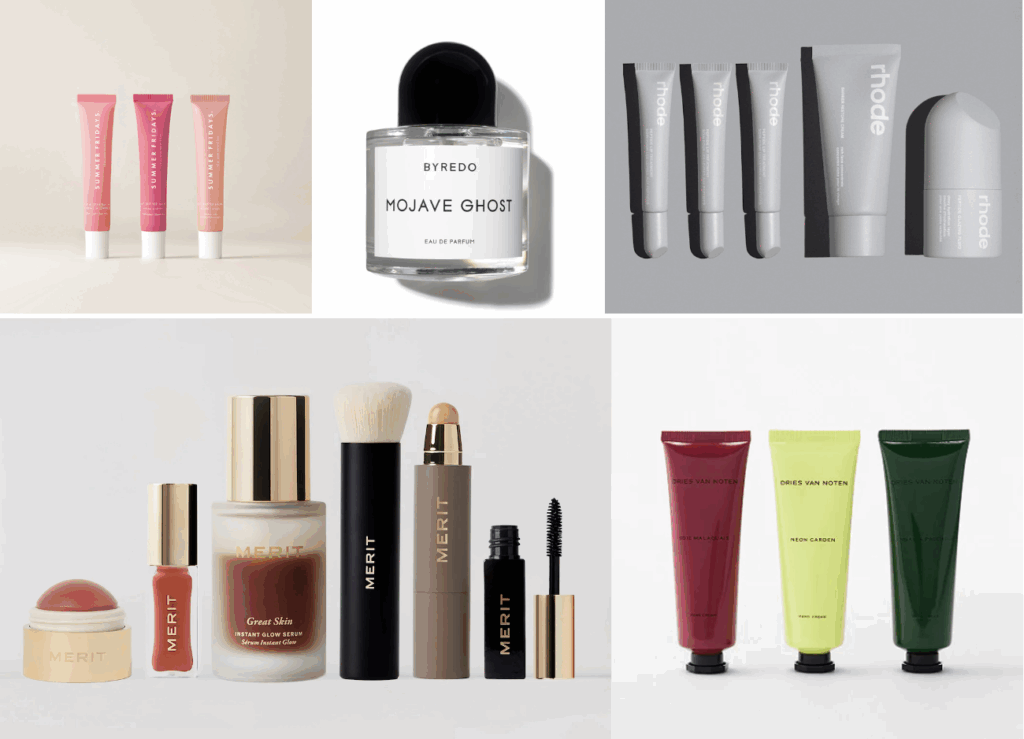
In a market where the look of a company’s branding is paramount, fonts and typography are increasingly recognized as essential components of identity across industries. “Brands are using typography not just as a design choice, but as a strategy to shape how we see them,” Carolina Sojoguti, a brand experience strategist, stated recently, pointing to Rhode, Summer Fridays, and MERIT as examples. “Their typography is wide, spaced out, and hyper-legible, [but] it is not just aesthetic, it is designed to stand out on Instagram and TikTok, where most beauty discovery happens nowadays.”
At the same time, Sojoguti says that brands like BYREDO and DRIES VAN NOTEN “are playing with uneven spacing, unpredictable letter sizing, and asymmetry. It feels more high-fashion, more editorial and makes you look twice,” while the likes of Augustinus Bader, The Ordinary, and Dr. Barbara Sturm all use “clinical, structured typography; it’s clean, direct, and subconsciously makes you think: trustworthy, effective, no fluff.”
“The smartest brands are getting it right in ways that feel almost invisible,” per Sojoguti, who claims that “some brands look expensive before you even check the price. Others feel cool without needing a celebrity endorsement.” The common element? The use of typography as a competitive edge.
Protecting This Competition Edge
Despite their ubiquity and cultural influence, the legal protections afforded to typefaces – the design of a set of characters (e.g., Helvetica) – and fonts, which refer to the digital or physical files that render a typeface in specific weights and sizes, remain surprisingly narrow in the U.S.
U.S. copyright law, for example, generally does not protect typeface designs, as they are considered functional, utilitarian designs akin to industrial tools – not expressive works of authorship. There has, of course, been a notable exception: For decades, the Copyright Office allowed registration of scalable font software as copyrightable computer programs. However, since 2018, the Copyright Office has more frequently rejected font software claims, finding that many modern digital font files lack the originality or programmatic authorship needed for copyright protection.
A recent decision shows how sharply these limits operate. This summer, the Northern District of California dismissed designer Nicky Laatz’s copyright claim against Zazzle, holding that her “Blooming Elegant” font could not qualify as a computer program and therefore could not support a federal infringement suit. Because the Copyright Office expressly refused to register the font data as software, the court found that she lacked the prerequisite registration to proceed, a nod to the fact that even commercially successful fonts remain difficult to protect under U.S. copyright law.
Alternatively, design patents protect the look of something functional and because of this, “a popular use of design patents is to protect the outside of common consumer products,” Seyfarth Shaw LLP previously stated in a note. This includes the text that appears on product packaging. As such, companies are “increasingly investing in designing unique and aesthetically pleasing typefaces.”
Typography as an Indicator of Source
Still, the most interesting – if limited – pathway lies in trademark law. For fonts and logos, this protection can apply when a font is used as part of a stylized word mark or logo. The Metallica logo is a classic example: its angular, spiked letters form a distinctive visual identity that has been registered as a trademark by the band. What is protected is not the idea of sharp, heavy-metal letterforms in general, but the specific arrangement, shapes, and styling of “Metallica” as it appears in commerce to identify the band and its products.
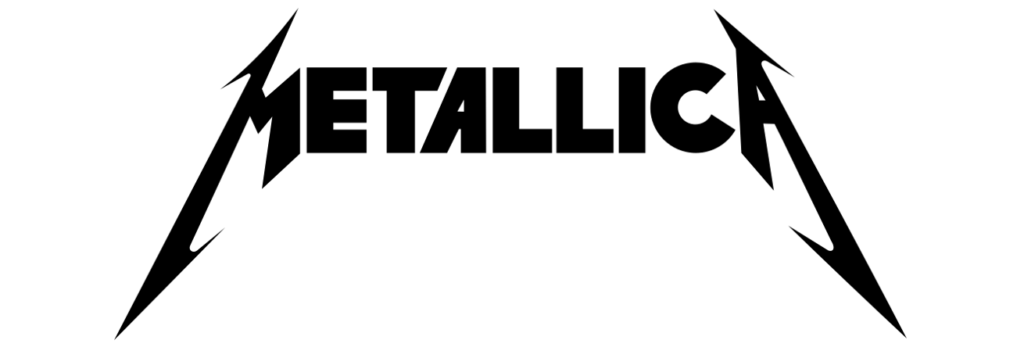
Even then, the scope of protection is narrow. Trademark law does not allow a company to monopolize a typeface itself; others remain free to use similar letterforms in unrelated contexts. What is safeguarded is the exact stylized expression of the brand’s name or logo in that font.
Enforcement is aimed at preventing confusion: if another band adopted a font that is confusingly similar to the spiky “Metallica”-style one for use on goods like t-shirts or album covers, consumers could reasonably believe there was a connection – and that is where infringement claims would come into play. The same principle applies to other iconic marks: Disney’s distinctive script, embedded in countless registrations, signals the company across films, parks, and merchandise. A competitor’s use of that lettering in a way that implies Disney’s involvement would give rise to merited infringement causes of action.
The larger takeaway is that typography can, indeed, form part of a protectable trademark expression, but only when it transcends mere design choice to function as a source-identifying symbol. This places brands like Metallica, Coca-Cola, and Disney in a rarefied category, while leaving most typefaces – however stylish or influential – aesthetically powerful but legally exposed.
The Bigger Picture for Brands
Viewed from a broader perspective, the uneasy fit between typography and intellectual property law underscores a larger truth about branding today: the law often lags behind culture. Typography has become one of the most immediate ways brands signal identity in a crowded, image-driven marketplace, yet the U.S. legal framework continues to treat typefaces as largely utilitarian.
For now, companies are forced to rely on creative combinations of trademark, design patent, and contractual licensing to safeguard what has become a critical business asset. The bigger picture is that while the legal system may not fully recognize the cultural weight of typography, the market certainly does – and the brands that understand its power are using it as one of the sharpest tools of differentiation they have.
Share