

Charlotte Tilbury’s attempt to register a “quiet luxury”-centric logo has been shut down for now. In a recently-issued decision, the European Union Intellectual Property Office (“EUIPO”) refused registration of a figurative mark filed by Charlotte Tilbury TM Limited, citing a lack of inherent distinctiveness. The refusal, which centers on a geometric logo composed of a rhombus intersected by a vertical line, highlights a potential disconnect between contemporary branding trends and the formal requirements of EU trademark law.
The Background in Brief: Charlotte Tilbury TM Limited filed an EU trademark application in April 2025 for a figurative mark consisting of a stylized geometric design for use across a broad range of Class 3 goods – from cosmetics and skincare to perfumery and toiletries. Later in April, the EUIPO issued a notice of grounds for refusal, finding that the mark was devoid of distinctive character under Article 7(1)(b) of the EU Trademark Regulation due to its simplicity and inability to function as an indicator of commercial origin.
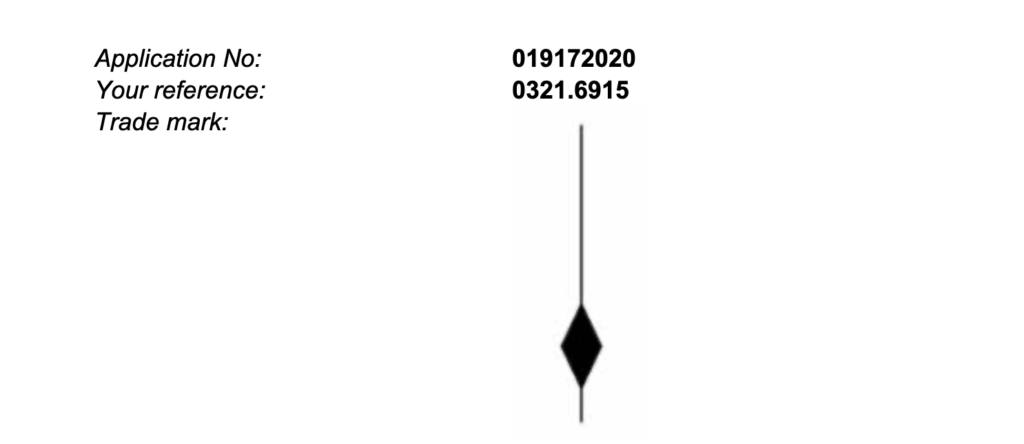
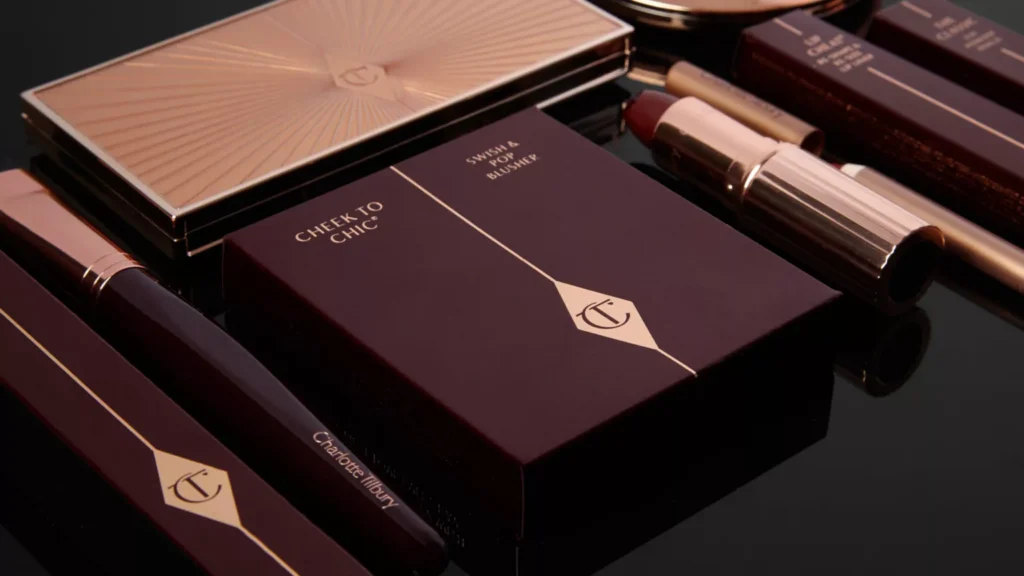
Tilbury filed a written response in September 2025, arguing that the mark is not merely a basic geometric figure and can, in fact, function as an indicator of source. The company asserted that “the geometric and aesthetic symmetry” of the design – which commonly appears on the company’s packaging (albeit with the CT logo) – creates “a visual symbol that is easily memorable to the consumer” in relation to its cosmetics products, thereby, enabling it to function as trademark. It further noted that the concept of the mark aligns with “quiet luxury,” a trend that “focuses on subtle sophistication.”
The Mechanics of a “Quiet Luxury” Logo
In a December 12 decision, the EUIPO maintained its refusal, holding that the mark, when viewed as a whole, consists of a “simple figurative element” that is “prima facie incapable of transmitting a trademark message.” The Office found that the design does not “depart significantly from the norms or customs of the sector,” and does not contain any characteristics that could be “easily and instantly memorized by the relevant public” to serve as an indicator of commercial origin.
>> Pointing to Article 7(1)(b) of the EUTMR, the EUIPO noted that marks that are “devoid of any distinctive character” must be refused registration. Under established case law, only signs that “depart significantly from the norms or customs of the sector” can function as indicators of commercial origin.
Charlotte Tilbury’s mark falls short, according to the EUIPO, as it consists of a “simple figurative element that is prima facie incapable of transmitting a trademark message” to the relevant general consumer of cosmetics and related goods.
While Charlotte Tilbury asserted that the mark aligns with the broad branding trend of “quiet luxury,” the EUIPO rejected that argument, stating that the concept “does not make reference only to the design of logos,” but also includes elements like high-quality materials and understated presentation. In other words, appealing to a branding trend was not enough – the mark still had to meet the legal threshold for distinctiveness, which the Office found it did not.
Not the final say on Tilbury’s mark, the EUIPO’s decision only concerns the question of inherent distinctiveness, or whether the mark is capable on its own of identifying the origin of the goods. Charlotte Tilbury TM Limited has also made a subsidiary claim based on acquired distinctiveness through use, which the Office will examine separately.
The Bigger Picture for Brand Identity
Charlotte Tilbury is hardly alone in experimenting with increasingly abstract or minimalist branding. As luxury and beauty brands respond to cultural shifts toward subtlety and restraint (i.e., “quiet luxury”) some are opting for smaller logos (think: “quiet logos”) and/or more subtle forms of branding. TFL has been charting this shift across the luxury market. (There is nuance here, of course; while some companies are playing with quiet luxury and shaping their branding accordingly, for mass-market luxury players like Louis Vuitton, etc. bold, logo-driven branding is commercially powerful and remains in place.)
But EUIPO’s decision underscores a potentially unpleasant reality: Trademark law may not be ready to meet this aesthetic on its face. Minimalism, even when supported by thoughtful design language and industry trends, must serve as an indicator of source identifier, not just as a decorative element.
At the same time, the decision also highlights the precarious nature of relying on prior registrations in non-EU jurisdictions. Tilbury argued that the same mark had been registered in Bahrain, Oman, Saudi Arabia, the UAE, and published in the UK. But EUIPO quickly dismissed this, reminding applicants that “the EU trademark regime is an autonomous system” and that prior decisions in third countries – even those with harmonized legal frameworks – do not bind EUIPO examiners.
Share