


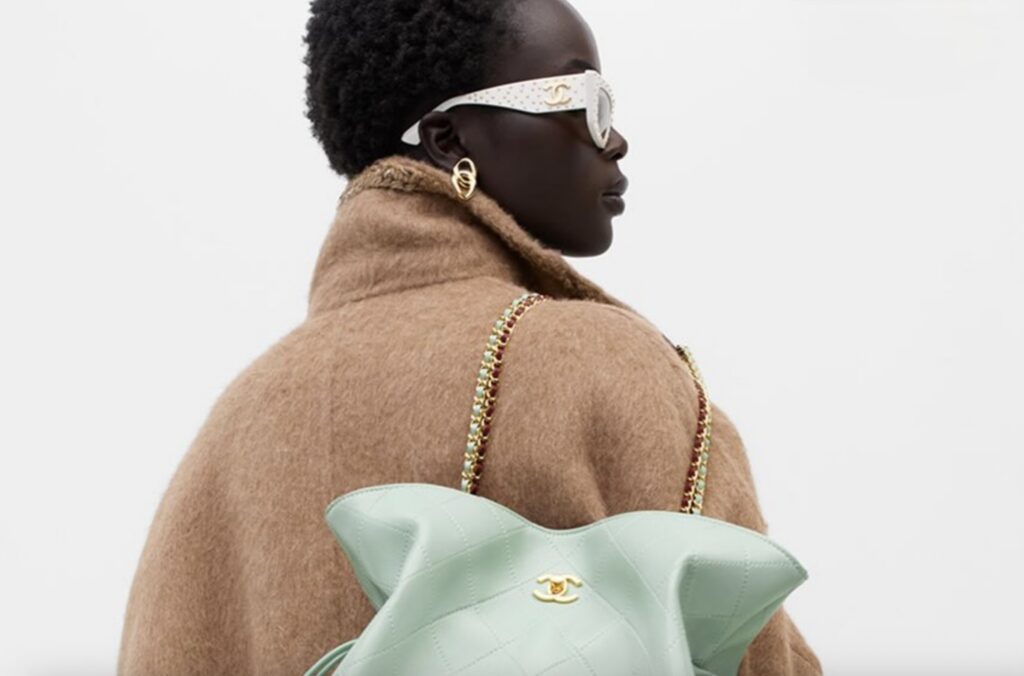
Chanel is asking a New York federal court to hand it a win in a trademark case over allegedly counterfeit goods sold by a fashion retailer with outposts in New York City and the Hamptons. In a newly-filed motion for summary judgment, the luxury brand argues that Taroo Southampton, The Tru Group, and their owner, Theresa Russo (collectively, “Taroo”), repeatedly sold non-genuine Chanel-branded products – including handbags and apparel – despite being put on notice of the alleged infringement years earlier.
Beyond Chanel’s assertion that that there is no genuine dispute that Taroo repeatedly sold counterfeit Chanel goods, its latest filing, as first reported by TFL, raises a particularly timely trademark question: Does it matter if consumers know that the products they are buying are fake?
When the Buyer Knows It Is Fake
In its August 7 motion, Chanel characterizes the dispute as a relatively straightforward case of willful counterfeiting: Taroo repeatedly offered non-genuine Chanel-branded goods for sale, including after being put on notice of Chanel’s trademark rights. To support its position, Chanel points to Russo’s testimony that she has been solely responsible for purchasing Taroo’s inventory since 2020 and that she never purchased an authentic Chanel item for resale, as well as evidence that Taroo’s Chanel-branded goods were sourced from places like Canal Street and AliExpress.
The luxury brand also points to sales of alleged fakes after Taroo was put on notice in 2021. In February 2024, the NYPD seized counterfeit Chanel-branded products from Taroo’s Manhattan store and arrested an employee, Chanel asserts. Then, in September 2024, a Chanel investigator allegedly encountered Chanel-branded goods at its Southampton store, including a blue handbag that she purchased for $521.
Notably, Chanel claims that a Taroo employee identified the bag as a “replica,” said that an authentic version would retail for approximately $10,000, and confirmed that Taroo’s owner purchases “all their Chanel replicas.” Chanel subsequently determined that the bag was a counterfeit version of its Classic 11.12 handbag.
The fact that its investigator knew the handbag was not authentic when she bought it does not eliminate the potential for consumer confusion, the central element of a trademark infringement claim, per Chanel. The company maintains that confusion can arise after the initial sale, when “a consumer or passerby observe[s] someone wearing the accused products and believe[s] they originated with Chanel because the marks are identical.”
Chanel points to Second Circuit precedent recognizing such harm, including where a consumer knowingly buys an infringing product at a lower price while others may perceive it as genuine. In the post-sale context, the signals that made the handbag’s counterfeit nature clear to the purchaser – such as its price and the circumstances of the sale – largely disappear: A passerby does not know that it cost $521 rather than $10,000 or that the seller called it a “replica.”
With the foregoing in mind, Chanel is asking the court to grant summary judgment in its favor, award it $500,000 in statutory damages, and permanently enjoin Taroo from any further infringement.
THE BIGGER PICTURE: The case puts renewed focus on post-sale confusion at a time when consumers are markedly comfortable buying products that they know are not the “real” thing. The robust market for “dupes” – while legally distinct from infringing goods – is perhaps the clearest evidence of that shift: Shoppers actively seek out alternatives to luxury products with no expectation that they are purchasing the originals (i.e., without any confusion).
As Chanel rightly argues, the buyer’s knowledge that a product is counterfeit does not necessarily eliminate the potential for subsequent consumer confusion. And that is where post-sale confusion comes in: A consumer may knowingly buy a fake, while others who encounter the product later may believe it is genuine.
The doctrine’s ability to reach beyond the purchaser makes post-sale confusion interesting in the current market – and also helps explain why it has long attracted criticism. Trademark infringement doctrine is rooted in preventing consumer confusion about the source of goods and services, while post-sale confusion extends that inquiry beyond the purchasing decision itself. Critics have argued that doing so stretches trademark law beyond its traditional consumer-protection rationale and gives brands a means of protecting exclusivity or prestige even when purchasers know exactly what they are buying.
For luxury brands, of course, that is precisely what makes the doctrine attractive and potentially powerful. Their trademarks can function as signals of exclusivity, price, and status to people other than the purchaser. As consumers become more willing to knowingly buy copycat products, post-sale confusion puts the focus on a different audience: everyone else.
The case is Chanel, Inc. v. Taroo Second, Inc., et al., 1:24-cv-09038 (S.D.N.Y.).
Share