

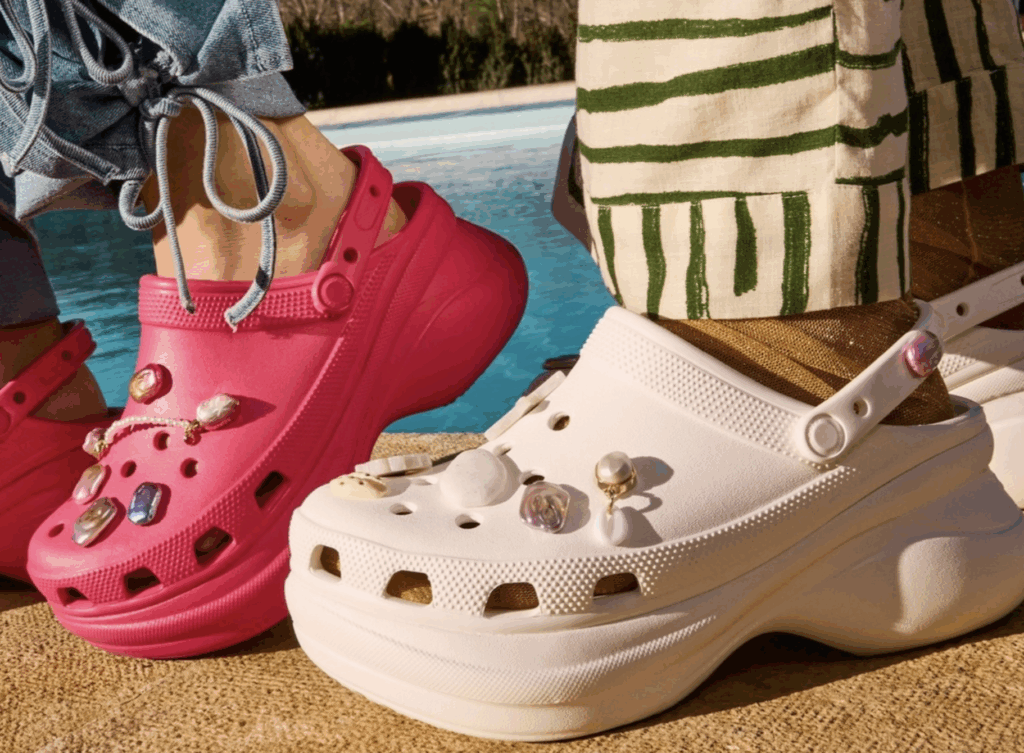
Crocs’ effort to block the importation of lookalike clogs through the U.S. International Trade Commission (“ITC”) has produced a mixed result at the U.S. Court of Appeals for the Federal Circuit. In a precedential decision issued on January 8, 2026, the Federal Circuit dismissed Crocs’ appeal of the ITC’s finding of no violation by several active respondents as untimely, while affirming the Commission’s decision to impose a limited exclusion order barring imports tied to a separate group of defaulting sellers accused of infringing or diluting Crocs’ registered three-dimensional trademarks covering features of its Classic Clog footwear.
The ruling leaves Crocs with relief that is limited to non-participating sellers, meaning that it can block imports tied to sellers that failed to participate in the ITC investigation, but cannot stop imports by companies that actively participated in the case and were found not to have violated Crocs’ trademark rights.
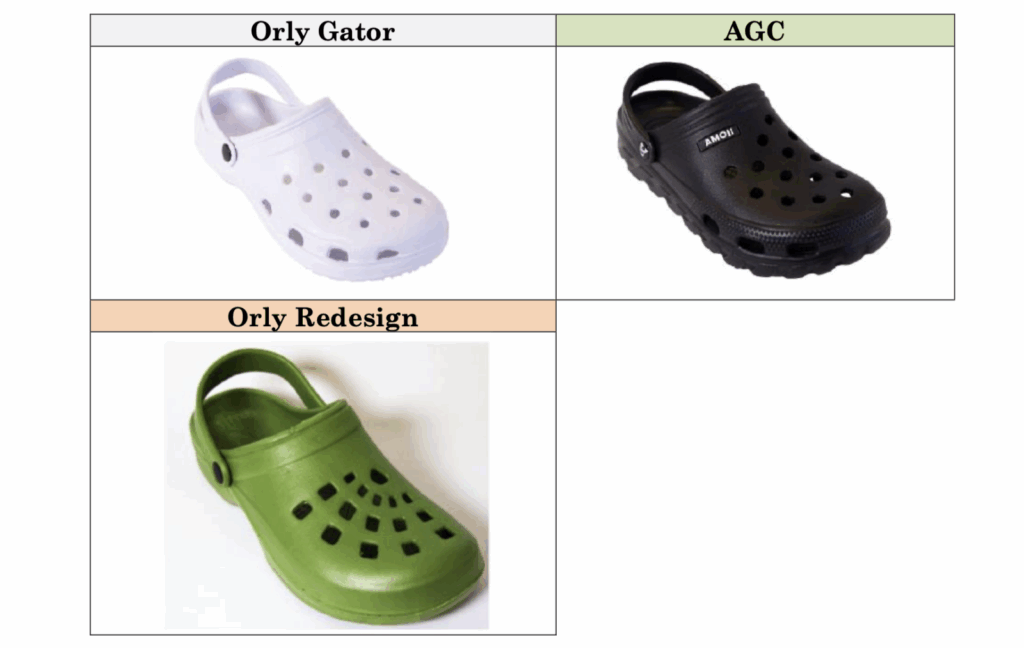
The Background in Brief: Crocs initiated the ITC investigation in June 2021, alleging that multiple footwear sellers were importing and selling clogs that infringed and diluted its federally registered configuration marks, including U.S. Trademark Nos. 5,149,328 and 5,273,875. The ITC instituted the investigation in July 2021, with the respondents ultimately falling into two groups: companies that actively participated in the proceedings, including Orly Shoe Corp., Hobby Lobby Stores, Inc., and Quanzhou ZhengDe Network Corp. (doing business as Amoji), and a group of China-based exporters that failed to appear and were deemed in default.
After a full hearing, an ITC administrative law judge ruled in January 2023 that Crocs had not proven trademark infringement or dilution by the companies that actively participated in the case and also concluded that Crocs had waived certain claims against the sellers that failed to appear.
Following its review, the ITC agreed that Crocs had not shown infringement or dilution by the active respondents but rejected the finding that Crocs had waived its claims against the defaulting sellers. Instead, the ITC treated the allegations against those sellers as true for purposes of determining what remedies were appropriate.
The Result of Crocs’ Appeal
On appeal, Crocs sought to challenge both the ITC’s finding that the active respondents did not violate its trademark rights and the Commission’s decision to limit the import ban to defaulting sellers. The Federal Circuit declined to review the no-violation findings, ruling that Crocs missed the deadline to appeal that part of the decision because those findings became final as soon as they were issued and were not subject to presidential review.
Because Crocs did not file its appeal until December 22, 2023 (more than 60 days later), the court said it did not have jurisdiction to revisit that portion of the case. The court also rejected Crocs’ request for a broader import ban, agreeing with the ITC that in this posture – where some respondents participated in the investigation and Crocs did not proceed solely under the default-only statutory pathway for a general exclusion order – the Commission’s remedy was limited to a targeted exclusion order directed at the defaulting sellers.
The case is Crocs, Inc v. U.S. International Trade Commission, No. 24-1300 (Fed. Cir.)
Share