

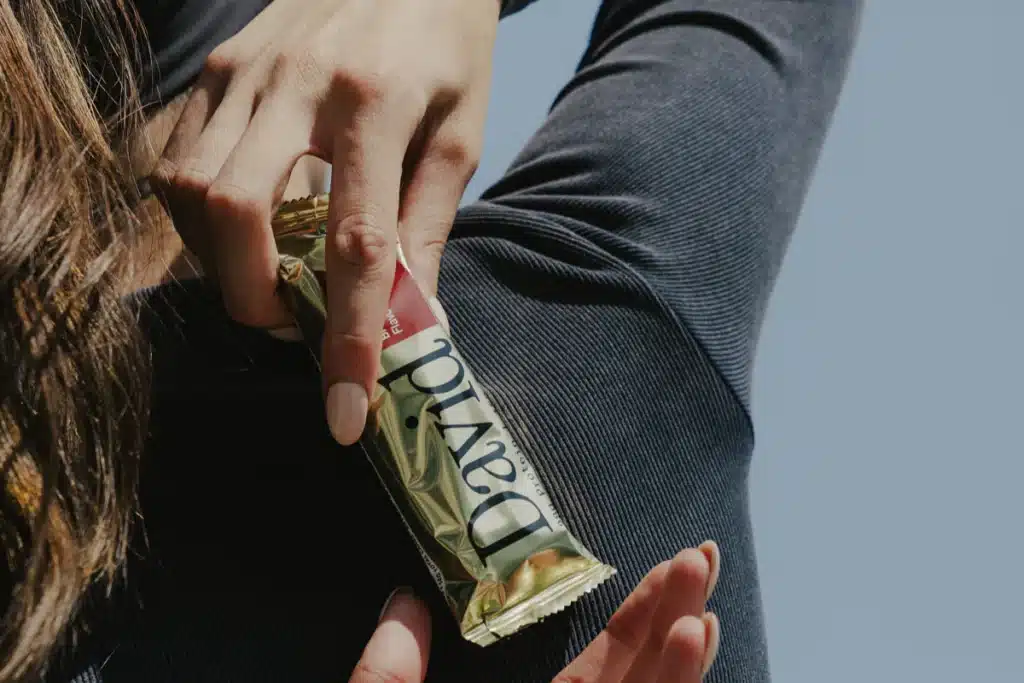
A federal judge has denied a bid for emergency injunctive relief by three challenger food companies accusing the makers of the viral David Protein bars of orchestrating a calculated campaign to monopolize a key ingredient in the functional foods market. In a newly-issued decision, Judge Victor Marrero of the U.S. District Court for the Southern District of New York rejected the plaintiffs’ request for a temporary restraining order (“TRO”), concluding that they failed to demonstrate a likelihood of success on the merits of their sweeping antitrust claims.
The Background in Brief: Own Your Hunger LLC, Lighten Up Foods LLC, and Defiant Foods LLC (the “plaintiffs”) filed suit early this month and sought immediate court intervention to force the restoration of supply of EPG – a patented fat substitute they claim is essential to their low-calorie food products. Specifically, they asked the court to compel Linus Technology (which operates under the David Protein brand), its founder Peter Rahal, and EPG supplier Epogee LLC to resume selling EPG on substantially the same terms that existed before a contested acquisition.
In his June 17 order, Judge Marrero denied the motion, holding that the plaintiffs have not plausibly defined the relevant market and had failed to show that EPG lacked viable substitutes. Notably, the court found the plaintiffs’ argument that EPG was an “essential facility” to which the defendants had unlawfully denied access to be legally deficient at this stage of the case.
“Plaintiffs have not demonstrated a likelihood of success … because the plaintiffs have not plausibly defined the relevant product market,” the court wrote. “They do not grapple with the fact that EPG is patented … and have not explained why a consumer would view their low-calorie sauces, nut spreads, and chocolates as reasonably interchangeable with David Bars.”
With the TRO denied, the plaintiffs must now proceed toward a hearing on their motion for a preliminary injunction.
Ingredient Hoarding & Market Manipulation
In the headline-making lawsuit, which was filed on June 2, the plaintiffs accuse Linus Technology, Peter Rahal, and Epogee LLC of violating federal and state antitrust laws by way of a covert scheme to eliminate competition by securing exclusive control of EPG (esterified propoxylated glycerol), a fat replacement the plaintiffs call “the only commercially viable substitute for fat” that reduces calories without altering taste or texture. According to the complaint, Epogee had long encouraged food companies to develop products around EPG, offering supply assurances that led brands to invest heavily in R&D. But beginning in March 2025, Epogee allegedly began reporting unexplained supply shortages, while internally preparing for an acquisition by Linus Technology.
The plaintiffs allege that once the deal closed on May 29, the new owners immediately cut off all EPG access to outside companies, a move the plaintiffs describe as a “bait-and-switch.” They point to public statements made by Rahal, himself, including a candid quote from a May 29 interview: “We will be taking all the supply … CPG sucks because of the competition.”
The lawsuit further claims that Epogee misrepresented EPG availability to customers for two months while secretly negotiating its sale; that the defendants intentionally stockpiled enough EPG to last two years in order to prevent competitors from obtaining it; and that they actively suppressed public reporting of the acquisition, including allegedly having a nosh.com article removed shortly before the deal was announced.
The plaintiffs claim that the results have been devastating: stalled product lines, manufacturing shutdowns, lost sales, layoffs, and over $449,000 in sunk costs. They estimate monthly operating losses of $15,000 and are seeking both injunctive relief and treble damages under the Sherman Act, Clayton Act, and New York’s Donnelly Act.
No Monopoly, Just Market Strategy
In response, the defendants have argued that their conduct is both legal and rational. In court filings, they maintain that Epogee had never been profitable selling small volumes of EPG and had simply shifted to a more sustainable model by targeting higher-volume customers. They deny creating artificial shortages and emphasize that EPG is a patented ingredient, meaning they cannot be compelled to license or distribute it in a way that undermines their own business interests.
They also argue that competitors are free to use alternative fats or develop their own formulations and that some already have. “Plaintiffs’ predicament,” they wrote in opposition filings, “is of their own making, as they failed to secure long-term supply contracts.”
The Bigger Picture
At the heart of the case is a timely and increasingly common business model: proprietary ingredient control as a path to category dominance. With functional and wellness-oriented food startups increasingly reliant on patented compounds and vertically integrated supply chains, the David Protein lawsuit could set new precedents around what constitutes illegal monopolization in modern consumer packaged goods.
While essential facilities claims have largely fallen out of favor in federal courts, this case may test their relevance in markets where IP rights intersect with market foreclosure.
Meanwhile, David Protein shows no signs of slowing down. The two-year-old company recently raised $75 million in Series A funding, with backing from prominent figures like Peter Attia and Andrew Huberman, and has secured shelf space in over 3,000 retailers. Its rapid rise makes the outcome of this case a closely watched signal for investors, entrepreneurs, and regulators, alike.
The case is OWN Your Hunger v. Rahal, 1:25-cv-04544 (SDNY).
Share