


Generative AI is giving fashion and retail brands new ways to produce creative assets, from campaign imagery and virtual models to synthetic influencers and other advertising content. As generative AI models become more sophisticated, the resulting imagery can look much like the advertising that companies have traditionally created using human models and conventional production methods. Lawmakers are responding to these advances in AI by pushing for greater transparency around its use.
For brands, that raises a key question: Will AI-generated advertising resonate with consumers in the same way when it comes with a disclosure? New York’s new synthetic performer law is requiring some brands to confront that question.
New York Puts AI Disclosure into Focus
New York’s Synthetic Performer Disclosure Law, which took effect on June 9, mandates that a business that produces or creates an advertisement for a commercial purpose must conspicuously disclose the presence of a “synthetic performer” when it has actual knowledge that one is being used. The law defines a “synthetic performer” as a digitally created, reproduced, or modified asset that uses generative AI or another software algorithm to create the impression of a human performance by someone who is not recognizable as an identifiable natural performer.
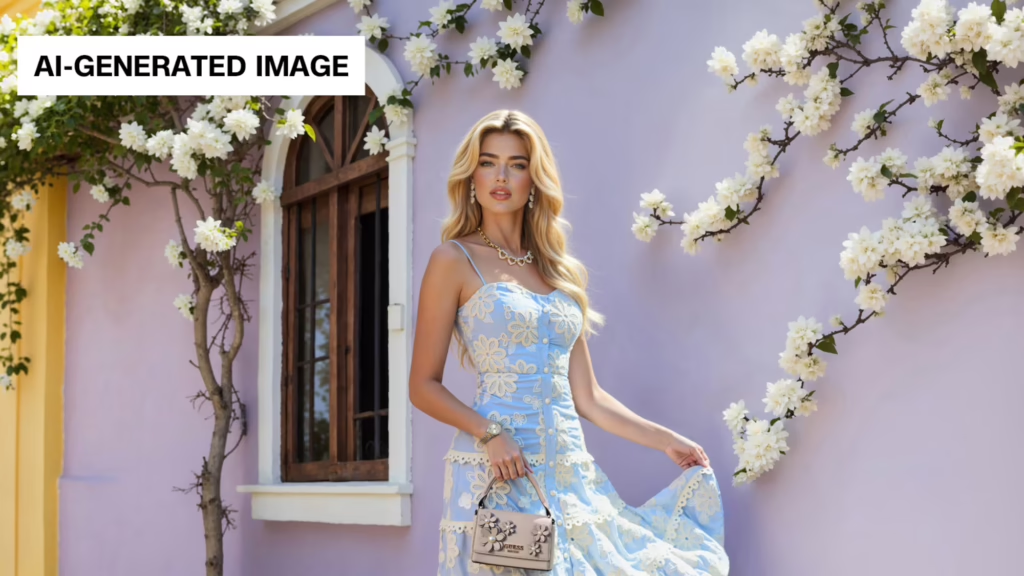
New York is not requiring companies to label every advertisement created with AI. A wholly AI-generated human model that qualifies as a synthetic performer may trigger the law, while an AI-generated product image without a synthetic performer would not trigger this particular requirement.
Failure to comply carries a $1,000 civil penalty for a first violation, increasing to $5,000 for subsequent violations.
The Influencer Parallel
Synthetic performers are relatively new, but brands have dealt with disclosure questions before. Influencer marketing has raised similar issues: paid content can look much like an organic endorsement, making it difficult for consumers to know when a seemingly authentic endorsement is connected to an advertiser.
Regulators have responded by reiterating that existing disclosure rules apply to certain relationships between brands and influencers. The Federal Trade Commission’s (“FTC”) Endorsement Guides, for example, provide that connections between advertisers and endorsers – including influencers – that are not reasonably expected by consumers and could materially affect the weight or credibility of an endorsement should be clearly and conspicuously disclosed.
For brands, these disclosure mandates come with a commercial concern: consumers might respond differently to content knowing that what appears to be an organic endorsement is actually paid-for advertising.
AI-generated advertising raises related questions. Will a consumer respond differently to an ad after learning that the model depicted in it is generated by AI? Does a virtual influencer carry the same credibility once its synthetic nature is identified? Does an AI label alter the appeal of imagery that might otherwise be indistinguishable from conventionally produced creative?
Research does not point in one direction. Some studies have found that identifying advertising as AI-generated can reduce consumer trust, engagement, advertising attitudes, or purchase intention. Other research has found that transparency can increase trust or credibility.
The Commercial Effect of Disclosure
The issue has particular relevance in fashion, where campaign imagery often sells more than the attributes of a product. Brands use it to create aspiration, establish a larger brand aesthetic, and shape how consumers see the company and its products. A conspicuously placed AI disclosure becomes an unavoidable part of that imagery.
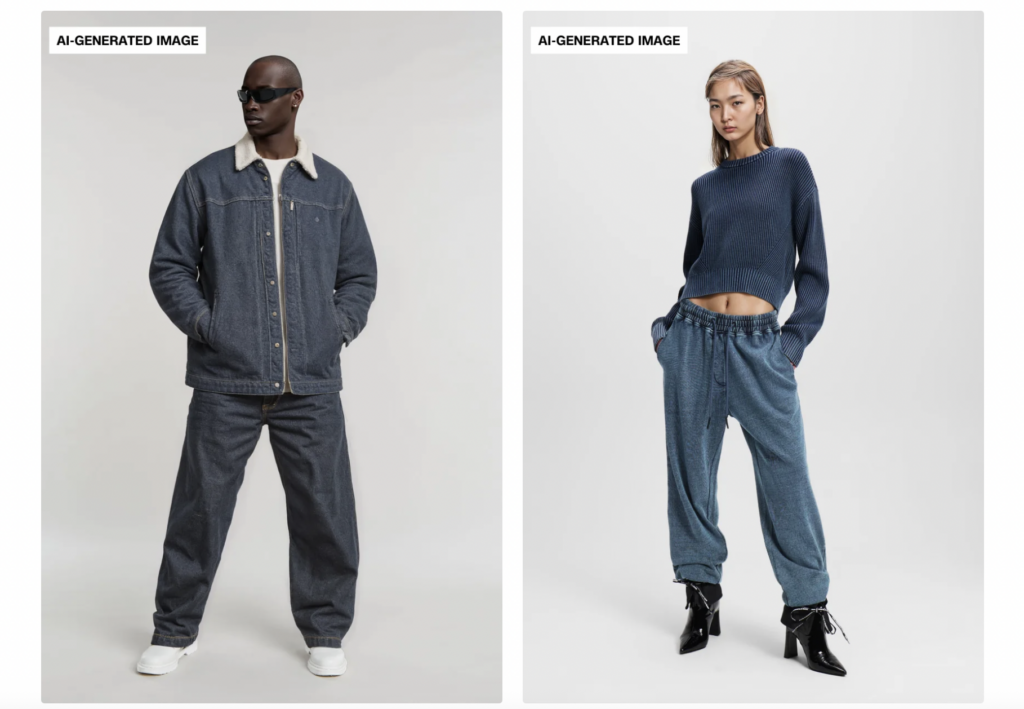
Legal teams will need to determine when disclosure is required and how to make it conspicuous, as the New York law does not prescribe disclosure language, placement, or format. Marketing and creative teams have a different question to answer: what does the disclosure do to consumer perception and campaign performance?
The broad adoption of influencer marketing shows how a similar concern has played out. The FTC’s disclosure rules require certain material connections between brands and influencers to be clearly disclosed, but brands and influencers have continued to test those boundaries. Some still minimize or obscure disclosures, while a wave of litigation has alleged that brands failed to require influencers to disclose paid relationships or adequately monitor their compliance.
The persistence of these practices suggests that concerns about the effect of prominent disclosures have not disappeared. Synthetic advertising may create a similar conflict between the desired presentation of an ad and information that, when disclosure is required, must accompany it.
THE BOTTOM LINE: New York’s synthetic performer law applies to a defined category of AI-generated advertising, but it puts a broader commercial question in front of brands. As synthetic imagery becomes more common, companies will need to account for disclosure when deciding how and where to use it. The effect of the disclosure may become part of the decision to use AI in the first place.
For brands betting on synthetic imagery, the question is straightforward: What is the image worth once consumers know how it was made?
Share