CaaStle was slated to revolutionize the trillion-dollar fashion industry by allowing brands to seamlessly rent their wares to fickle consumers. With easy-to-use B2B technology and a long list of fashion industry partners, CaaStle founder and CEO Christine Hunsicker was busy wooing prospective investors with that exact précis and numbers to back it up. The company was valued at more than $1.4 billion, and Hunsicker claimed that it was generating hundreds of millions of dollars in revenue and sitting on substantial cash reserves.
The company ultimately collapsed into bankruptcy, and Hunsicker is headed to federal prison for her role in a nearly $300 million securities fraud scheme. On August 20, U.S. District Judge J. Paul Oetken sentenced the 49-year-old founder to five years in prison and three years of supervised release after she pleaded guilty to securities fraud in March. Hunsicker was also ordered to pay $283.3 million in restitution and forfeit the same amount.
Federal prosecutors say Hunsicker defrauded hundreds of investors between 2019 and 2025 by providing them with falsified income statements, fake audited financial statements, fictitious bank records, and sham corporate documents that dramatically overstated CaaStle’s financial condition. At one point, Hunsicker showed an investor fabricated bank records reflecting nearly $200 million in cash. CaaStle, which rebranded from Gwynnie Bee in late 2018, actually had less than $200,000.
The criminal case puts hard numbers behind a collapse that began spilling into public view in the spring of 2025, when lawsuits detailed a widening gap between the business CaaStle presented to investors and the one it was actually operating.
“One of the Largest Frauds in History”
Among the first cases to expose the extent of that gap was a lawsuit filed by P180 – the fashion-focused financing and operating company that Hunsicker helped establish – in New York Supreme Court in April 2025. P180 accused CaaStle of engaging in “one of the largest frauds in history,” one that ultimately cost it more than $58 million. The complaint alleged that Hunsicker depicted CaaStle as having hundreds of thousands of subscribers, scalable rental technology, and strong distribution capabilities, when the company really had only a few hundred subscribers, less than $20 million in 2024 revenue, and was hemorrhaging cash.

According to the suit, retail veteran Brendan Hoffman launched P180 with the purpose of owning or investing in apparel companies that would use CaaStle’s technology. The company was created in close collaboration with Hunsicker, who allegedly wooed Hoffman with claims about CaaStle’s technology, logistical capabilities, and ability to boost revenue and profitability for fashion brands.
“The entire endeavor was a sham,” P180 alleged. CaaStle’s technology could not effectively scale, its revenues were a fraction of what had been represented, and its purported subscriber network was “little more than a mirage.”
The federal case has since filled in more of that picture. Prosecutors say Hunsicker was using falsified financial information to raise money for CaaStle as the company struggled with dwindling cash and significant expenses. She also told investors that their money would be used to purchase discounted CaaStle shares from existing shareholders seeking liquidity. Those shareholders did not exist, according to prosecutors. Hunsicker fabricated them and funneled the money into CaaStle as fresh capital, obscuring the company’s need for cash to fund its operations.
In another instance, prosecutors say Hunsicker forged the signatures of two CaaStle directors to make it appear that the board had approved stock options for an investor, generating more than $20 million for CaaStle.
P180 and the Push for Cash
The federal case also sheds new light on P180’s role in CaaStle’s final years. Hunsicker helped develop P180 in 2024 as a venture that would acquire stakes in fashion companies and have those companies use CaaStle’s technology and services. P180 ultimately acquired a controlling stake in Vince and a minority stake in Altuzarra. Prosecutors say the structure was also intended to generate revenue for cash-strapped CaaStle.
Hunsicker raised millions of dollars for P180 from existing CaaStle investors while continuing to misrepresent CaaStle’s financial performance and failing to disclose that earlier representations about the company had been false.
P180, meanwhile, alleged in its civil lawsuit that CaaStle’s board and senior leadership were aware of the company’s “huge financial issues” by December 2024 but continued to mislead P180 through March 2025. Hunsicker and other CaaStle directors who also sat on P180’s board allegedly failed to disclose material facts and used their influence to push transactions that would benefit CaaStle or delay exposure of its financial condition.
Against that background, P180 lodged claims for fraud and fraudulent inducement, negligent misrepresentation, aiding and abetting breach of fiduciary duty, conversion, unjust enrichment, and breach of contract against CaaStle. (Hunsicker was not named as a defendant in P180’s lawsuit.)
EXPRESS Enters the Fray
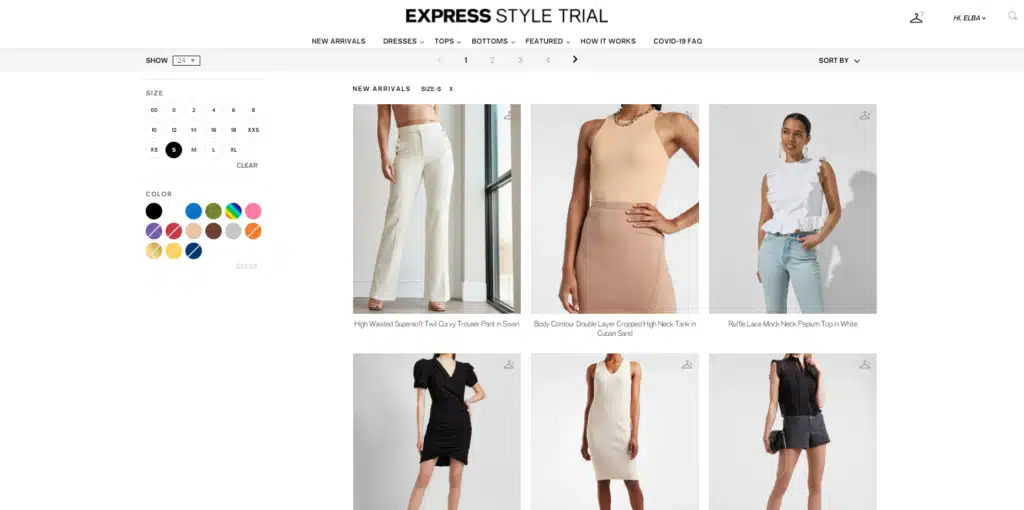
P180 was not the only company taking CaaStle to court as its finances unraveled. EXP Topco, the owner of the EXPRESS trademarks, filed a separate fraud, trademark infringement, and breach of contract case over CaaStle’s operation of “Express Style Trial,” a rental platform it launched in 2019 for Express-branded apparel.
EXP alleged that Hunsicker approached it in early 2024 with a proposed licensing deal after CaaStle had been operating the service using the EXPRESS marks. By December, the parties had reached a near-final agreement that would allow CaaStle to continue the rental service in exchange for millions of dollars in guaranteed minimum royalties. CaaStle backed out before signing.
The parties subsequently entered into a March 2025 settlement under which CaaStle would pay EXP an undisclosed sum and wind down Express Style Trial. Ten days later, according to EXP, CaaStle said it lacked the funds to make the required payment. EXP asserted that CaaStle nevertheless continued using the EXPRESS trademarks and operating the rental site despite demands that it stop, prompting claims for breach of contract, trademark infringement, and unjust enrichment.
From Civil Suits to Criminal Charges
By late 2024, the problems inside CaaStle were becoming increasingly difficult to contain. CaaStle’s board removed Hunsicker as chair in December and prohibited her from soliciting additional investments. Prosecutors say she continued trying to raise money anyway. In February 2025, Hunsicker attempted to sell another $19 million worth of her CaaStle shares to an investor. Federal agents seized her electronic devices the following month. Even then, prosecutors say she continued meeting with the investor about a fake audit without disclosing that the document was fraudulent, that she had been removed from the board, or that she had been barred from selling shares.
Hunsicker resigned as CEO in April 2025, after CaaStle’s board accused her of misrepresenting the company’s performance to investors. CaaStle filed for Chapter 7 bankruptcy in June.
Federal prosecutors charged Hunsicker the following month with securities fraud, wire fraud, money laundering, making false statements to a financial institution, and aggravated identity theft. She pleaded guilty to one count of securities fraud in March 2026, agreeing to forfeit nearly $300 million in proceeds from the CaaStle scheme and a related scheme to defraud P180 investors. Her five-year prison sentence brings the collapse of CaaStle considerably closer to its endpoint. But it also leaves a broader question about how the company reached that point in the first place.
CaaStle raised hundreds of millions of dollars from investors, achieved a valuation of more than $1 billion, and built relationships with some of fashion’s biggest names, including Ralph Lauren, Banana Republic, Ann Taylor, Vince, Maje, and Ba&sh. At the same time, prosecutors say investors were being shown fabricated financial statements, fake audits, fictitious bank records, and corporate documents that bore little resemblance to the company’s actual financial condition.
For years, CaaStle sat at the intersection of two propositions that attracted significant capital: the rise of fashion rental and the promise that technology could transform the economics of traditional retail. The brands were real. The technology existed. The investors were sophisticated. And CaaStle had raised more than half a billion dollars. The financial picture underpinning that business, federal prosecutors ultimately established, was something else entirely.
The cases are P180, Inc v. CaaStle, Inc., 652451/2025 (N.Y. Sup.) and EXP Topco, LLC v. CaaStle Inc., 652221/2025 (N.Y. Sup.).
Share