

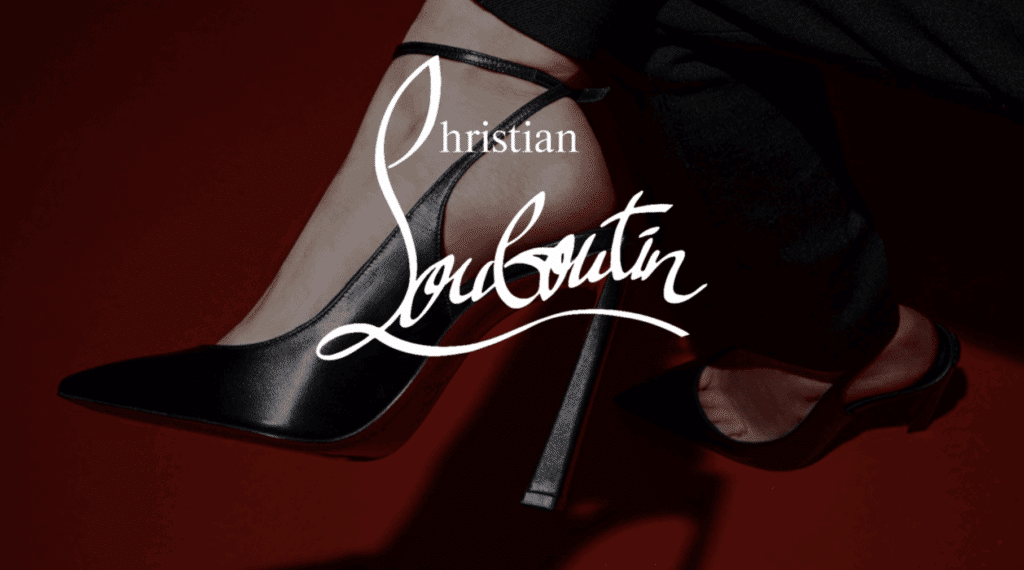
Christian Louboutin built a global luxury brand by turning a single design detail into a recognizable and legally protected signature. After training in Paris during the late 1970s and working under names like Charles Jourdan and Roger Vivier, Christian Louboutin opened his first boutique in 1991. The red-lacquered sole, introduced shortly after, became a key brand identifier and the foundation of its IP strategy.
Origins to a Signature: Stagecraft, Apprenticeship, and the Red Idea
Paris in the late 1970s gave Louboutin two educations – nights absorbing showgirl geometry at the Folies Bergère and days learning construction in storied shoe ateliers. He left school early, trained in the workshops of Charles Jourdan while learning from master shoemaker Roger Vivier, and internalized the two halves that still define the brand: rigorous make and unapologetic spectacle. In 1991, he opened a small salon in Galerie Véro-Dodat, a jewel box for high heels and a theater for performance dressing.
The red-lacquered sole arrived soon after and swiftly became the product. As Louboutin tells it, a flash of nail polish on a prototype made the silhouette “read” instantly; the studio turned that flash into a system. The result was a visual shorthand with precise psychology: a glimpse of red communicated provenance. Editors, stylists, and celebrities amplified the code; the public consumed it. The maison had its trademark.
Building the Maison: From One Salon to a Global Business
For Louboutin, the 1990s and 2000s were years of selective expansion. The company grew from a Paris atelier into a network of flagships across Europe, the Americas, and Asia, extending beyond stilettos into pumps, boots, flats, and, by 2003, leather goods. Through that growth, the house kept a workshop-level discipline around last shape, pitch, and finish. The retail concept reinforced the story, with interiors that felt part gallery and part backstage.
By the 2010s, street style had already shown that ornamental footwear had an audience far beyond eveningwear. Louboutin formalized that shift with a dedicated men’s line and stand-alone men’s stores. Collaborations, exhibitions, and pop-culture moments did the rest, cementing the red sole as an international status language.
The Red Sole in Court: Turning Aesthetics into Enforceable Signature
A signature only matters if you can keep it and prevent others from co-opting it. Louboutin treated its red sole not just as design but as intellectual property – registering and defending the red lacquer as a distinctive indicator of origin. The most cited test came in New York when Louboutin sued Yves Saint Laurent. In 2011–2012, the U.S. Court of Appeals for the Second Circuit recognized the red sole as a protectable trademark when contrasted with the color of the shoes’ upper, allowing monochrome red shoes to proceed but still confirming Louboutin’s rights. That “contrast” rule codified what the brand had already mastered in practice – a narrow but powerful zone of exclusivity that preserves recognition without monopolizing the entire color.
The litigation did not just protect market share; it broadcast that the sole is Louboutin’s logo.
Diversification with Discipline: Beauty, Bags, and a Broader Audience
Category expansion followed the same logic as the shoes – theater outside, engineering inside. After leather goods in 2003, beauty launched in the mid-2010s with nail lacquers and lipsticks, followed by fragrance and a fuller cosmetics range. Packaging echoed the footwear’s sculptural vocabulary – faceted columns, spikes, lacquer.
These businesses widened access without dulling the halo: the core footwear line remained the maison’s center of gravity, while beauty and bags multiplied consumer touchpoints and revenue.
Legacy and the Mechanics of Desire
Christian Louboutin’s business is built on three core elements: silhouette, visual impact, and construction. The shoes work because they are engineered to elongate the leg and change posture; they resonate because the red sole turns that effect into a public signal. The result is a brand that behaves like a case study in modern luxury: a single audacious flourish scaled into a system, defended in court, and refreshed through retail, culture, and product selection.
More than three decades on, the red sole is both cultural icon and business asset – a tiny painted surface that tells an outsized story about authorship, IP, and how a luxury house can convert momentary attention into durable equity.
This piece was prepared in collaboration with Jamie Zwirn and Emilie Mentrup.
Share