


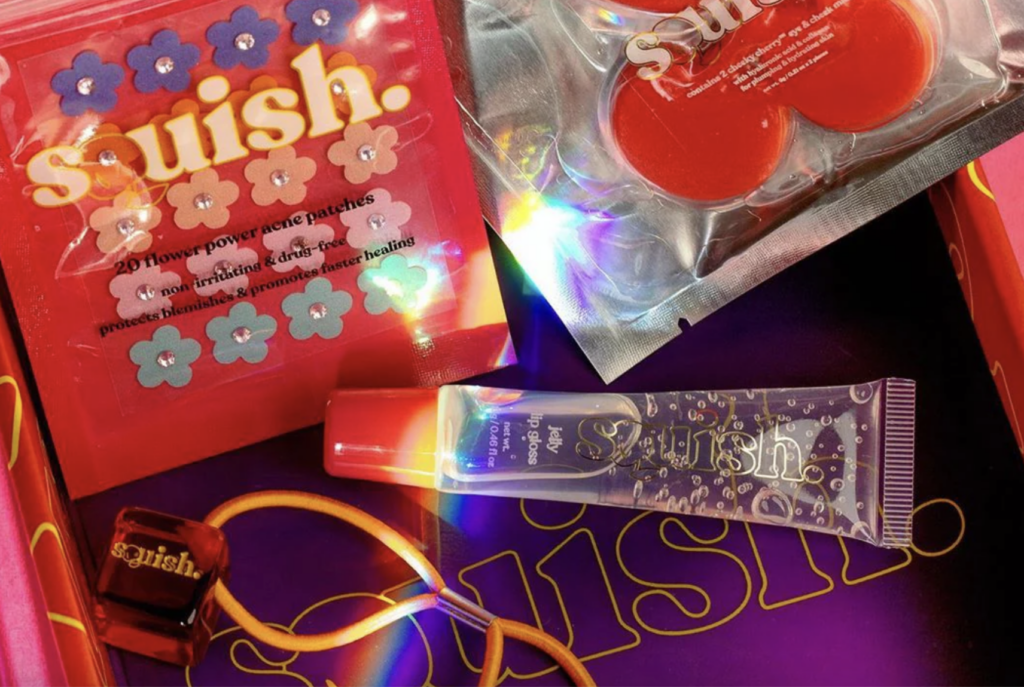
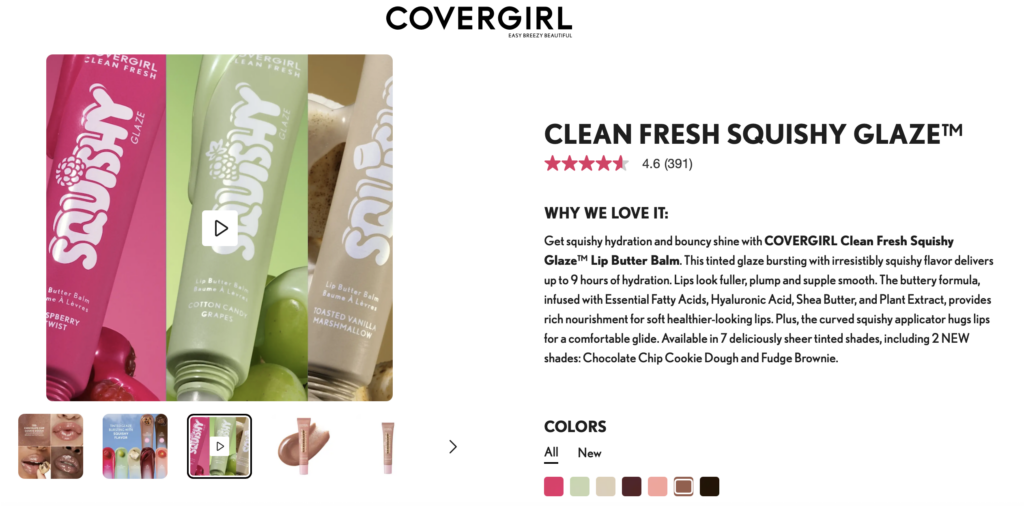
A trademark clash between Squish Beauty and Coty is raising questions that extend well beyond lip gloss. In a newly-filed motion to dismiss, Coty urges a New York federal court to throw out Squish Beauty’s trademark infringement lawsuit, arguing that its COVERGIRL CLEAN FRESH SQUISHY GLAZE lip gloss line is not likely to confuse consumers with Squish Beauty’s federally registered SQUISH mark, which it uses on similar goods.
In doing so, Coty raises a broader question about trademark enforcement: can a trademark owner argue before the U.S. Patent and Trademark Office (“USPTO”) that two marks can coexist and later claim in court that consumers are likely to confuse them?
A Tale of Two Proceedings
The dispute stems from the lawsuit that Squish Beauty filed against Coty in April, accusing the cosmetics giant of infringing its federally registered SQUISH trademark – and appropriating its “brand and marketing aesthetic, look and feel, fonts, images, and packaging”– with Covergirl’s Clean Fresh Squishy Glaze lip balm. Squish also alleges that Coty used the term “SQUISH” in promotional materials in an effort to capitalize on its existing brand recognition.
In its July 7 motion to dismiss, Coty argues that its use of the CLEAN FRESH SQUISHY GLAZE name – together with the prominent display of the Covergirl mark – reduces any likelihood of consumer confusion. More fundamentally, however, Coty contends that Squish is seeking a broader scope of trademark protection than its own prosecution history supports.
According to Coty, when Squish sought to register SQUISH in 2022, the USPTO initially refused registration based on an existing SQUISHY registration for cosmetics. Coty says Squish responded by arguing that the two marks “differ sufficiently in appearance, pronunciation, and meaning” to coexist before the USPTO ultimately issued the registration in 2024.
Fast forward and Coty argues that Squish is taking a different position: after distinguishing SQUISH from SQUISHY before the USPTO, it now alleges that Covergirl’s use of “Squishy Glaze” is likely to confuse consumers. According to Coty, those earlier representations are difficult to reconcile with Squish’s current theory of likelihood of confusion.
The Consistency Question
Trademark prosecution and trademark infringement litigation do not always involve identical inquiries. During examination, the USPTO considers whether two marks can coexist on the federal register. In infringement litigation, by contrast, courts ask whether consumers are likely to be confused by the parties’ actual marketplace use of those marks. Accordingly, trademark owners are not necessarily precluded from advancing different positions in the two forums, as marks that coexist on the federal register may nonetheless give rise to a likelihood of confusion depending on how they are used in the marketplace.
Coty argues that this case goes beyond simply making different arguments in different forums. It essentially maintains that Squish cannot obtain registration by emphasizing the differences between SQUISH and SQUISHY and later minimize those same differences in an infringement suit. Coty points to Squish’s earlier representations to the USPTO that the marks were “holistically dissimilar” and that “no confusion will occur in the minds of members of the trade and public.”
Coty also asserts that SQUISH is a relatively weak mark because “squish” describes characteristics of cosmetic products and because numerous SQUISH- and SQUISHY-formative marks already exist in the marketplace.
Taken together, Coty argues that Squish has failed to plausibly allege a likelihood of consumer confusion and that the complaint should be dismissed.
THE TAKEAWAY: Whether Coty’s motion ultimately succeeds remains to be seen, but it underscores an important reality for brand owners and trademark practitioners: positions taken during trademark prosecution may later shape trademark litigation. The case also raises a practical question. When trademark holders distinguish cited registrations to secure registrations of their own, how should courts evaluate those representations if they later surface in infringement litigation?
The case is Squish Beauty LLC v. Coty, Inc., 1:26-cv-03503 (S.D.N.Y.).
Share