


Sustainability sells – but it does not always translate into protectable branding. As brands across fashion, beauty, and consumer goods continue to package themselves in eco-friendly language, the U.S. Patent and Trademark Office (“USPTO”) and its Trademark Trial and Appeal Board are pushing back. The latest example: The trademark office’s refusal to register GREEN COLLECTIVE, in a case that underscores the limits of building brand identity around the same “green” language that now floods store shelves and marketing copy.
The Background in Brief: S3 Design Group filed to register GREEN COLLECTIVE for use on kitchen tools, household goods, and office supplies. The USPTO pushed back, and the Trademark Trial and Appeal Board (“Board”) agreed: “Green” is universally understood to mean “environmentally friendly,” while “collective” describes a group or business organized around a shared purpose. When the terms are combined, the Board said, the phrase tells consumers exactly what they are getting – eco-conscious goods from an eco-conscious company.
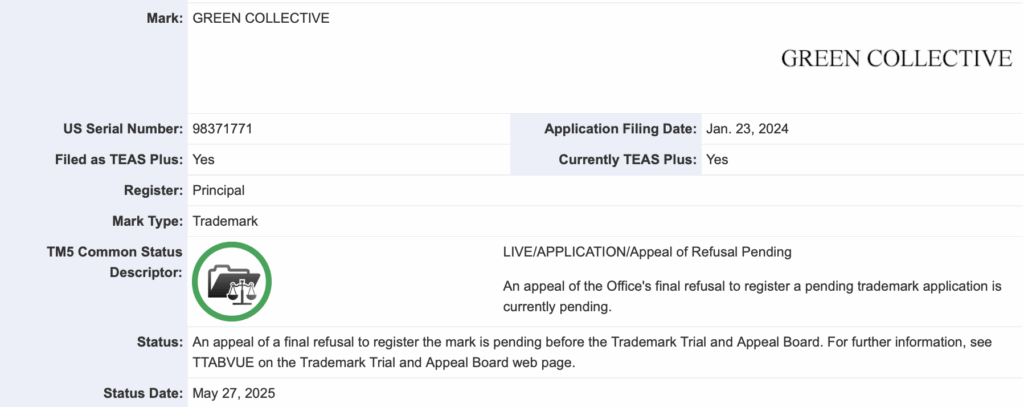
That kind of transparency might play well in the marketplace, but it also fails to show that a term acts as an indicator of source and instead, is merely descriptive of products marketed as environmentally friendly.
The Green Branding Problem
The Board’s refusal on August 25 highlights a tension at the heart of sustainable branding. Companies are under pressure – from regulators, investors, shoppers, and consumer plaintiffs, alike – to make their ESG and sustainability claims clear and explicit. Yet, trademark law resists protecting the very language that signals eco-consciousness.
And simply being first is not enough. S3 Design Group argued that it should prevail because it was the first – and only – user of the phrase GREEN COLLECTIVE. The Board rejected that argument outright, stating that “the fact that an applicant may be the first and only user of a merely descriptive designation does not justify registration if the only significance conveyed by the term is merely descriptive.”
Citing its own precedent and the Supreme Court’s 2004 decision in KP Permanent Make-Up v. Lasting Impression, which warned against allowing anyone to obtain “a complete monopoly on use of a descriptive term simply by grabbing it first,” the Board emphasized that descriptiveness is judged by consumer perception of the term – not by whether someone else has registered or used it. Being first does not convert a descriptive term into a protectable trademark.
For brands, the lesson is pretty straightforward: “Green,” “eco,” and “sustainable” may resonate with consumers, but they can be legally weak. They will not carry the weight of trademark protection on their own, and instead, they risk leaving companies with unenforceable marks in increasingly crowded spaces. That is the paradox. The clearer the sustainability claim, the less protectable it becomes. And as eco-friendly products proliferate, the more descriptive these words appear in the eyes of the law.
THE TAKEAWAY: The Green Collective decision is not just a technical refusal; it is a warning to brands in the booming sustainable goods sector. Marketing can lean on eco-language, but brand identity needs something stronger – coined terms, unexpected combinations, or house marks that stand apart from generic sustainability descriptors. In a market where everyone is “green,” distinctiveness is the real competitive advantage.
Share