

Chrome Hearts and Nordstrom have reached a settlement in principle in their trademark dispute over cross-adorned accessories, putting the case on track to end before a court weighs in on the scope of the luxury brand’s rights. In a joint notice filed on September 14 in the U.S. District Court for the Central District of California, the parties said they expect to finalize and fully execute the settlement within 45 days and dismiss the case within that time.
The settlement takes the question of whether Nordstrom’s products infringed Chrome Hearts’ rights off the table. But the broader trademark issue remains: Fashion companies routinely rely on recurring visual elements, from patterns and hardware to stitching, shapes, and motifs, to create recognizable brand codes. When those elements become sufficiently associated with a single source, trademark law can provide powerful protection. At the same time, many of those elements are ornamental, aesthetically desirable, or part of fashion’s broader design vocabulary.
That was the issue at the heart of Chrome Hearts’ case: How far can trademark rights extend when the thing identifying the brand is also part of the design of the product itself?
The Trademark Function of Design
Trademark law does not protect a design feature simply because it is recognizable or aesthetically appealing. To qualify for protection, the feature at play must function as a trademark by identifying the source of a product in the minds of consumers. That does not mean a feature must stop being decorative before it can function as a trademark. In fashion, ornamentation and source identification frequently overlap, and some of the industry’s most recognizable brand elements are incorporated directly into products while simultaneously signaling who made them.
The question is one of consumer perception. In determining whether a design has acquired source-identifying significance, courts consider the length and manner of its use, advertising and promotional efforts, sales success, media coverage, attempts by others to copy it, and evidence of actual consumer recognition.
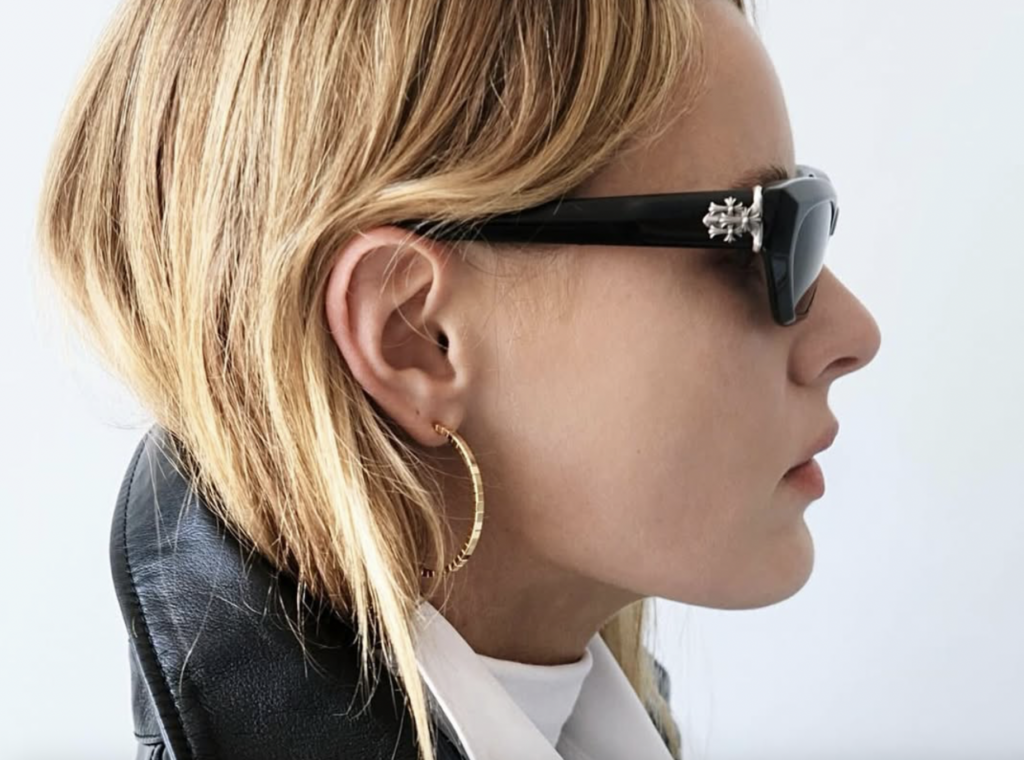
The Los Angeles-based company was not asserting ownership over cross motifs generally. Instead, it sought to enforce registrations covering specific designs, including its CH Cross and CH Plus marks, which it has used extensively across jewelry, apparel, and accessories. It maintained that decades of use, advertising, media attention, and celebrity adoption have caused consumers to associate those particular designs with the brand, and pointed to federal registrations to strengthen its position.
Ornamentation, Source Identification, or Both?
Part of the complication for companies like Chrome Hearts is that crosses have long appeared in fashion and jewelry and are used by countless companies. At the same time, trademark rights in a specific design do not necessarily extend to similar design elements more generally.
The harder question is what happens in between. A design can be decorative and still function as a trademark. And consumers may closely associate a particular design with a brand without assuming that every similar design comes from that brand.
And the issue extends well beyond Chrome Hearts. Brands often use the same design elements across products for years, making them an important part of how consumers recognize the brand. Unlike design patents, which provide protection for a limited term, trademark rights can potentially continue indefinitely. That makes trademark protection particularly valuable, but also makes defining its boundaries important for competitors.
The settlement in principle means the Chrome Hearts case is unlikely to answer whether Nordstrom’s challenged products infringed Chrome Hearts’ marks or how a court would have evaluated the ornamental and source-identifying aspects of the designs. But the underlying question is not going away. As fashion companies continue to build brand identity through recurring visual elements, questions about whether a recognizable design actually functions as a trademark will keep coming up.
The case is Chrome Hearts LLC v. Nordstrom, Inc., 2:26-cv-06078 (C.D. Cal.).
Share