For companies that invest heavily in building recognizable products and brand identities, there is an incentive to claim proprietary rights in the features consumers have come to associate with them. But consumer recognition does not necessarily translate into legal ownership. A product shape, design feature, color, aesthetic, or other element may become closely associated with a brand without giving the company behind it exclusive rights in every similar use.
Just as intellectual property laws provide companies with proprietary rights, these same doctrines establish limits on their scope. Generic terminology, functional product features, ideas, and commonplace design elements, for instance, are generally beyond the bounds of protection and remain available for competitors to use, preserving room for competition.
The Limits of Trademark Rights
The balance between protecting trademark rights and preserving room for competition is evident in trademark law, which is designed to enable consumers to identify the source of goods and services – not to give companies broad ownership over desirable words, symbols, or product features. That is why generic terms cannot function as trademarks for the goods or services they describe, for example, and descriptive terms generally require acquired distinctiveness before they are entitled to protection. The functionality doctrine similarly prevents companies from using trademark rights to monopolize useful product features.
Those limits are well established – but determining how far trademark rights extend can become more complicated when a company has built strong rights around a relatively simple element that is not, on its own, proprietary.
Adidas offers an example, as the sportswear giant has built an extensive trademark portfolio around its Three-Stripe branding. Thanks to decades of use and promotion, consumers have come to associate adidas’ Three-Stripe marks with the company, supporting trademark rights in what is, at its core, a simple design element. However, the strength of adidas’ rights in its Three-Stripe marks does not necessarily give the company rights over other configurations of stripes.
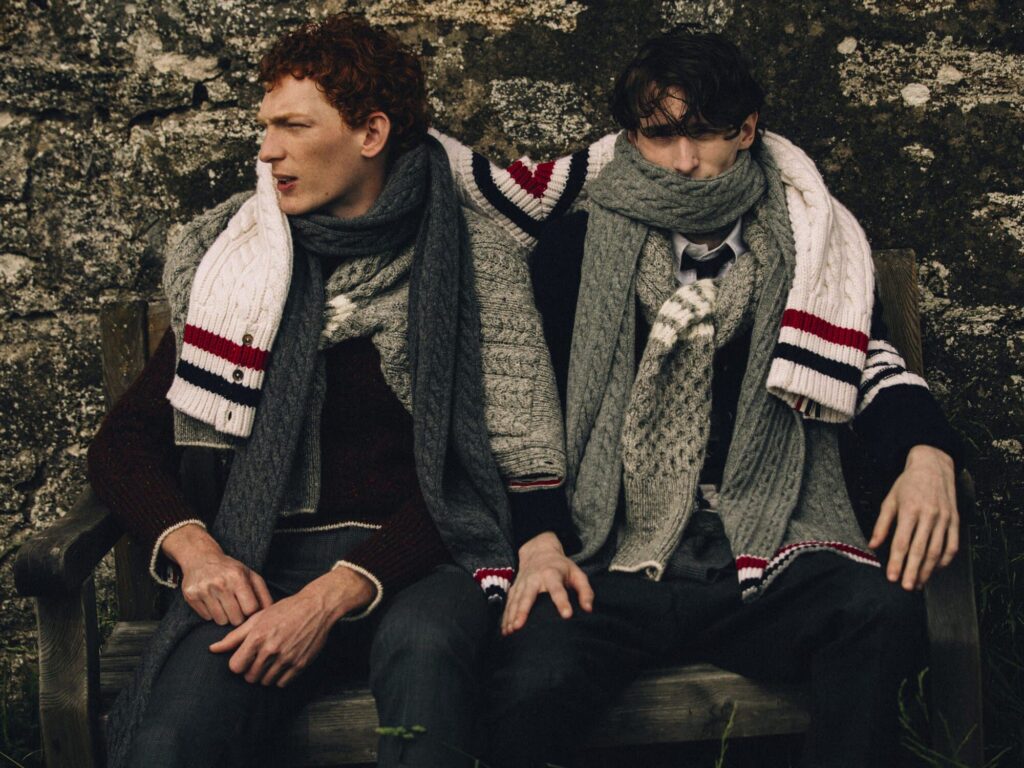
Over the years, enforcement actions have tested the scope of those rights. In adidas’ lawsuit against Thom Browne, for instance, a federal jury sided with the fashion brand in 2023, finding it not liable for trademark infringement or dilution in connection with its use of striped designs, including its Four-Bar Signature.
The Limits of Product Design Protections
Similar limits apply to product design. Trade dress can protect non-functional product configurations that have acquired secondary meaning, while copyright and design patent law may provide protection for qualifying elements. Features that do not meet the requirements for protection under these forms of IP law fall outside their scope.
Deckers, the owner of UGG, maintains trademark, trade dress, design patent, and other rights in aspects of its footwear and has asserted those rights against competing products that it claims are infringing. The dispute centered, in part, on where Deckers’ proprietary rights end and features that are functional, commonplace, or characteristic of the broader footwear category begin, with a federal court determining that Deckers’ asserted trade dress in its Classic Ultra Mini and Tasman styles was generic and therefore not protectable.
How much of a recognizable product belongs to the brand, and how much belongs to the category? Similar questions arise around handbag shapes, jewelry motifs, garment silhouettes, packaging formats, and other product features that may include both protectable and unprotected elements.
Ideas, Trends & Aesthetics
Other limits apply to the ideas and aesthetics that shape products and brands. Copyright protects original expression, but generally does not extend to the ideas, concepts, systems, or methods underlying that expression. Protection may also be limited for commonplace elements or instances in which the available ways of expressing an idea are constrained.
Trademark and trade dress law can protect particular source-identifying elements, but recognition alone does not make a broader aesthetic proprietary. A company may help popularize a color palette, silhouette, styling approach, store aesthetic, or visual language without obtaining exclusive rights in the trend or concept itself.
A since-settled lawsuit between influencers Sydney Nicole Gifford and Alyssa Sheil put some of these issues into a social media context. Gifford accused Sheil of copying copyright-protected images and appropriating the trade dress associated with her online presence, which she alleged included a palette of cream, grey, and beige, minimalist backdrops, and other recurring elements of her content. Sheil disputed that Gifford could claim proprietary rights in the broader aesthetic. Because the case ended in a settlement, the court did not ultimately determine what – if any – aspects of Gifford’s claimed visual identity were protectable.
Share