


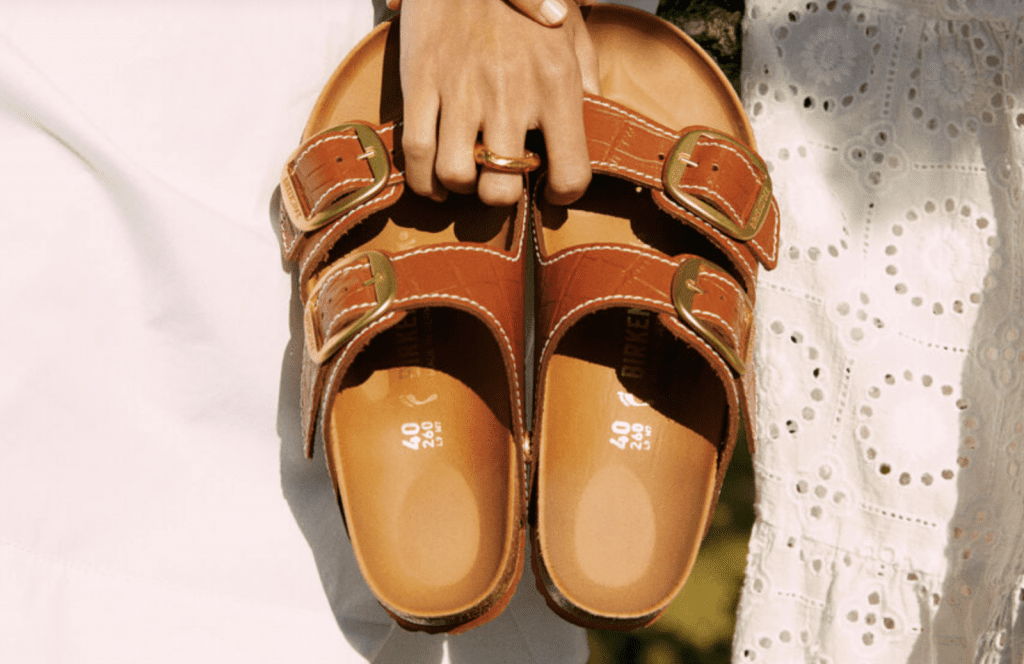
Birkenstock has secured another copyright win in the Netherlands, with a Dutch court ordering Lidl to stop selling lookalike versions of five of the footwear company’s best-known models. The court’s newly-issued decision follows a November 2025 ruling against a Dutch footwear retailer and comes after the Court of Justice of the European Union clarified the copyright standard for works of applied art.
The District Court of Gelderland sided with Birkenstock in a September 23 decision, issuing an injunction against Lidl’s sale of lookalikes of its Arizona, Madrid, Gizeh, Boston, and Florida models in the Netherlands and finding that the sandals at issue infringe, in particular, Birkenstock’s copyright in its footbed design. In addition to the injunction, the court ordered Lidl to disclose sales and orders information, pay damages, and reimburse Birkenstock’s legal costs, with the amounts to be determined separately.
A German-Dutch Divide
The decision marks the second time in less than a year that a Dutch court has reached a different conclusion on copyright protection for Birkenstock sandals than Germany’s Federal Court of Justice. In February 2025, the German court rejected Birkenstock’s copyright claims, holding that the sandals at issue did not qualify for protection as works of applied art. Among other things, it found that the availability of other design options was not, on its own, sufficient to establish the requisite originality.
In November 2025, the District Court of Midden-Nederland found Birkenstock’s Madrid, Arizona, and Florida models eligible for copyright protection and held that footwear retailer Scapino infringed those rights. Birkenstock’s Boston style failed the court’s originality analysis, while its claim over the Gizeh design failed because the court found that its copyright had expired. That judgment is on appeal.
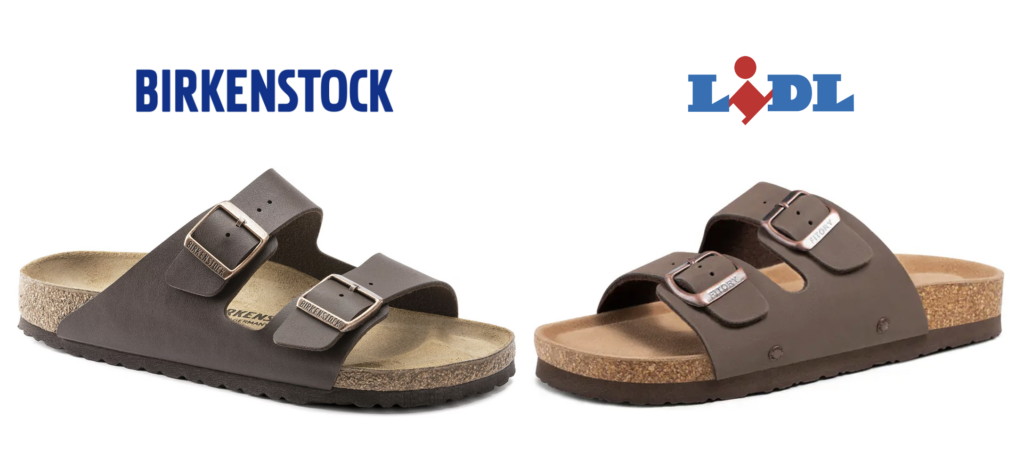
It is worth noting that the Lidl decision comes in the wake of the CJEU’s December 2025 judgment in the joined Mio/konektra cases, which confirmed that works of applied art are subject to the same originality requirement as other works: The subject matter must reflect the personality of its author as an expression of the author’s free and creative choices.
On infringement, the CJEU held that creative elements of the protected work must be reproduced in a recognizable manner; whether the competing products create the same overall visual impression is irrelevant to that analysis.
THE STRATEGY: For brands with staple designs that remain commercially relevant for years, the Birkenstock cases are a reminder to consider more than one form of protection. Registered designs can provide protection early in a product’s life, while copyright and where applicable, trademark and unfair competition law may provide additional avenues. Crocs’ recent case against Five Below illustrates the approach, with the company asserting trade dress, design patent, and utility patent rights in connection with its footwear and charms.
Counsel considering copyright protection should identify the specific elements of the product that reflect creative choices and distinguish them from features dictated by technical or other constraints. Evidence about the design process may be relevant to that analysis, but it is neither necessary nor decisive; the originality inquiry ultimately turns on the creative choices expressed in the work itself.
That analysis is relevant for enforcement, as well. Under Mio, a copyright claim cannot rest simply on the competing product creating the same overall visual impression. Counsel will need to identify the creative elements of the protected work and show that those elements have been reproduced in a recognizable manner.
The case is Birkenstock IP GmbH & Co. KG et al. v. Lidl Nederland GmbH et al.
Share