

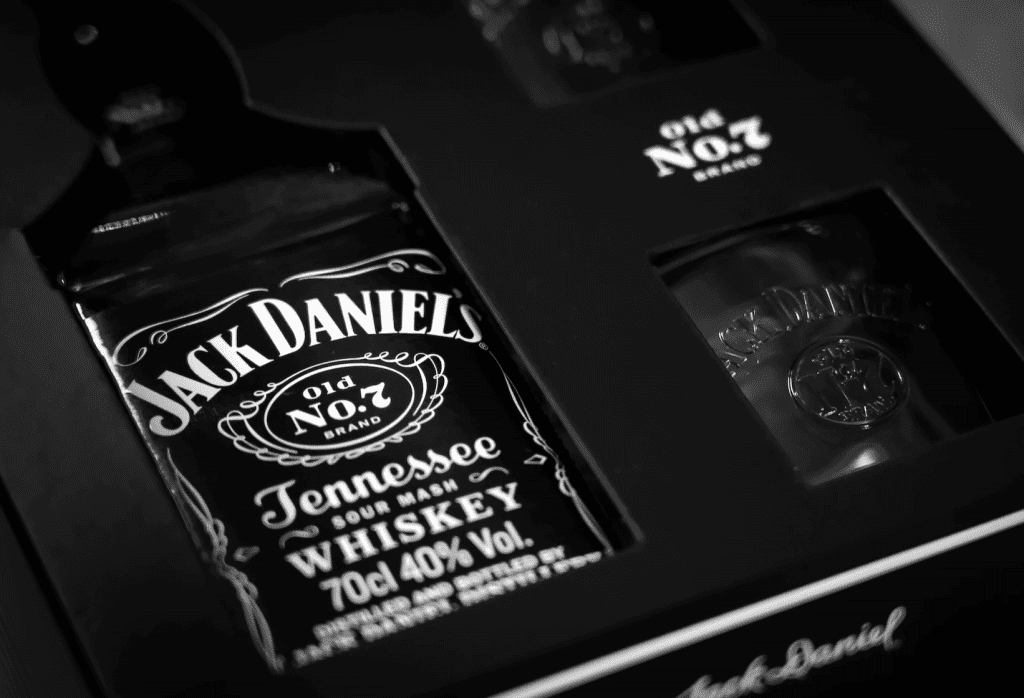
Jack Daniel’s has lost its latest bid in a closely-watched lawsuit to stop the sale of VIP Products’ “Bad Spaniels” dog toy, with the U.S. Court of Appeals for the Ninth Circuit holding that the whiskey maker failed to prove that the parody product tarnished its famous trademarks under the Federal Trademark Dilution Act (“TDRA”). In a decision issued on Tuesday, the court vacated a permanent injunction entered in Jack Daniel’s favor last year and directed the district court to enter judgment for VIP Products on the trademark dilution claim.
The Ninth Circuit’s ruling marks the latest chapter in the long-running Jack Daniel’s lawsuit that previously reached the U.S. Supreme Court, which held in 2023 that VIP could not rely on the Rogers test because it used the challenged marks as source identifiers for its own products. After the case returned to the district court, Jack Daniel’s prevailed only on its claim for dilution by tarnishment, despite losing on its trademark infringement claim. The Ninth Circuit has now reversed that remaining victory.
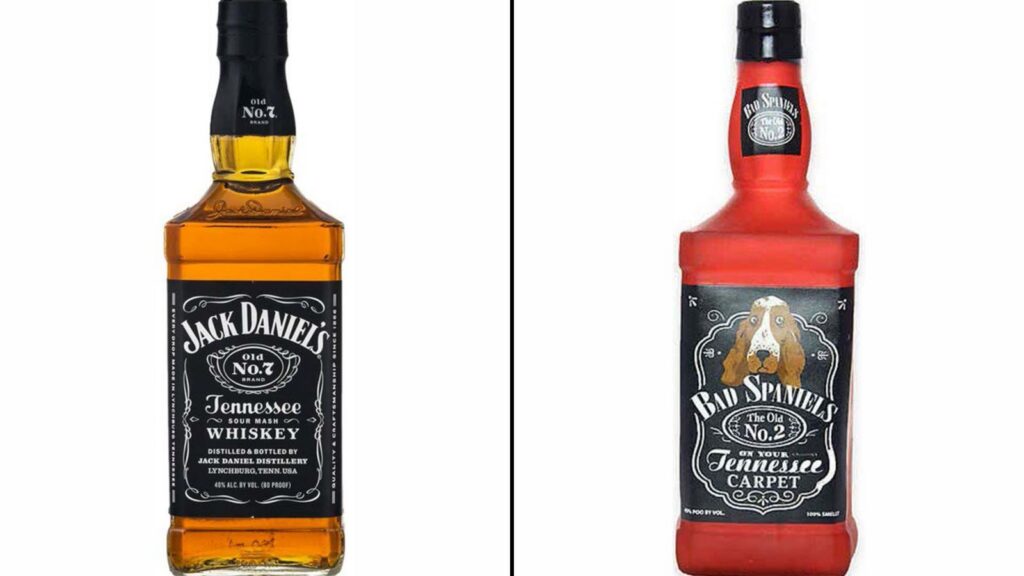
In doing so, the appeals court clarified what trademark owners must prove to establish dilution by tarnishment. According to the panel, a plaintiff must show that its mark is famous, that the accused mark is sufficiently similar, and that the junior mark creates a mental association that is likely to harm the reputation of the famous mark. The court concluded that Jack Daniel’s failed to satisfy that burden.
Significantly, the court rejected Jack Daniel’s argument that the Bad Spaniels toy’s overall poop-themed presentation, standing alone, established tarnishment. Instead, it held that fame must be established for each asserted mark individually, finding that Jack Daniel’s proved fame only for the “Jack Daniel’s” word mark and its registered trade dress, not for other elements such as “Old No. 7.”
The panel also found the evidence of reputational harm lacking. While Jack Daniel’s expert testified that associating a food or beverage with feces generally creates consumer disgust, the court said that testimony rested on generalized consumer psychology rather than evidence showing that the Bad Spaniels toy itself was likely to damage the reputation of Jack Daniel’s famous marks. The court further criticized the expert’s analysis for failing to account for the product’s obvious parody, noting that parody remains relevant when evaluating whether a plaintiff has established a likelihood of tarnishment, even after the Supreme Court’s earlier decision.
THE BIGGER PICTURE: For companies with large trademark portfolios, the decision underscores that fame does not necessarily extend across an entire family of marks. Instead, the Ninth Circuit held that each asserted trademark must independently qualify as famous under the TDRA before it can support a tarnishment claim. The opinion also suggests that courts may demand more tailored evidence of reputational harm, particularly where parody is involved, rather than accepting generalized theories that an allegedly offensive product necessarily tarnishes a famous brand.
The case is VIP Products LLC v. Jack Daniel’s Properties, Inc., 2:14-cv-02057 (D. Arizona).
Share