


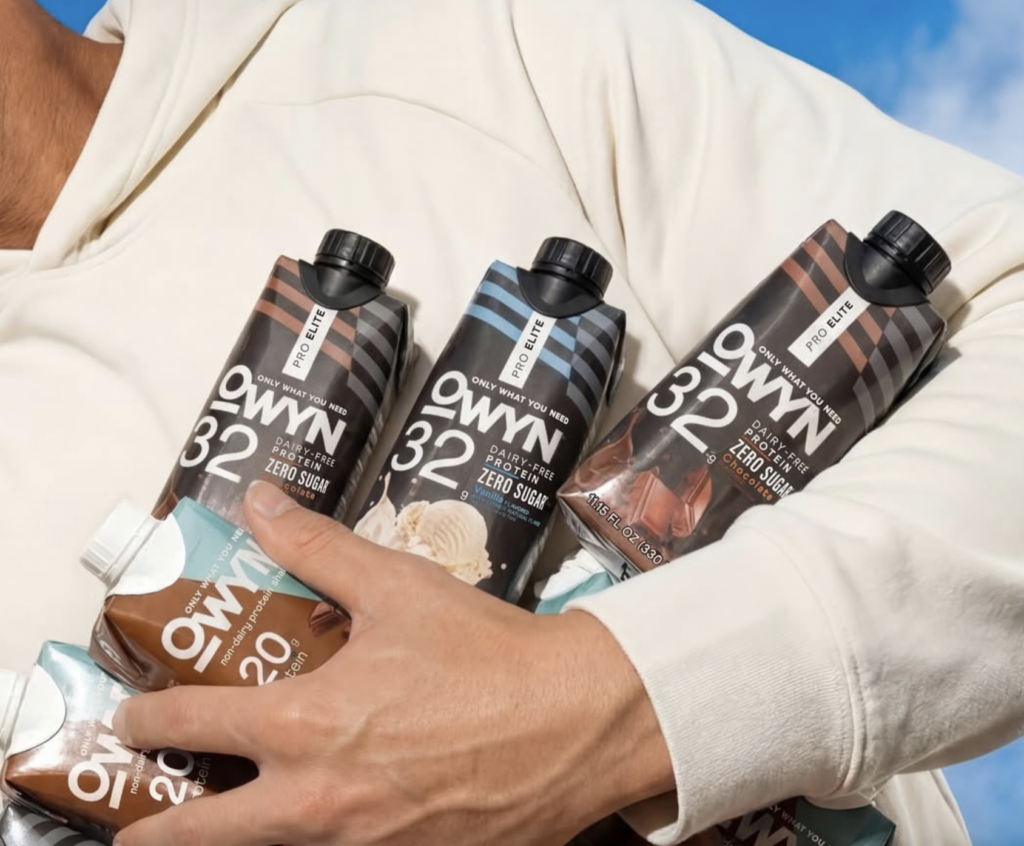
Two years after Simply Good Foods paid $280 million for OWYN, the deal is at the center of a securities fraud lawsuit over what Simply Good told investors about the acquisition and subsequent performance of the plant-based protein shake brand. In a complaint filed in the Southern District of New York, the Monroe County Employees’ Retirement System (“MCERS”) accuses Simply Good and several current and former executives of making materially false and misleading statements and omissions about the integration and performance of OWYN.
The case stems from Simply Good’s June 2024 acquisition of OWYN, which it said would diversify its portfolio and expand its presence in the ready-to-drink protein shake market. MCERS alleges in its August 14 complaint that in the wake of the deal, Simply Good repeatedly touted the successful integration of OWYN into its business: Then-CEO Geoff Tanner said the integration was “progressing as planned” in October 2024, “progressing well” in April 2025, and “nearly complete” in July 2025, when he also said OWYN had a “very long runway of sustained growth.”
Meanwhile, MCERS alleges that problems were developing behind the scenes. According to the complaint, key OWYN managers left after the acquisition, and a new pea protein supplier created product issues that hurt reviews, sales, and distributor relationships. Still yet, Simply Good allegedly increased overhead following the personnel losses, relied more heavily on discounting and promotions, and later cut marketing and brand support as margins came under pressure.
From Acquisition to Impairment
Those issues began surfacing publicly in October 2025, MCERS claims, when Simply Good reported slowing OWYN sales growth and disclosed a product-quality issue tied to pea protein sourcing. The disclosures prompted Simply Good shares to fall more than 17 percent that day, per MCERS, which contends that Tanner continued to downplay the extent of the problems during the related earnings call and maintained that the integration had “gone well.”
By April 2026, Simply Good reported that OWYN quarterly sales had fallen nearly 17 percent year-over-year, recorded a $187 million impairment charge, and cut its fiscal 2026 net-sales outlook. Then-CEO Joseph Scalzo told investors in a corresponding call that Simply Good “did not meet [its] own expectations with the integration of the brand into our company.” MCERS claims that Scalzo further stated that Simply Good had lost “important brand expertise,” its marketplace execution was poor, and OWYN’s performance “fell well short of our plans.”
Following the disclosures, Simply Good shares fell more than 27 percent from April 8 to April 10. By July, another $13 million impairment brought the total write-down of OWYN’s brand value to $200 million – equivalent to about 70 percent of the $280 million Simply Good paid for the company less than two years earlier.
MCERS alleges that Simply Good and its executives knew – or recklessly disregarded – problems affecting OWYN but continued to make misleading statements about the integration and the brand’s expected performance. It also claims that Simply Good warned in SEC filings about potential integration risks without disclosing problems that had allegedly already occurred.
Against that background, MCERS is pursuing Section 10(b) and Rule 10b-5 claims against Simply Good and the individual defendants, along with Section 20(a) controlling-person claims against the executives. In addition to monetary damages, it is seeking class certification for purchasers of Simply Good common stock between October 24, 2024 and April 8, 2026.
THE BIGGER PICTURE: The Simply Good case follows other stock-drop lawsuits in the retail space that have focused on the gap between management’s public statements about a deal or growth strategy and later disclosures about execution problems. Farfetch, for example, has faced securities claims over alleged misstatements about its operations, including integration issues stemming from acquisitions, while investors suing Nike have similarly alleged that executives continued to tout its Consumer Direct Acceleration strategy despite operational problems with its rollout.
The cases differ in their facts, but the OWYN lawsuit still highlights a recurring risk in retail M&A: The value of a fast-growing consumer brand can depend on preserving the people, product quality, distribution, and consumer demand that made it an attractive acquisition target in the first place.
The case is Monroe County Employees’ Retirement System v. The Simply Good Foods Company, et al., 1:26-cv-06971 (S.D.N.Y.).
Share