
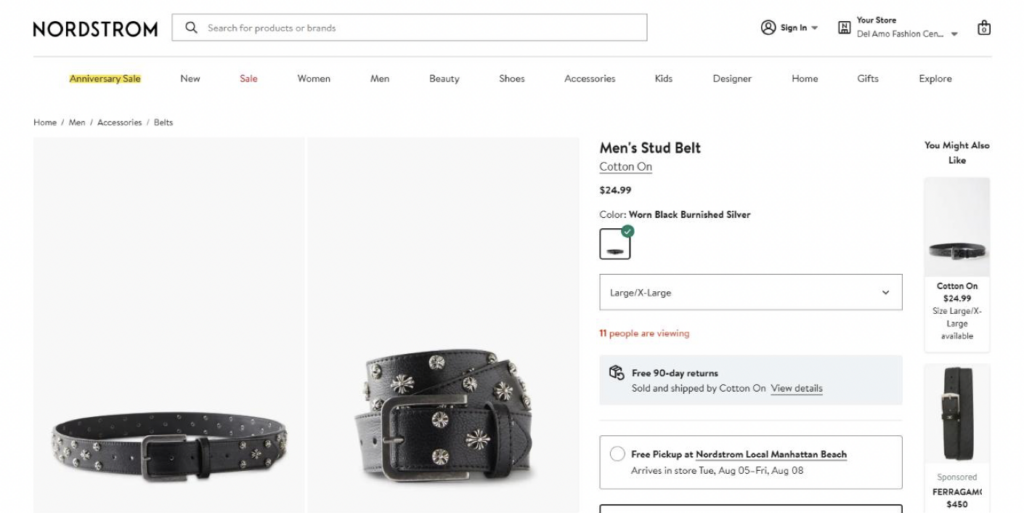
Chrome Hearts is taking on Nordstrom over a collection of accessories that the luxury brand claims unlawfully replicate some of its most recognizable design elements. In a complaint filed in the U.S. District Court for the Central District of California on June 4, Chrome Hearts accuses the retail giant of trademark infringement and counterfeiting, false designation of origin, and unfair competition stemming from the sale of belts and jewelry bearing cross-shaped motifs that it alleges are “identical, substantially indistinguishable, or confusingly similar to” one or more of its federally registered trademarks.
On its face, the lawsuit is the latest in a long line of routine trademark matters in the luxury segment. But in reality, it raises a more complex issue: how trademark law should treat design features that are both decorative and potentially source-identifying.
The Trademark Function of Design
The newly-filed case sits at the intersection of two competing principles of trademark law. Courts must balance the need to protect marks that have acquired source-identifying significance against the need to avoid granting exclusive rights in design features that have long been part of the broader visual vocabulary of fashion.
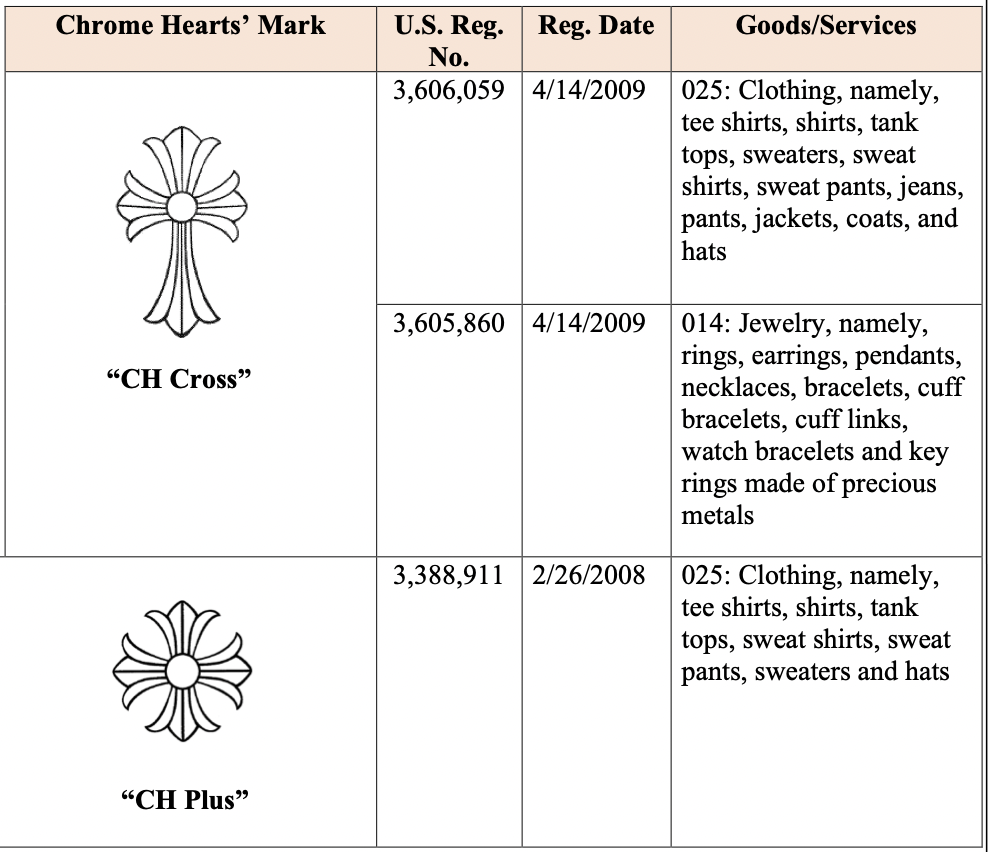
The key question is whether the design feature at issue functions as an indicator of source. Trademark law does not protect a design feature simply because it is recognizable or aesthetically appealing. To qualify for protection, such a feature must function as a trademark by identifying the source of a product in the minds of consumers, even if it also serves a decorative purpose. In evaluating whether a design feature functions as a trademark, courts often look to factors, such as the extent and manner of its use, advertising and promotional efforts, consumer recognition, and whether the feature is used consistently in a way that signals brand origin.
Chrome Hearts argues that its cross motifs have acquired that source-identifying capabilities. It maintains that decades of use, extensive advertising, significant celebrity adoption, and federal trademark registrations have made the cross designs at play closely associated with the Chrome Hearts brand in the minds of consumers. Against that background, Chrome Hearts argues that consumers encountering similar motifs are likely to believe that the products originate from, are affiliated with, or have been approved by the company.
Importantly, Los Angeles-based Chrome Hearts is not claiming rights in cross imagery generally. Instead, it is seeking to enforce federal registrations covering specific cross designs – the CH Cross and CH Plus – that it contends have come to function as trademarks over time.
Those registrations, however, do not eliminate what is likely to be the central challenge in the case. Crosses have long been part of the visual vocabulary of fashion and jewelry and appear on products sold by countless brands. As a result, the dispute is not simply about whether Chrome Hearts has protectable rights in its designs. It is also about how trademark law treats design features that may simultaneously function as both decoration and source identifiers.
Ornamentation, Source Identification, or Both?
In fashion, the distinction between ornamentation and source identification is rarely clear-cut. Many design features serve both functions simultaneously, and many of the industry’s most recognizable trademarks do exactly that. In short, a design need not cease being decorative in order to qualify for trademark protection.
Rather, the dispute is likely to turn on whether consumers have come to recognize those particular designs as indicators of source and whether Nordstrom’s use of similar motifs is likely to create confusion about the origin, sponsorship, or affiliation of the challenged products. More fundamentally, Nordstrom is likely to argue that – and the court may have to determine whether – the allegedly infringing cross motifs are being used as trademarks at all or merely as decorative design elements that consumers do not perceive as source identifiers.
How the court answers those questions may ultimately determine the reach of Chrome Hearts’ rights in some of its most recognizable visual symbols – and more broadly, help define where courts draw the line between protectable trademarks and ornamental design in fashion.
The case is Chrome Hearts LLC v. Nordstrom, Inc., 2:26-cv-06078 (C.D. Cal.).
Share