


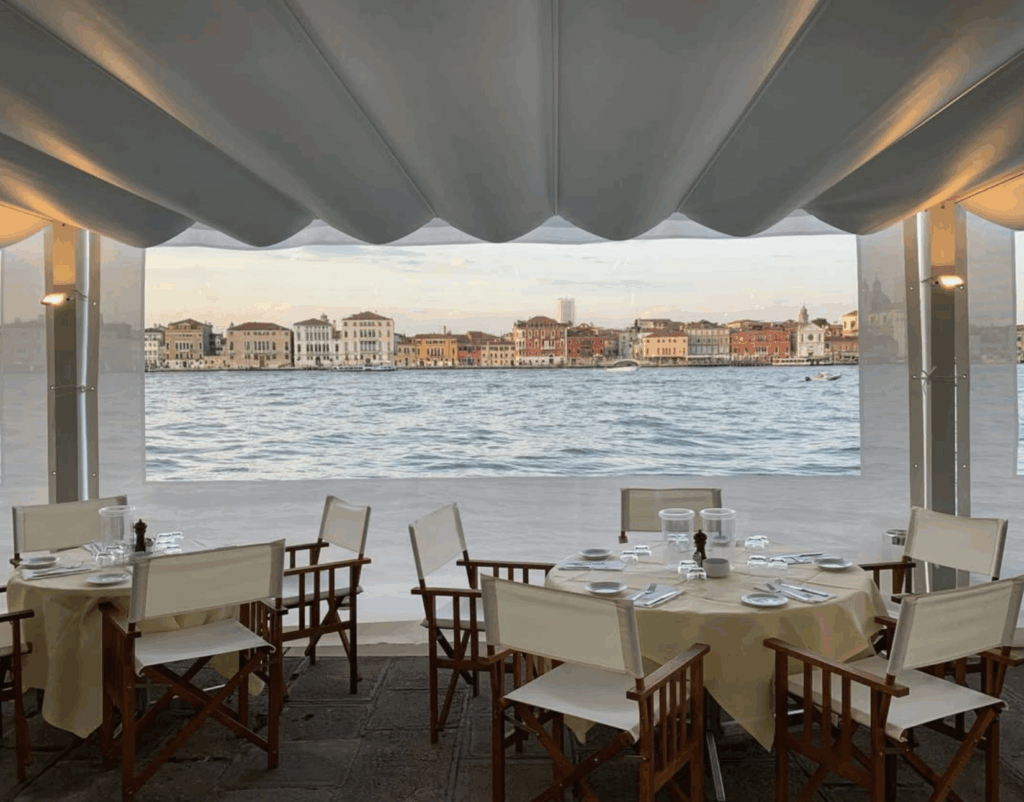
Behind the opulent interiors of Hotel Cipriani in Venice, situated just steps from the Grand Canal, a bitter dispute would quietly simmer for decades – eventually erupting into global litigation over the rights to one of the most storied names in luxury hospitality. The players? Two titans of hospitality: Belmond, the now-LVMH-owned luxury hotel and travel company that boasts an international collection of iconic hotels and exotic railroads, including the Venice Simplon-Orient-Express, and the Cipriani family, heirs to one of Italy’s most well-known hospitality dynasties, stewards of one of the most famous names in the global industry.
In a joint statement released in February 2023, the two entities – having clashed for more than twenty years – declared the unlikely: peace. “Belmond and the Cipriani family announce that they have reached an agreement which puts an end to all litigations between them around intellectual property,” the statement read, almost too simply for the weight of what it conveyed. “These legal issues go back several decades, well before LVMH acquired Belmond.”
The Origins of a Divide
The story behind Belmond v. Cipriani got its roots in 1958 when Giuseppe Cipriani Sr., with funding from the Guinness family, opened Hotel Cipriani on the Island of Giudecca. The Venetian patriarch of one of hospitality’s most illustrious dynasties was already the proprietor of the famed Harry’s Bar in Venice – a haven for artists, writers, and royalty – and also operated Locanda Cipriani, a rustic-chic retreat on the island of Torcello. For years, these properties, while not formally part of a single legal entity, embodied Mr. Cipriani’s cohesive vision of Italian elegance, one that bore the family’s name and signature hospitality ethos.
That connection began to evolve less than a decade later when, in 1967, Mr. Cipriani sold his interest in Hotel Cipriani to the Guinness family. This sale would prove to be decisive, as in addition to the hotel, itself, it included a transfer of the exclusive rights to use the CIPRIANI name in connection with hotel services. In 1976, the Hotel Cipriani – and those trademark rights – changed hands again, this time landing under the ownership of a consortium that would come to be known as Orient-Express Hotels Ltd. and ultimately, Belmond.
While Giuseppe Cipriani may have sold off the hotel and the corresponding trademark rights in the process, his famed hospitality family – which retained ownership of Harry’s Bar and Locanda Cipriani – did not slow down. In fact, Giuseppe Sr.’s son, Arrigo (followed by his own son Giuseppe Jr.) expanded the Cipriani family brand into a global empire of restaurants, clubs, and hotels, with properties in New York, Dubai, Monte Carlo, Hong Kong, London, and beyond. They operated under the very name they believed defined them, Cipriani.
The problem? In the eyes of Orient-Express Hotels Ltd., which rebranded to Belmond in 2014, the Ciprianis’ use of their family name in furtherance of the offering of hospitality services ran squarely afoul of the law. The result? A globally sweeping web of trademark proceedings that would play out in Spain, Italy, Portugal, Russia, the United Kingdom, the European Union, the U.S., Singapore, Israel, etc. No major market was spared from the legal campaign Belmond would unfurl.
At the crux of this multi-decade, multi-jurisdictional dispute was a critical question: Could a family – separated from at least some of the legal rights to its own surname in a commercial context – still use that name to build a global hospitality business? Or alternatively, did the 1967 trademark sale permanently sever that connection, transforming CIPRIANI from a legacy into a legal asset now owned purely by Belmond?
The Cipriani family’s position was deceptively simple: The 1967 agreement – in which Giuseppe Cipriani Sr. sold his interest in Hotel Cipriani and with it, the rights to the CIPRIANI trademark for use on hotels – had never been intended to bar the family from using their own name in unrelated hospitality ventures, such as restaurants. The Ciprianis argued that the deal was specific to the hotel itself – a singular, iconic property in Venice – not a blanket surrender of rights across the entire hospitality segment. From their perspective, their continued use of the name for family-run restaurants and clubs was not only legally permissible; it was essential to their legacy.
Belmond viewed the matter differently. Having acquired the CIPRIANI trademark through a clear chain of title, it insisted that the exclusive rights in the name in hospitality had been assigned in full. The Cipriani family’s continued use of the name, the company argued, infringed its rights, created consumer confusion, and diluted the brand equity Belmond had legally acquired and actively protected.
What followed was not just a trademark dispute – it was a long-running and far-reaching clash between legacy and law.
Each side remained entrenched in its position on the interpretation and effect of certain provisions in the 1967 Agreement, which was drafted long before the rise of global restaurant empires, personal branding, and international trademark frameworks. Courts in London, New York, Rome, Madrid, Singapore, and Tel Aviv struggled to interpret the rights and intentions embedded in the deal. Some sided with Belmond’s claims to exclusivity; others acknowledged the Cipriani family’s argument that their name could not be wholly divorced from their identity or business pursuits.
The Case that Started the Clash
The clash that had been simmering behind the scenes became unabashedly public in 2006 when Orient-Express Hotels Ltd. filed suit in the United Kingdom against Cipriani (Grosvenor Street) Ltd., a company controlled by Giuseppe Cipriani Jr., over its use of the “Cipriani” name for a newly opened restaurant in London. In its complaint, Orient-Express alleged that the name of the unaffiliated CIPRIANI restaurant – launched in Mayfair in 2004 – infringed its rights in and registration for CIPRIANI, which had covered hotel and restaurant services across the European Union since 1996.
According to Orient-Express, the Ciprianis’ restaurant – called Cipriani London – created a likelihood of confusion among consumers and constituted trademark infringement and passing off. The Ciprianis appealed – without success. In 2010, the Court of Appeal upheld the lower court’s ruling, affirming that the use of the CIPRIANI name infringed the Orient-Express’s trademark rights. In its February 2010 decision, the Court of Appeal ordered the Cipriani family to remove the name from the restaurant and to publicize the outcome of the case, including on its menus.
In a statement in the immediate wake of the court’s decision, the Cipriani family said: “We are disappointed with the Court’s decision. Our restaurant has operated successfully for nearly six years in London and we do not believe there is any confusion with the Hotel Cipriani in Venice which has absolutely no operations in the UK.” Making clear that it had no intention of backing down in other markets, they asserted, “This decision does not affect our properties outside of the UK and the Cipriani family continues to own and develop new businesses in countries around the world, in addition to existing operations around Europe, Asia and the U.S.”
As of May 2010, the parties reached what Orient-Express called a “favorable settlement,” one that would see the Ciprianis agree to pay almost £10 million in costs and damages.
But the drama did not end there; the matter landed back before the court almost three years later, with the Court of Appeal finding that Giuseppe Cipriani, Jr. was violating the injunction that barred his company from using the Cipriani name. His use of “Guiseppe Cipriani” and “G. Cipriani” in connection with the company’s Downtown Mayfair and C London restaurants would confuse consumers who would think that Cipriani (Grosvenor Street) Ltd.’s outposts were affiliated with or “economically linked” to Orient-Express’ CIPRIANIbusinesses.
Litigation, Legacy, and a Truce
In June 2014, Belmond (which rebranded from Orient-Express in 2014) confirmed in a U.S. SEC filing that its fight with the Ciprianis was far from over. It had yet to collect $1.63 million in damages from Cipriani (Grosvenor Street) Ltd. and had launched a new infringement action in Spain against a company owned by Cipriani family members – despite the 2010 settlement. At the same time, it was defending against an infringement claim in Italy, and additional disputes were playing before national trademark offices in countries ranging from Portugal to Russia.
Then came the truce.
In February 2023, the two sides announced a comprehensive global settlement. According to a joint statement, the deal “establishes once and for all the respective rights of the parties around the Cipriani marks in different regions of the world,” and finally “allows the development of these formidable brands within a well-defined and clear legal frame.”
The Hotel Cipriani of Venice, Belmond’s Venetian crown jewel will remain the only hotel in the world allowed to carry that name. The Cipriani Group, in turn, will continue expanding its luxury restaurant and club empire globally, which consist of restaurants in New York, Abu Dhabi, Ibiza, Istanbul, Los Angeles, Doha, and soon Marbella, Punta del Este, and Manama, and Casa Cipriani outposts in New York, Milan, and soon Miami.
Roeland Vos, Belmond’s CEO, captured the significance with calculated understatement, “The agreement with Giuseppe Cipriani and his family marks the start of a new era for both Belmond and the Cipriani Group. We are very proud of the Hotel Cipriani, our mythical hotel in Venice, its magical location and the unique experiences it delivers to our guests.”
Meanwhile, Giuseppe Cipriani Jr. acknowledged the détente, saying, “We are grateful to Belmond and [LVMH chairman and CEO] Mr. Arnault for their openness to find a solution to longstanding litigations … We are happy to be able to continue the development of our family business within an appeased context.”
In the wake of the final settlement, the once-divided Cipriani legacy now moves forward on parallel – and at times, intersecting – tracks. The Cipriani Group will continue to expand its constellation of restaurants, clubs, and hospitality ventures in some of the world’s most sought-after destinations. And in a final twist no one might have predicted during the height of their courtroom battles, some of these new projects will be developed in partnership with Belmond. What began as a bitter feud over a name has ended in a rare accord – one that not only protects the legacy of Hotel Cipriani but also situates both brands to exist under a framework built not on conflict, but on coexistence.
Share