


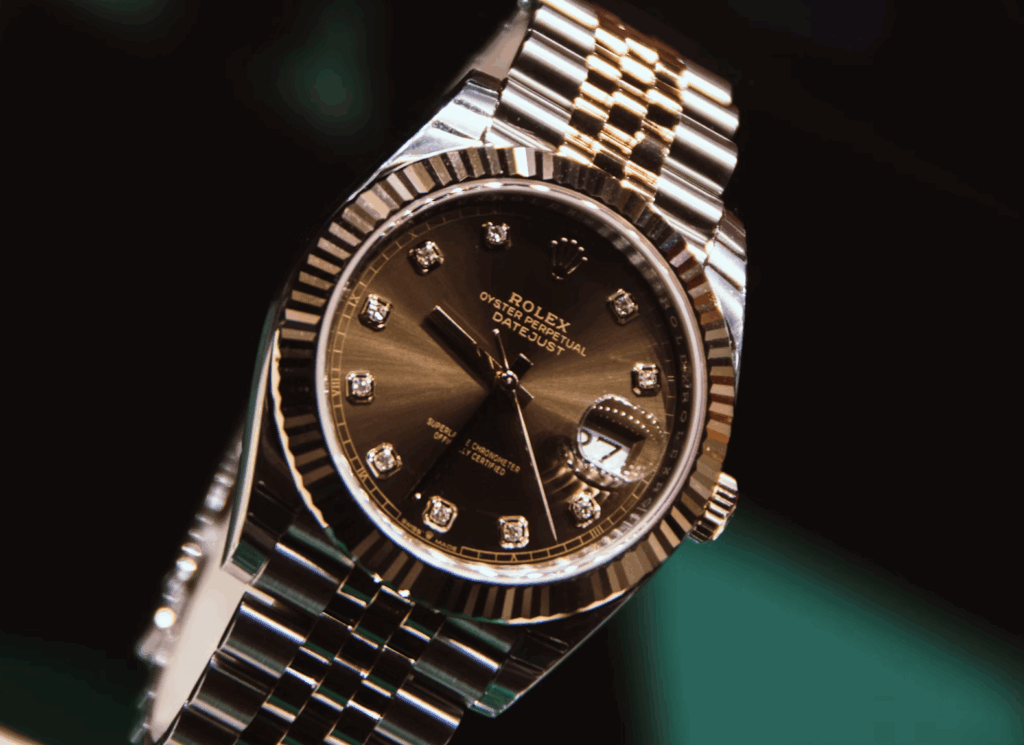
In the world of luxury watches, secrecy is not just a cultural trait, it can be a business strategy. From closely guarded production figures to the inner workings of the allocation systems for their most coveted creations, watchmakers have long treated information as one of their most valuable assets. For companies like Rolex, Patek Philippe, and Audemars Piguet, keeping data about production and distribution out of public view is as much about brand positioning as it is about protecting business intelligence.
The legal system, however, is not always sympathetic to broad claims of confidentiality. That tension was on display this spring when the Paris Court of Appeal ruled on Rolex’s attempt to protect a large swathe of information that it provided in an antitrust case that pits it against the French Competition Authority. The case arises from Rolex’s appeal of a decision by the regulator, which sanctioned Rolex back in 2023 for imposing a sweeping ban on online sales by its authorized distributors in violation of both European Union and French competition law.
A Five-Year Horizon & the Strategic Use of Scarcity
As part of its appeal, Rolex submitted extensive economic studies and underlying data on production, sales, and product availability – and sought to keep much of it confidential. The court confirmed that Rolex’s production, sales, and availability data from 2018 onward – the period when Rolex says supply shortages became most pronounced – should be treated as trade secrets and remain under seal. But it refused to seal materials from 2017 and earlier, finding that Rolex had not provided evidence to show why that info should continue to be treated as secret.
The court also addressed documents without explicit time references but prepared in 2024. Because of their recency, these were granted confidentiality.
At the heart of the Paris Court of Appeal’s May 2025 decision is its reliance on the “five-year presumption,” a European principle that deems business information that is at least five years old to have lost its confidential character, unless the company claiming secrecy can prove that the info is still commercially sensitive. In short: Absent concrete reasoning, older info, such as production data or sales figures, is treated as historical rather than strategic.
For Rolex, this means revising its submissions and unredacting material from 2017 and earlier. While the company’s most recent data will remain protected, the public record will soon reveal more about its historic production and allocation practices.
More broadly, the court’s decision is significant for watchmakers – and other luxury brands, including those in the upper echelon of the personal luxury goods market and auto segment, many of which rely on the secrecy of past data to preserve the mystique around their brands. Scarcity is often deliberately cultivated as both a marketing tool and a competitive shield. Protecting data around production volumes and distribution networks, for instance, is not only about keeping rivals from copying business methods, but also about sustaining the narrative that demand perpetually outstrips supply.
But when courts insist on transparency, as they did with Rolex’s pre-2018 data, that narrative is at risk of partial exposure. Once historic figures are unredacted, the public, competitors, and secondary market players may gain insight into how carefully calibrated the notion of scarcity really is.
Looking Ahead
The trade secret-centric judgment in the Rolex case is not the end of the story. The Court of Appeal still must decide whether its prohibition on online sales was lawful. Nonetheless, the ruling on confidentiality highlights the tension between secrecy as brand strategy and transparency as legal duty. For Rolex and its peers, the lesson is unmistakable. Trade secrets will continue to shield the most sensitive, recent data, but courts are increasingly skeptical of indefinite secrecy. Information more than five years old will not automatically remain protected; companies must prove that such data still carries strategic weight.
The court has put forth what experts endorse as a pragmatic balance. By ordering Rolex to provide the raw data and code behind its economic analysis, judges and regulators can verify the evidence while keeping those materials sealed from competitors. That approach may serve as a model for future competition cases.
For other luxury companies with selective distribution systems, the message is clear: Secrecy has limits. Courts expect proof and appear to be more willing than ever to pierce the veil when information has aged.
The case is Rolex S.A. and Rolex Holding S.A., Paris Court of Appeal, RG n° 24/03052.
Share