

Dior opened in 1946 with a postwar vision built on structure and optimism. Backed by textile magnate Marcel Boussac, Christian Dior established his house at 30 Avenue Montaigne and debuted the “New Look” in 1947, a return to volume and form that helped restore Paris as fashion’s center. From the beginning, the house paired couture with commercial ambition, moving quickly into fragrance, accessories, and one of the industry’s earliest licensing programs.
Over time, Dior built a global model around clear design codes, tight retail control, and a legal strategy that treats its signatures, from the Bar suit to the cannage motif, as assets to defend and reinterpret.
Origins to “New Look”: A Postwar Reset with Structure and Scale
In February 1947, Christian Dior presented a debut that reversed wartime austerity – the Bar suit’s nipped waist and full skirt restored volume, ceremony, and fabric to women’s wardrobes. The press named it the “New Look,” and customers answered with orders.
Mr. Dior’s work was a calibrated architecture of femininity, financed by textile magnate Marcel Boussac, whose backing let a young maison operate at couture scale from day one. As Paris regained its fashion primacy following the end of World War II, Dior’s atelier became both studio and factory of glamour.
Dior moved quickly from catwalk to counter. Fragrance – led early by Miss Dior – translated couture aura into a daily ritual and built a business outside fittings and seasons. Accessories and licensed categories widened the reach. The house refined show cadence, celebrity dressing, and international distribution, turning a Paris collection into a global itinerary. The strategy was straightforward: define the look, expand through fragrance, and use branding and retail to scale the business.
Succession and Reinvention: Designers, Governance & the Code
Christian Dior died suddenly in 1957 at the height of his fame, prompting the house to tap a then-unknown Yves Saint Laurent as his successor. The appointment made Saint Laurent the world’s youngest couturier at just 21. Following Saint Laurent was Marc Bohan, who enjoyed a long, steady tenure. Late-20th-century leadership recast the codes through distinct lenses: Gianfranco Ferré’s architectural rigor, then John Galliano’s theater, which expanded desire and controversy in equal measure before his dismissal in 2011 – a governance inflection that reminded the industry that reputation and legal risk travel with a creative director’s name.
The next decade rebalanced Dior’s vocabulary and voice. Raf Simons (2012) brought modernist clarity and re-anchored couture technique to contemporary ease. In 2016, Maria Grazia Chiuri became the house’s first female creative director, advancing feminist references and collaborations with artists and artisans. Her shows layered slogans with savoir-faire – embroidery, petites mains, and craft guilds – and aligned a historic atelier with current cultural debates while preserving Dior’s technical bar.
In June 2025, Dior named Jonathan Anderson as sole creative director across women’s, men’s, and haute couture – following Kim Jones’ departure from Dior Men earlier that year and Chiuri’s exit after her final womenswear show. The appointment consolidated the Dior studio under one hand for the first time in decades.
Commerce, Culture & the Defense of Signs
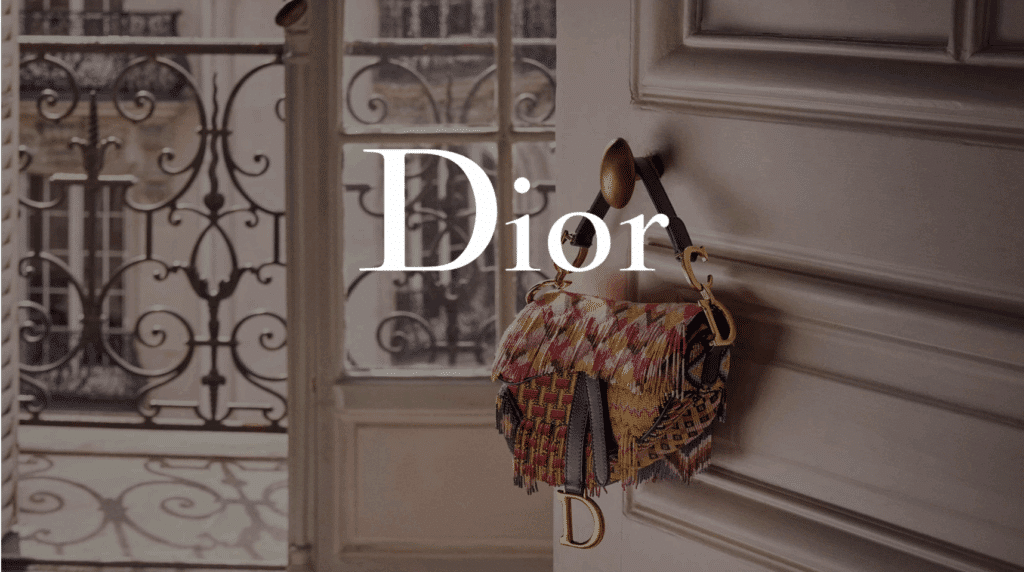
LVMH-owned Dior’s rise into a luxury powerhouse has been as strategic as it is aesthetic. Beauty and fragrance became profit engines, menswear and leather goods broadened reach, and retail architecture turned boutiques into marketing machines. House codes – the cannage motif and the Saddle bag’s return among them – function as both design language and protectable trade dress.
From a 1947 silhouette shock to a multinational maison with a curated code book, Dior has treated elegance as an evolving system – couture precision at the top, scalable products beneath, and storytelling that brings them together. The Bar jacket changed the line of a body – the business that followed changed how a fashion house endures.
This piece was prepared in collaboration with Jamie Zwirn and Emilie Mentrup.
Share