


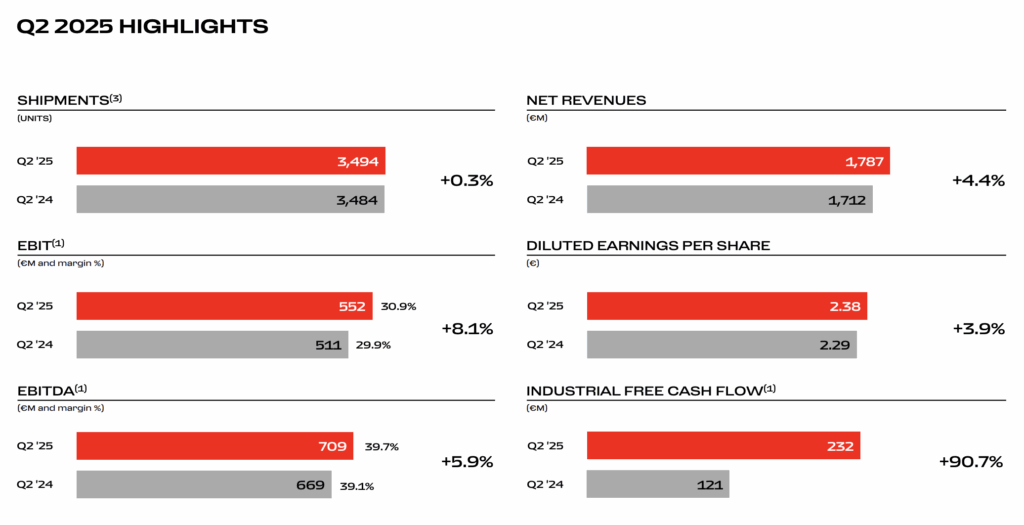
Despite a fraught macroeconomic landscape and new trade barriers affecting European exports to the U.S., Ferrari delivered a robust financial performance in the first half of 2025, reporting revenue of €3.58 billion ($4.1 billion) for the six months ended June 30 – up 8.5 percent year-over-year. The Maranello-based automaker’s profit rose to €1.09 billion, reflecting a margin of 30.6 percent, a full 170 basis points higher than the prior year. This performance comes amid a complex trade landscape for European automakers, underscoring the brand’s unique pricing power, disciplined product strategy, and intensifying investment in hybrid and electric innovation.
Ferrari reported on July 31 that revenue growth was powered by a richer product mix and greater personalization, with shipments remaining essentially flat year-over-year at 7,087 vehicles. Ferrari’s hybrid models now represent 47 percent of total deliveries, reflecting the company’s carefully managed transition away from pure internal combustion – a transition made all the more urgent by regulatory and market shifts.
Beyond core vehicle sales, Ferrari’s sponsorship, commercial and brand revenues soared by 26.6 percent to €396 million in the first half. This was driven by new lifestyle initiatives, licensing, and improved Formula 1 performance, helping to diversify income and cushion margin pressures from increased R&D and SG&A spending.
Margins Up Despite Rising Costs
Ferrari’s EBIT margin rose to 30.6 percent despite increased costs across the board. R&D expenses were up by 5.1 percent to €458 million, reflecting greater investment in hybrid and EV technologies, including work on future models and in-house component development. (Crucially, as Ferrari ramps up its EV roadmap toward 2026 and beyond, the capital intensity of electrification poses a structural margin risk. Ferrari is targeting exclusivity in EVs, not volume, but competitors are already crowding the space with high-performance electrics.)
Selling, General & Administrative Expenses spending jumped by nearly 16 percent, fueled by racing activities and brand-building expenses tied to lifestyle and retail expansion.
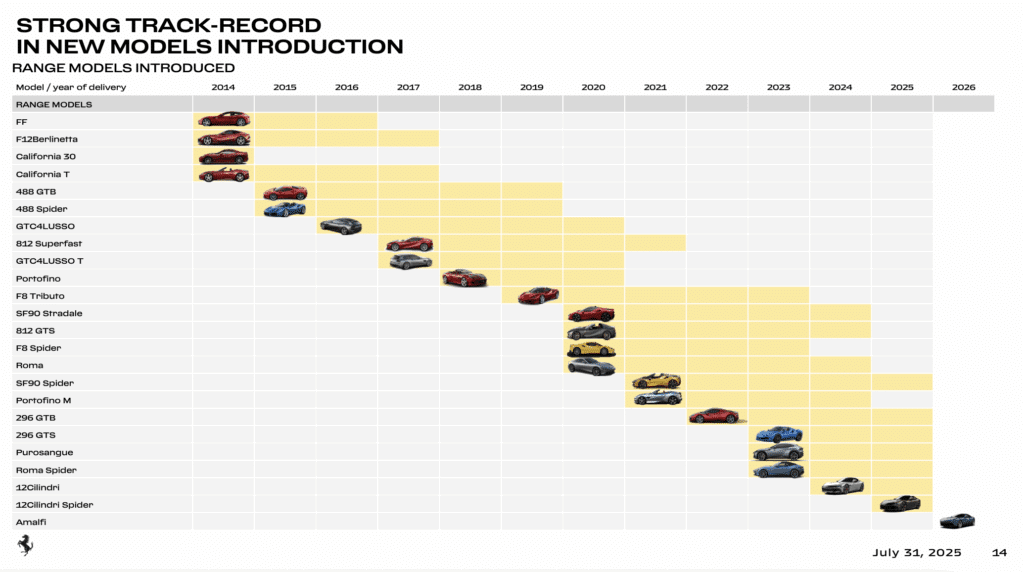
Nevertheless, Ferrari managed to lower cost of sales as a percentage of revenue to 47.6 percent, down from 49.7 percent last year. Operating leverage from a higher-margin model mix (especially the SF90 XX and 12Cilindri families) helped offset the drag from fading models like the Daytona SP3 and 812 Competizione A.
Regional Disparities & Strategic Allocation
Geographically, Ferrari’s growth was mixed. While the Americas and EMEA posted gains, Greater China (Mainland China, Hong Kong, and Taiwan) saw a revenue decline of €36 million, despite stable shipments. This likely reflects strategic allocation choices rather than softening demand, with Ferrari opting to prioritize markets with more favorable currency and regulatory environments.
The U.S. market accounted for over 24 percent of global shipments. Although Ferrari avoided immediate fallout from tariffs this spring (front-loading shipments to the U.S. before the tariffs became effective in April), analysts warn of potential price hikes or margin compression in the second half if tariff-driven costs cannot be absorbed or offset.
A Luxury Outlier – For Now
At a time when brands like those under LVMH’s and Kering’s umbrellas face softening demand in Fashion & Leather Goods and investors express doubts about future prospects of “big luxury,” Ferrari’s performance reinforces the resilience of ultra-luxury mobility. The company continues to convert exclusivity, engineering, and motorsport prestige into superior margins and shareholder returns. Still, the road ahead is not without challenges. Brand strength alone may not insulate Ferrari from structural pressures in electrification, regulation, and global trade. But for now, it remains a rare outlier – delivering acceleration in an otherwise slowing luxury sector.
Share