

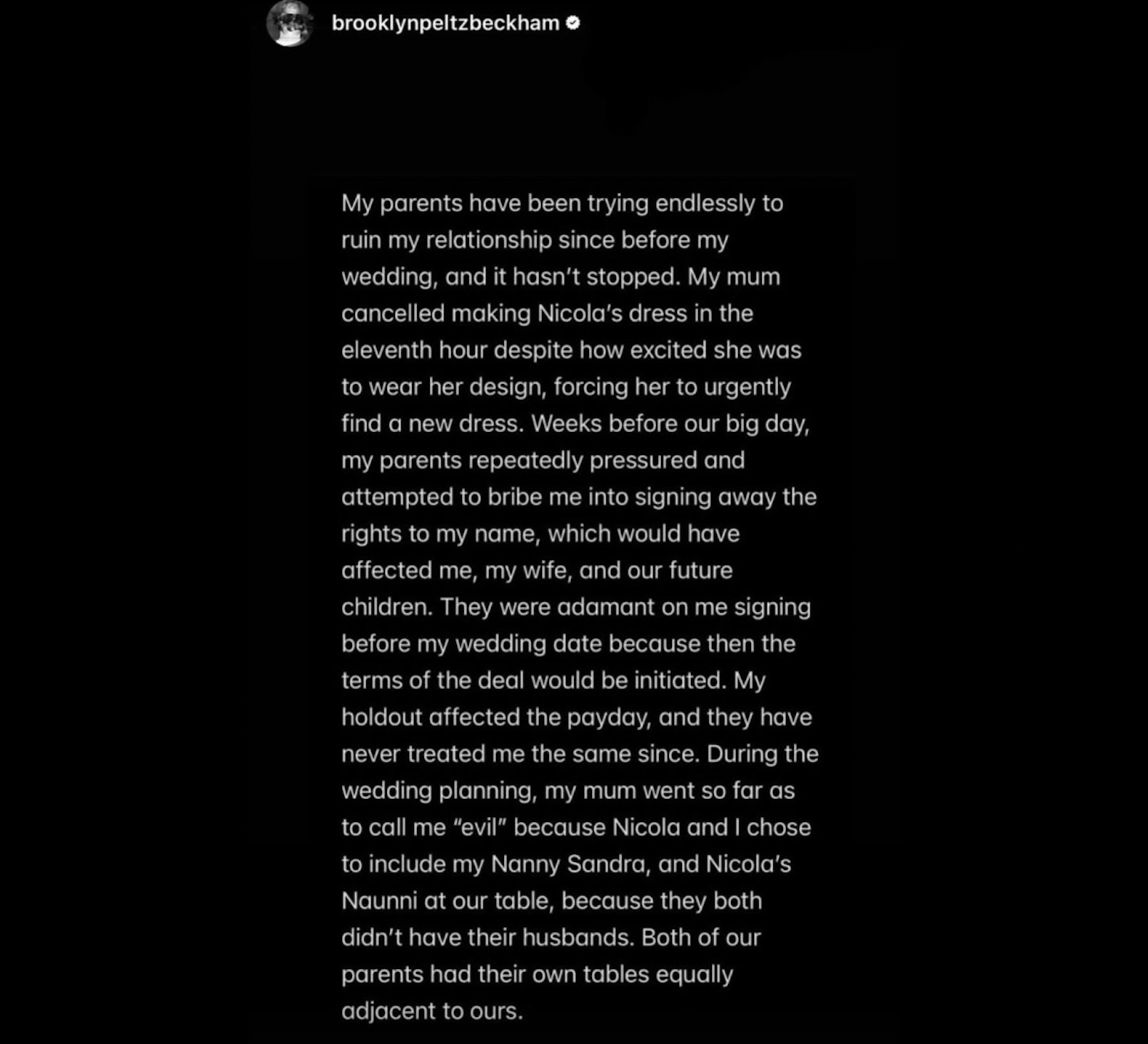
The Beckham family is dominating headlines after son Brooklyn posted a pointed statement on social media this weekend. In a series of Instagram stories, Brooklyn, 26, shed light on an array of claims about his famous family, including that his parents sought to have him sign away rights connected to his name. While the public narrative has largely centered on interpersonal tensions and wedding-era disagreements among the Beckham clan, the name-centric allegation introduces a materially different dimension to the dispute: one that centers on governance and control of a commercially valuable personal brand.
For trademark practitioners and brand strategists, that framing is the intriguing one. Among the claims raised by Brooklyn is that he was pressured to sign away rights to the commercial use of his name. “They were adamant on me signing [away the rights to my name] before my wedding date because then the terms of the deal would be initiated,” he wrote of his parents, adding that his refusal “affected [their] payday.” The terms of the alleged agreement and the deal at issue have not been made public, but the language situates the conflict squarely within questions of trademark law, rights allocation, contractual leverage, and brand control.
Building Brand Beckham
The allegations arise against the backdrop of Brand Beckham – a roughly £500 million ($670 million) commercial ecosystem that has been built, structured, and protected through an extensive network of operating entities, licensing arrangements, and trademark registrations.
Serving as a case study in transforming celebrity appeal into bona-fide brand prowess, David Beckham’s post-playing career has evolved into a diversified brand management platform spanning endorsements, licensing, equity participations, media production, and sports ownership. Through his holding company, which he launched in 2014, Beckham has executed long-term commercial partnerships with the likes of adidas, Tudor Watches, Hugo Boss, Maserati, and Stella Artois. At the same time, he maintains equity ownership in MLS franchise Inter Miami CF and creative and production company Studio 99.
And in a nod to his aims to scale further, Beckham entered into a strategic partnership with Authentic Brands in 2022, which now co-owns and manages the global David Beckham brand, as well as his Studio 99 arm.
Victoria Beckham’s enterprise reflects a parallel brand architecture anchored in fashion and beauty. Since launching her eponymous label in 2008, the business has expanded into footwear, leather goods, accessories, beauty, and a long-term global licensing agreement with Safilo for the design, production, and distribution of Victoria Beckham eyewear.
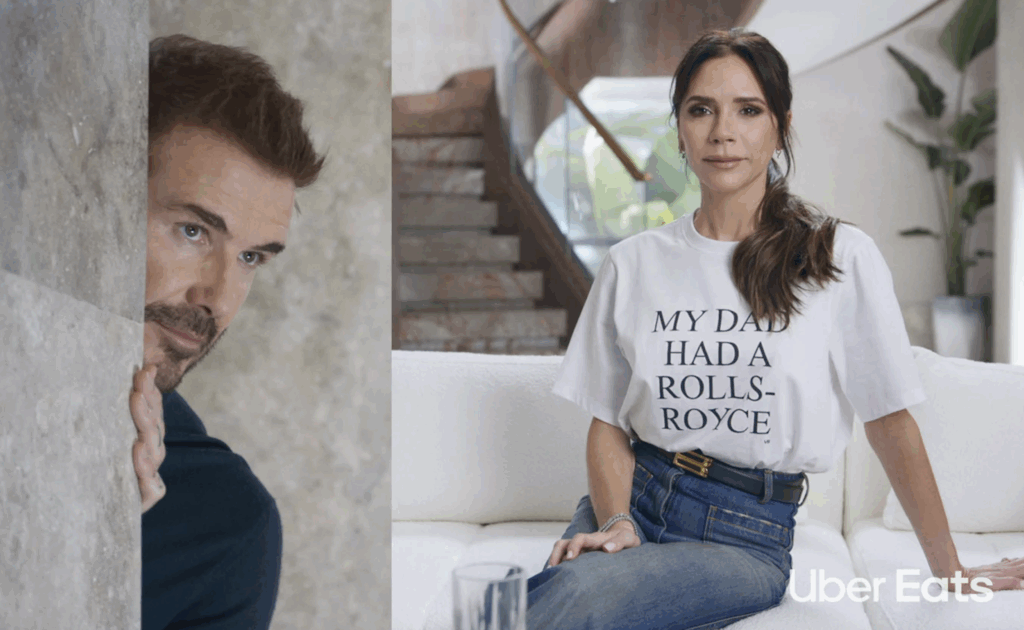
Together, they have leveraged their combined visibility for global ad campaigns and a Netflix documentary, reinforcing the Beckham name as a unified – and enduring – commercial asset.
As for what distinguishes the Beckhams from much of the crowded celebrity-brand landscape, branding executives suggest it is a combination of cultural self-awareness and operational discipline that has translated into unusual brand longevity. From a personality perspective, Mel Arrow, chief strategy officer at McCann London, says that “the real brand-building genius” behind Brand Beckham is their willingness to embrace the “personas” that they developed after being “mainstays of popular culture for so long.”
Commercially speaking, Matt Walters, a partner at New Commercial Arts, says that the Beckhams have parlayed their “separate personal narratives with their own interests and touchpoints” into a “house of brands,” with multiple commercial identities operating under a single-family umbrella.
An Arsenal of IP
Behind these operating businesses sits an extensive portfolio of word marks, logos, and brand extensions registered across multiple jurisdictions and product classes – reflecting a long-term strategy aimed at converting the Beckham name into defensible, licensable intellectual property. That portfolio predominantly consists of registrations tied to David and Victoria, but it also extends to trademarks filed in the names of each of their four children, Brooklyn included, across a wide range of goods and services.
It is not publicly clear why the Beckhams elected to register their children’s names as trademarks and how (or even if) those rights were intended to be deployed commercially. Nonetheless, the filings expand the family’s IP arsenal, could facilitate future licensing deals, and now appear to be the source of some of the tensions surfacing publicly.
THE BOTTOM LINE: Disputes over rights in an individual family member’s name – and how those marks function within a broader family brand – expose the potential governance, leverage, and value-allocation pressures in even in the most sophisticated celebrity enterprises.
Share