

A newly-filed lawsuit is pitting two skincare brands against one another over colorful bottles, minimalist branding, and competing interpretations of what consumers associate with a single source. In a complaint filed on May 18 in federal court in Texas, 1135 Skincare, LLC – which does business as Saint Crewe – is seeking a declaratory judgment that its packaging does not infringe the alleged trade dress of Bubble Beauty.
The complaint comes after Bubble allegedly sent Saint Crewe multiple cease-and-desist letters demanding that the smaller company halt sales, advertising, and promotion of several products, provide an accounting of revenues, and conduct a nationwide recall of products already on the market. Saint Crewe responded with a preemptive filing that seeks not only to defeat Bubble’s claims, but also to challenge whether Bubble possesses enforceable trade dress protections at all.
According to Saint Crewe, Bubble claims rights in the overall visual appearance of its skincare packaging, including brightly colored containers, contrasting caps, rounded bottle and jar shapes, and pared-back branding elements. Saint Crewe argues that Bubble’s packaging lacks the consistency and distinctiveness necessary for trade dress protection, pointing to significant variation in Bubble’s colors, shapes, and product presentations across its skincare lineup.
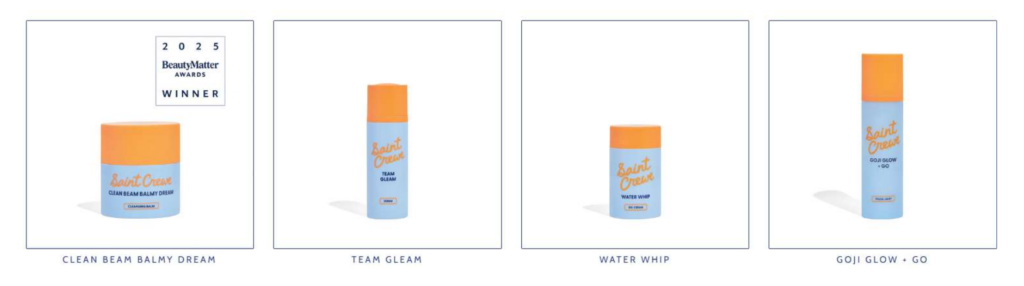
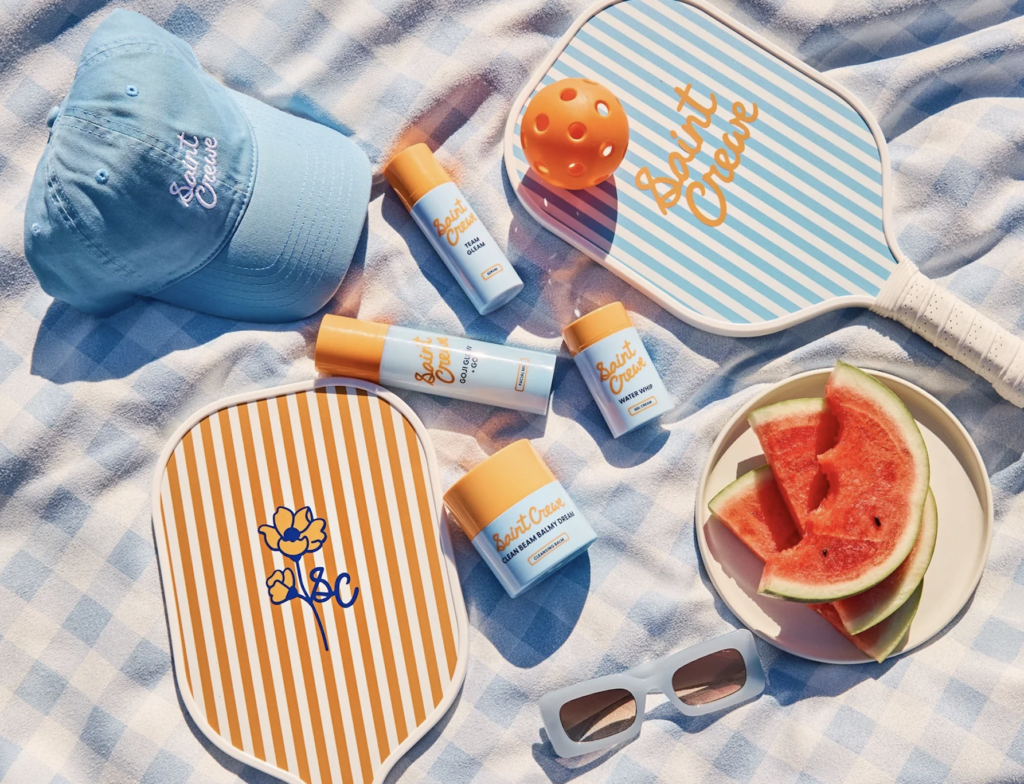
At the same time, Saint Crewe maintains that unlike its own products, which are “uniformly styled with the signature Saint Crewe script font, orange cap, and blue body,” Bubble’s products feature a “disjointed rendering” of the Bubble name and appear in a wide variety of colors.
Against that backdrop, Saint Crewe is asking the court to declare that there is no likelihood of confusion between the companies’ products, that Bubble’s alleged trade dress lacks the secondary meaning required for trademark protection, and that Saint Crewe’s packaging does not infringe any enforceable rights Bubble may hold.
Trade Dress in an Aesthetics-Driven Market
The case arrives at a moment when beauty companies have become increasingly dependent on the “look and feel” of their products as branding has shifted toward aesthetics-first consumer engagement. In an era shaped by TikTok, Sephora shelving, and algorithmic discovery, packaging itself has become a primary market signal – with pastel color-blocking, minimalist typography, rounded packaging, and pharmaceutical-inspired design cues functioning as shorthand for relevance and cultural fluency.
>> The complication is that many of those visual signifiers have become so widely adopted across the skincare market that establishing exclusive source association is difficult.
Historically, trade dress doctrine was designed to prevent competitors from copying packaging so distinctive that consumers would mistake one product for another. But in contemporary beauty markets, consumers may perceive many of these design elements less as source identifiers than as category signifiers – visual cues associated with “modern skincare” more broadly. That tension is especially acute in the context of unregistered trade dress, where plaintiffs must establish not only distinctiveness and non-functionality, but also that consumers associate the asserted elements with a single commercial source despite the widespread use of similar aesthetics throughout the category.
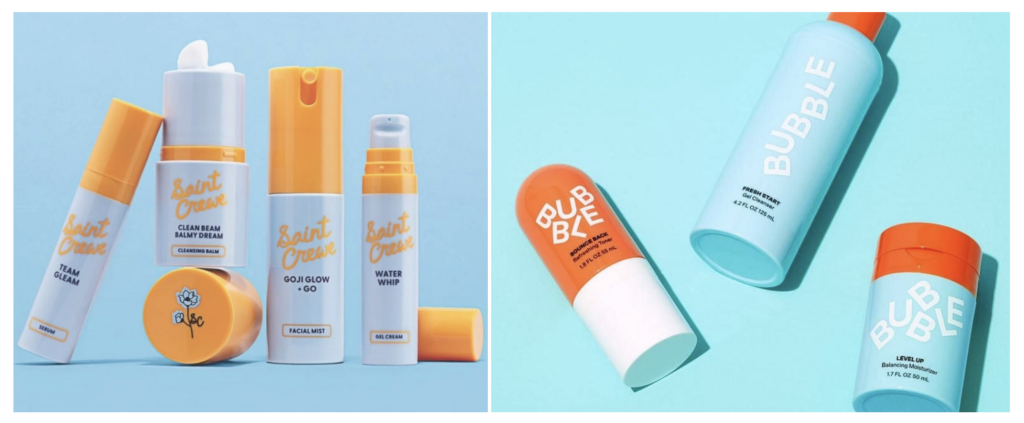
Saint Crewe’s complaint (and a number of recently-decided cases, including Apollo v. Sol de Janeiro) directly targets that issue. The company argues that Bubble’s alleged trade dress is too inconsistent and too reflective of broader skincare design conventions to warrant exclusive protection, pointing to variations in Bubble’s colors, shapes, and packaging configurations across product categories.
In crowded aesthetics-driven markets like beauty (and fashion/footwear), courts are often reluctant to grant expansive rights over design features that have become commercially ubiquitous within the category.
The dispute also reflects the strategic role trade dress claims play in highly saturated beauty markets, where packaging functions not merely as branding, but as a mechanism for shelf differentiation, algorithmic visibility, and consumer signaling. Even where such claims face significant hurdles – particularly in the context of unregistered trade dress, they can still meaningfully influence competitive behavior within highly image-conscious consumer industries.
Against that backdrop, disputes like this routinely extend beyond pure consumer confusion questions and into broader battles over who gets to claim exclusivity over the visual language of contemporary skincare.
The case is 1135 Skincare, LLC v. Bubble Beauty, Inc., 4:26-cv-00604 (N.D. Tex.).
Share