

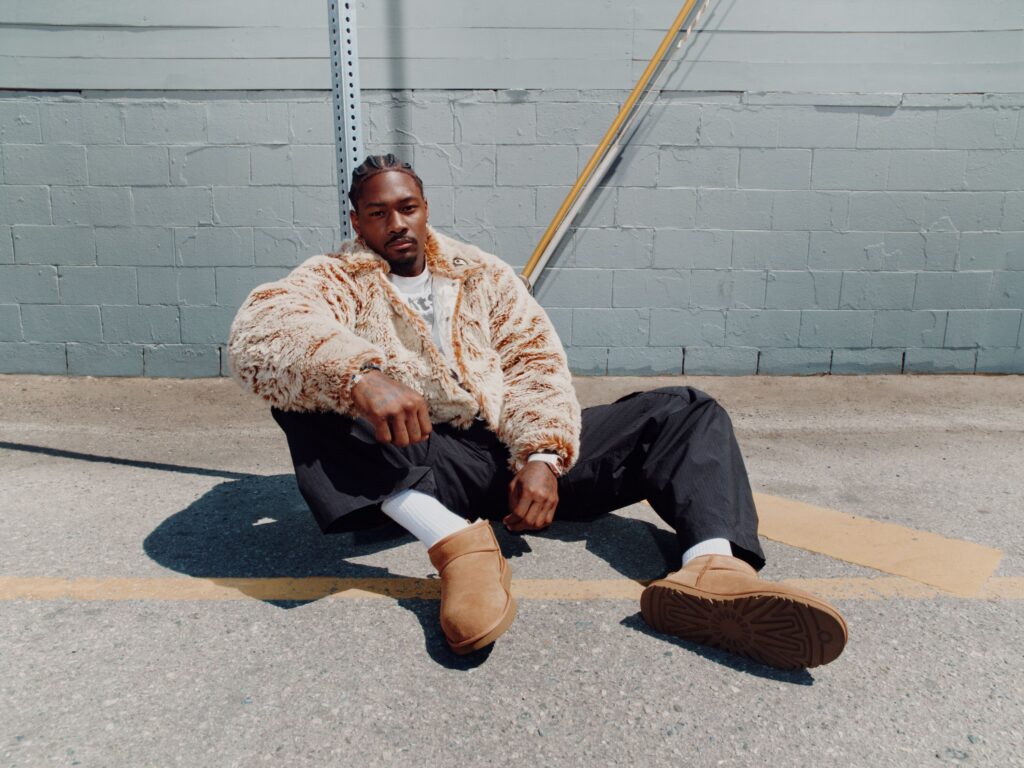
UGG’s efforts to claim exclusive rights in a couple of shearling-lined boot designs have been dealt a blow, as a court sided with Quince in a closely watched case over dupes. In a decision that underscores the limits of trademark law in protecting product design, a federal judge in California found that two of UGG’s best-known styles – the Classic Ultra Mini boot and the Tasman slipper – are generic and therefore, ineligible for trade dress protection. The ruling, as first reported by TFL, grants partial summary judgment in favor of Quince, a direct-to-consumer brand accused of copying the look of the popular UGG footwear.
The Background in Brief: UGG-owner Deckers Outdoor Corporation filed suit against Quince in June 2023, alleging that the buzzy apparel and lifestyle startup was offering up three shearling footwear products that infringed its unregistered trade dress rights and a design patent. At the center of the dupes-centric case are the UGG Classic Ultra Mini boot, Bailey Button boot, and Tasman slipper.
Quince responded with a motion for partial summary judgment, arguing, among other things, that Deckers’ claims for trade dress infringement of the Mini and Tasman trade dresses fail because those trade dresses are generic; the unfair competition claim based on the Mini and Tasman fails because there is no protectable trade dress; and the patent infringement claim fails because the asserted patent is invalid. According to Quince, which has made its name for selling affordable luxury dupes, the UGG design elements, such as ankle-high suede construction and exposed stitching, are common features of sheepskin footwear and cannot serve as a proprietary signature of the UGG brand.
In a motion of its own, Deckers sought summary judgment on its federal and state trade dress infringement claims.
When Signature Becomes Standard
Fast forward to October 2 and the U.S. District Court for the Northern District of California sided with Quince on both its and Deckers’ motions …
> Deckers’ motion: UGG’s owner argued that its trade dresses are nonfunctional, citing the availability of alternative designs, the absence of any advertising claiming functional advantages based on the products’ overall appearance, and the existence of supporting design patents. Quince countered with expert testimony that certain design features affect cost and performance and pointed to UGG’s own marketing highlighting comfort and durability.
The court held that “because a trade dress with either utilitarian or aesthetic functionality cannot be protected by trademark law, Deckers’s motion fails for the independent reason that it has not carried its burden of showing aesthetic nonfunctionality,” and denied summary judgment, leaving the issue of functionality for trial.
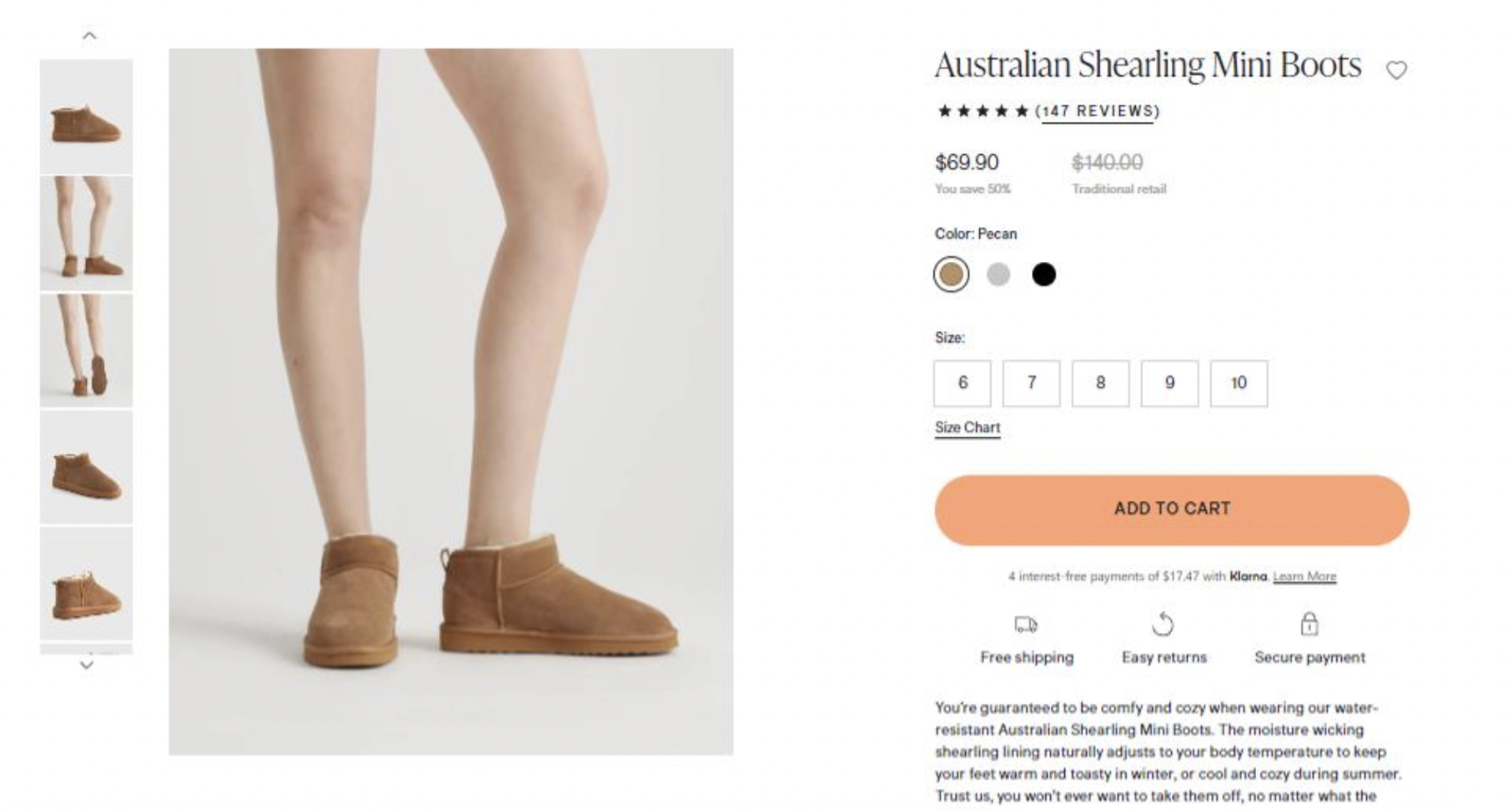
> Quince’s motion: The court sided with Quince on two of Deckers’ trade dress claims, determining that UGG’s designs are too commonly used in the marketplace to identify a single source. In her ruling, Judge Araceli Martínez-Olguín found that the design elements at issue – including the Mini’s “low ankle height, exposed sheepskin lining, and seam placements,” as well as the Tasman’s “moccasin and clog slipper silhouette and decorative collar stitching” – are not source-identifying. Instead, she held that they are “so common in the industry that [they] cannot be said to identify a particular source.”
Quince argued that the UGG Classic Ultra Mini and Tasman designs are “the basic form of a type of product,” pointing to at least 14 competitors offering similar ankle-height sheepskin boots and nine others selling comparable clog-style slippers. Its evidence – including screenshots submitted through the expert report of footwear designer Dennis Comeau – convinced the court that the Mini and Tasman trade dresses are generic.
Deckers attempted to counter by asserting that “not a single product closely resembling the UGG Classic Ultra Mini or the Tasman was being sold in commerce prior to their introduction,” but Judge Martínez-Olguín rejected that, noting that Deckers “has pointed to no authority … requiring that the competitor product must have been sold prior to its products.” She further held that Deckers “offered no authority requiring Quince to provide information as to where [the goods] were sold, in what quantity, and whether they are knockoffs.”
Ultimately, Judge Martínez-Olguín concluded that “Deckers has not carried its burden of proving non-genericness,” and that “Quince is entitled to summary judgment on its genericness defenses against the trade dress infringement claims.”
>> In short: Even long-term commercial success and consumer recognition cannot transform widely used product features into protectable trade dress.
Although Deckers lost its trade dress claims over the Mini and Tasman designs, the case continues in part. The court declined to find UGG’s design patent invalid and left intact its trade dress claim relating to the Bailey Button boot. Still, the decision limits the scope of what Deckers can assert going forward – and narrows the protective potential of trade dress law for widely-imitated apparel and footwear products beyond UGG’s offerings.
The Bottom Line for Brands
Judge Martínez-Olguín’s decision serves as a reminder that fashion brands cannot rely solely on trade dress – or the overall commercial look and feel of a product, including its design, shape, color, etc. – to fence off widely used design features. The ruling (even at the district court level) reinforces a broader truth: Not all distinctiveness is protectable. While brands may invest heavily in building association around a silhouette or design detail, trade dress protection remains limited – especially for elements that are functional, aesthetic, or widely adopted across the market.
In the general absence of copyright protection for apparel and relatively limited runway for design patents for the bulk of fashion designs, trade dress has become a go-to legal tool for protecting product appearance. But as this decision makes clear, claiming exclusivity over what courts view as baseline or ubiquitous design continues to be an uphill battle.
The case is Deckers Outdoor Corp. v. Last Brand, Inc., 3:23-cv-04850 (N.D. Cal.).
Share