

Nike secured yet another trademark win this spring, securing a victory before the Intellectual Property Office in Taiwan (“TIPO”). Siding with the Beaverton, Oregon-headquartered sportswear giant in its bid to block a mark that aimed to piggyback on the appeal of its world-famous Swoosh logo, the TIPO determined this spring that a Taiwanese trademark registration featuring a swoosh-inspired design for use on a wide array of apparel and footwear items – was likely to confuse consumers and ordered its cancellation.
The decision adds another win to Nike’s growing portfolio of successful oppositions; it also serves as a case study in the company’s broader global enforcement strategy, one that has made the swoosh one of the most heavily protected and closely monitored brand assets in the world.
The Nike-initiated trademark proceedings in Taiwan centered on a trademark filed by applicant Lien Shih-Wei in March 2024. The mark, which was registered by the TIPO in October 2024, consisted of a curved line reminiscent of Nike’s swoosh, with three small circular elements added at the curve. Nike filed its opposition in January 2025, citing Taiwan’s Trademark Act (Articles 30.1.10 and 30.1.11), which bars registrations that are confusingly similar to earlier marks, particularly where famous marks are concerned.
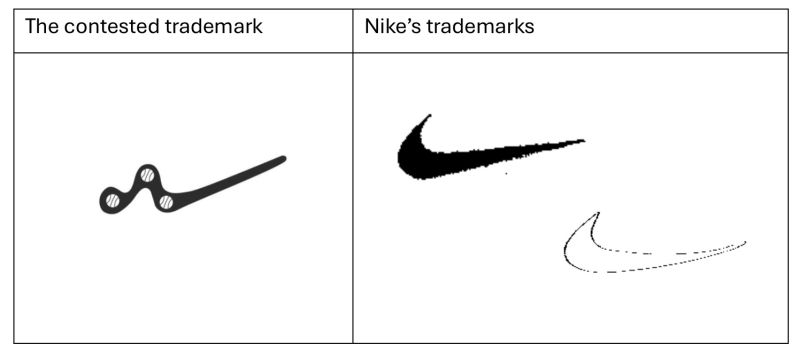
The TIPO ultimately agreed, holding that despite minor design modifications, the mark’s overall visual impression remained highly similar to Nike’s registered swoosh. Combined with the overlap in goods and Nike’s longstanding market presence, TIPO concluded that the mark was likely to confuse consumers and thus, cancellation of the registration was warranted.
This outcome closely follows Nike’s familiar approach: an aggressive opposition strategy, backed by a combination of longstanding registrations, extensive global use, and robust evidence of worldwide fame. The company has long made clear that it will move quickly to challenge any mark that threatens the distinctiveness and/or integrity of one of the most recognizable trademarks in the world.
Nike’s Global Enforcement Machine
Nike’s global trademark enforcement strategy is widely regarded as one of the most disciplined and far-reaching in the world. For a company whose brand value is estimated to be in the tens of billions of dollars, protecting the swoosh is not a routine matter of IP maintenance; it is central to preserving its dominance, licensing leverage, and long-term commercial strength.
At the heart of this strategy is tight control over the company’s core visual identity, regardless of jurisdiction. Nike maintains an extensive trademark portfolio across virtually every market where it operates, covering not only the swoosh and its various word marks – from Nike to Jordan – but also slogans (“Just Do It” immediately comes to mind), design variations, product configurations, and other brand identifiers. This vast network of registrations gives the company powerful tools to police new filings, fend off “copycat” branding, and maintain exclusive control over its most valuable assets.
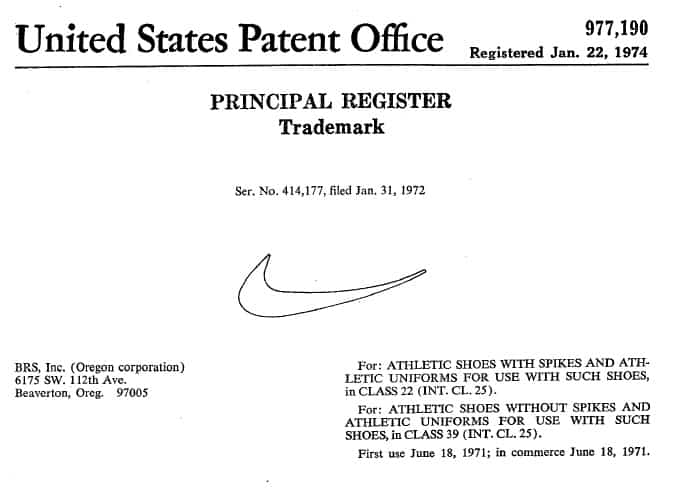
Nike backs these registrations with robust global monitoring. The company actively watches trademark offices worldwide, routinely filing oppositions or cancellation actions whenever potentially conflicting marks are published for registration. Whether filed by direct competitors, independent designers, or local businesses, filings that feature swoosh-like elements or similarly simple, curved motifs often find themselves in Nike’s crosshairs.
The Swoosh & Expanding Protection for Famous Marks
The Taiwan decision reflects a broader global trend: the increasingly expansive protection being afforded to famous marks, particularly in jurisdictions that are refining their IP enforcement regimes. While trademark law is fundamentally concerned with preventing consumer confusion, well-known marks are often protected against a wider range of risks. including dilution, association, and unfair advantage.
For globally recognized brands like Nike, enforcement does not depend on showing intent to copy or bad faith on the part of the applicant. Instead, trademark offices are largely focused on whether the average consumer is likely to perceive a commercial connection between the two marks, or whether the applicant’s mark could unfairly benefit from the reputation and magnetism of the established brand. In markets such as China, South Korea, the European Union, and Taiwan, authorities have increasingly shown a willingness to block applications that fall even near the outer edges of similarity. In these jurisdictions, the stronger and more famous the mark, the narrower the space left for new entrants to adopt branding that could evoke similar commercial impressions.

Nike’s victory in Taiwan is one more entry in what may be one of the most sophisticated and effective global trademark protection programs in the world. The swoosh is not just a design: it is a heavily monetized, highly protected commercial symbol that carries enormous brand equity. For Nike, allowing even marginally similar designs to survive registration risks weakening that equity and opening the door to long-term dilution of one of its most valuable assets.
In today’s IP landscape, where national trademark offices often favor famous marks and brands are able to monitor filings globally in real time, companies like Nike have effectively built global brand fortresses. Robust trademark portfolios – one viewed as limited to the IP ecosystem – have become critical enforcement tools for brand owners to exert influence over marketplace competition and safeguard the distinctiveness of their commercial identities.
As the Taiwan decision illustrates, the swoosh remains firmly protected – not only in its home market, but on every front.
Share