

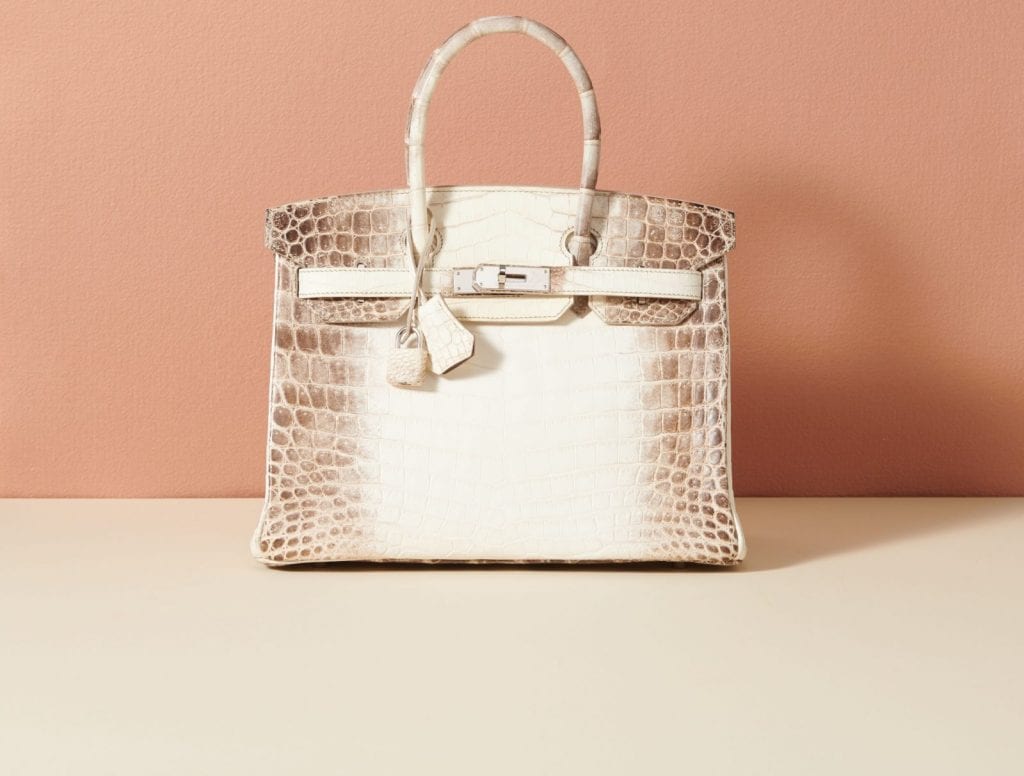
A high-end turf war may be taking shape in the market for pre-owned and access-based Hermès handbags. The launch of an invite-only rental offering by Vivrelle – designed to bring some of the most expensive and hardest-to-get bags to deep-pocketed consumers – is putting its expansion under the “Privée” name into focus, a move that may ruffle feathers – albeit not with the notoriously resale-averse Hermès, but with at least one fellow secondary market player.
Unveiled on April 30, Privée is Vivrelle’s “most exclusive tier” to date, comprising an invitation-only membership that offers access to high-end luxury accessories, including approximately 500 Hermès bags, alongside concierge-style services, in exchange for nearly $10,000 per year. The New York-based company – which is in expansion mode following a $62 million Series C round in June 2025 – has positioned Privée as a natural extension of its existing business model.
In announcing the launch, the company described the tier as one that will give members access to “one of the most prestigious multi-designer collections in the U.S.,” including Hermès Birkin and Kelly bags.
Brand Expansion Meets Trademark Territory
The new venture is not merely an operational expansion but one that is being positioned – and clearly branded – as distinct from Vivrelle’s core membership tiers, if new trademark filings are any indication. Coinciding with the launch are a pair of trademark applications, as first reported by TFL. Vivrelle filed applications with the U.S. Patent and Trademark Office on April 30 to register “Privée” and “Vivrelle Privée” for use in connection with “handbag rental; rental of jewelry and watches; rental of handbags, clutches and purses; [and] personal wardrobe styling,” claiming first use of the marks on April 29.
The establishment of Privée as an indicator of source in its own right is where the branding strategy gets particularly interesting. Vivrelle’s emphasis on its Hermès offerings and its name of choice place it closely in competition with Privé Porter, one of the most visible players in the Hermès-specific resale market.
Founded in 2008, Privé Porter is known for sourcing rare Hermès bags and delivering them to a global base of collectors and ultra-high-net-worth clients through a concierge-style model. (The company has also been known for police its marks, filing suit against a Net-A-Porter in 2014 over the latter’s use of “EIP Privé” for a members-only luxury offering. The case ultimately resulted in a confidential settlement, but Net-A-Porter’s subsequent removal of the “Privé” name from the widely publicized venture suggests that discontinuation of the branding was part of the resolution.)
That overlap is not just a matter of similar naming or goods/services, although those are the critical elements in any trademark dispute. It is notable because the lines separating the resale, rental, and concierge sourcing businesses are becoming increasingly difficult to define. What were once more distinct segments of the luxury market are beginning to converge as companies race to capture a new kind of consumer, one that prioritizes flexibility and access alongside ownership.
Inside Luxury’s Access Economy
Vivrelle’s expansion – and any pushback that may follow from the likes of Privé Porter – reflects the growing competitiveness within that evolving landscape, particularly as Hermès handbags continue to sit atop the ultra-luxury ecosystem.
With prices that routinely reach into the tens – and sometimes hundreds – of thousands of dollars, and a resale market that can outpace primary retail, Hermès‘ Birkin and Kelly bags function as both status symbols and to some extent, financial assets. That dynamic has made them uniquely suited to models that monetize access, whether through resale, short-term rental, or membership-based access. Vivrelle’s Privée offering reflects that evolution. By layering subscription access onto very-high-end inventory, it effectively transforms scarcity into a recurring service. But in doing so, it also places the company into more direct proximity with established players that have long defined the rules of secondary market access to Hermès’ most coveted products.
Against the background, the stakes extend beyond a single launch or name. This reflects a broader shift in the ultra-luxury market, where resale, rental, and concierge models are converging – and where the real competition is no longer just sourcing these coveted bags, but who can best package, monetize, and distribute access to them. As access becomes the core offering – whether through concierge sourcing or rental – competition is intensifying around how these services are branded and delivered.
Updated
May 30, 2026
Vivrelle “withdrew (e.g. abandoned) the [trademark] application[s]” at issue, according to USPTO records, and changed the name of its Privée venture to Réservé.
Share