

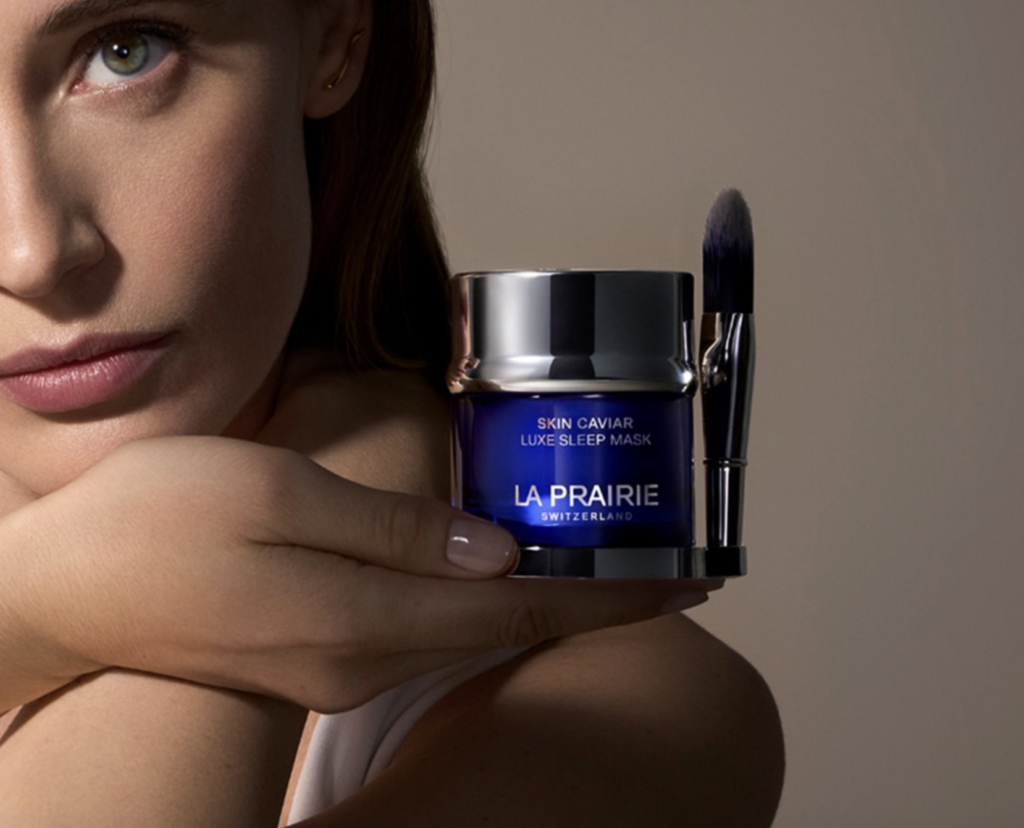
A federal court in New York has dismissed a lawsuit accusing La Prairie of misappropriating proprietary “caviar” biotechnology, ending a dispute tied to the development of its signature Skin Caviar products. In a newly-issued decision, the court granted motions to dismiss filed by Laboratoires La Prairie SA and its U.S. affiliate, La Prairie Inc. in the case waged against it by Caviar Biotec Ltd., a company that develops technologies for extracting and processing compounds derived from sturgeon roe for use in cosmetics and medical research.
The Background in Brief: Caviar Biotec sued La Prairie and its U.S. affiliate in 2025, alleging the luxury skincare brand misappropriated confidential research on the cosmetic uses of sturgeon roe. The dispute traces back to a 2020 disclosure of confidential trade secrets to cosmetics manufacturer Capsum, then a supplier to La Prairie. Caviar Biotec claims La Prairie obtained that information and used it to develop Skin Caviar products marketed with “Caviar Micro-Nutrients” and “Caviar Premier,” prompting it to assert trade secret misappropriation, unfair competition, unjust enrichment, and patent infringement claims.
Trade Secrets, Patents & Cross-Border Contracts
In a decision on March 3, 2026, Judge Loretta A. Preska of the U.S. District Court for the Southern District of New York sided with La Prairie, dismissing the lawsuit in its entirety. Delving into Caviar Biotec’s trade secret misappropriation claims, the court found that the complaint failed to plausibly allege that the London-headquartered company had taken reasonable measures to protect the secrecy of its purported trade secrets, including proprietary datasets, proteomics analyses, and other research relating to the biochemical composition and cosmetic applications of caviar.
Both the federal Defend Trade Secrets Act (“DTSA”) and New York trade secret law require plaintiffs to demonstrate that they implemented “reasonable measures to protect” the confidentiality of purported trade secrets. Here, the court found that Caviar Biotec’s allegations were largely conclusory. While the company asserted that it limited access to certain personnel and secured its electronic systems, the complaint did not identify specific protective measures or explain how the information was meaningfully safeguarded.
Critically, Judge Preska also held that the complaint failed to allege that a non-disclosure agreement (“NDA”) governed the initial disclosure of the information to cosmetics manufacturer Capsum, or that La Prairie itself was bound by confidentiality obligations at the time the materials were shared with it. Without sufficiently detailed allegations demonstrating that reasonable steps were taken to preserve secrecy, the court concluded that the trade secret claims could not proceed.
An NDA did govern later discussions – and the sharing of additional confidential information – between Caviar Biotec and La Prairie, namely about a potential partnership. However, the court did not reach the merits of the claims tied to those later disclosures, as the agreement included a forum selection clause providing that disputes arising from the NDA would be governed by Swiss law and litigated in courts at La Prairie’s domicile, and Judge Preska dismissed the claims under the doctrine of forum non conveniens.
On the patent front, the court dismissed Caviar Biotec’s infringement claim relating to a utility patent that covers a method of producing oil derived from the membrane of sturgeon roe sacks after separating the membrane from the roe. Caviar Biotec alleged that La Prairie’s “Skin Caviar Nighttime Oil” products infringed the patent because they contained “caviar-derived retinol” originating from sturgeon roe.
Judge Preska rejected that theory, finding that the complaint failed to plausibly allege that La Prairie practiced the specific extraction method described in the patent. The court noted that the complaint’s own allegations suggested that the accused products used ingredients derived from sturgeon roe eggs rather than from the roe sack membrane covered by the patent claims. Because the allegations did not plausibly match the patented method, the court dismissed the patent claim with prejudice.
THE BIGGER PICTURE: The decision highlights the enduring role of biotechnology and proprietary ingredient research in the luxury beauty sector, where brands increasingly rely on patented extraction processes and specialized ingredient technologies. These innovations often depend on collaborations with ingredient suppliers, research labs, and biotechnology companies – relationships that can give rise to disputes when partnerships break down.
Judge Preska’s ruling highlights several lessons for companies operating in this space: forum selection clauses can determine where cross-border IP disputes must be litigated; trade secret claims require detailed allegations of concrete confidentiality safeguards; and patent infringement claims must closely align the accused product with the specific method claimed in the patent. And absent clear contractual protections and well-defined confidentiality practices, disputes over innovation may prove difficult to sustain in court.
The case is Caviar Biotec Ltd. v. La Prairie, Inc., et al., 1:25-cv-1707 (S.D.N.Y.).
Share