

After this article was originally published, Novo Nordisk voluntarily dismissed its patent lawsuit against Hims & Hers without prejudice. The dismissal followed a newly announced “collaboration between the companies.” Under the agreement, Hims & Hers will begin offering Novo Nordisk’s FDA-approved GLP-1 medications – including Ozempic and Wegovy – on its telehealth platform later this month. The company said in a statement that will no longer advertise compounded GLP-1 offerings on its platform or in its marketing, and existing patients will have the opportunity to transition to FDA-approved medicines when determined clinically appropriate by their providers.
Feb. 26, 2026: When Novo Nordisk filed suit against Hims & Hers in early February, the case immediately drew attention as a high-stakes patent fight over semaglutide and what it could mean for the broader multi-billion-dollar market for GLP-1 treatments. In its headline-making complaint, Novo alleges that Hims’ compounded weight-loss products infringe one of its U.S. utility patents, which covers the semaglutide compound in Novo’s Ozempic, Wegovy, and Rybelsus drugs.
At first glance, the dispute looks like a straightforward patent enforcement action. But a more recently filed consumer class action adds a parallel set of allegations to the litigation landscape, reframing the conflict as one that spans patent law, FDA regulation, pharmaceutical manufacturing, and brand positioning in a market that is both commercially dominant and culturally ubiquitous.
Taken together, the lawsuits reveal how complex – and consequential – the modern GLP-1 market has become.
Novo Nordisk v. Hims & Hers
Filed in the U.S. District Court for the District of Delaware on February 9, Novo’s lawsuit against NYSE-traded Hims & Hers Health, Inc. centers on Novo’s U.S. Patent No. 8,129,343, which covers the semaglutide compound itself, pharmaceutical compositions containing it, and methods of treatment using those compositions. Novo alleges that Hims is marketing and selling compounded semaglutide injections and oral products containing its patent-protected molecule without authorization.
Shortly before Novo filed suit, Hims announced a $49 compounded oral semaglutide pill as an alternative to Novo’s newly launched oral Wegovy, which carries a starting price of $149 per month. It withdrew the pill within days after Novo objected and federal regulators warned that certain compounded semaglutide products could be unlawful.
In a February 9 press release announcing its lawsuit, Novo cited the short-lived pill as an example of what it described as unlawful mass compounding that infringed the ’343 patent. In its suit, the Danish pharmaceutical giant further maintains that it does not supply its semaglutide active pharmaceutical ingredient to compounders and that no generic version has received FDA approval. So, if Hims’ products contain semaglutide as claimed in the ’343 patent, Novo argues, they are infringing its rights.
Hims said in a statement that the lawsuit is “a blatant attack by a Danish company on millions of Americans who rely on compounded medications for access to personalized care” and is another case of Big Pharma “weaponizing the US judicial system to limit consumer choice.“
But that is only one dimension of the dispute.
A Second Lawsuit Complicates the Narrative
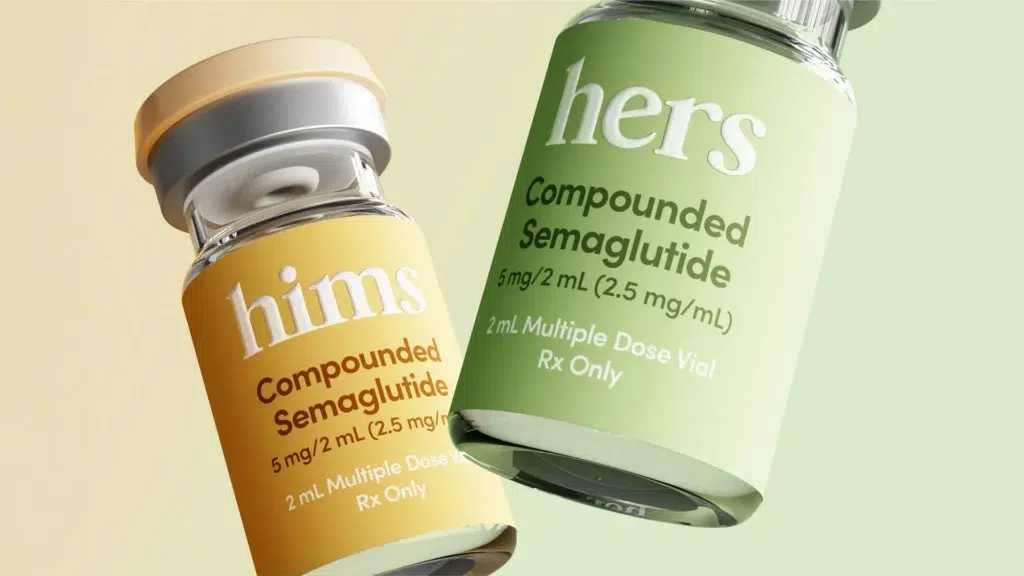
In the wake of Novo filing suit against Hims, consumer plaintiffs Andrew Donoho and Gloria Ferguson brought a separate case in an Illinois federal court alleging that Hims has misled purchasers by advertising its “compounded semaglutide” as having “the same active ingredient as Ozempic and Wegovy.” Unlike Novo’s patent case, the Illinois complaint does not hinge on whether Hims’ product contains semaglutide. Instead, it asks whether marketing the compounded drug as having the “same active ingredient” as Ozempic and Wegovy overstates the similarity between them.
Donoho and Ferguson argue that Hims’ pattern of describing the compounded product as having the “same active ingredient” as Novo’s drugs is misleading because, although both products contain semaglutide, Hims’ synthetic manufacturing process allegedly produces a materially different active ingredient with additional peptide impurities, rendering the “same active ingredient” claim false and misleading.
With that in mind, Donoho and Ferguson’s case – which primarily sets out claims under Illinois’ Consumer Fraud and Deceptive Trade Practices Act – focuses on how Hims presents its compounded product to consumers, whereas Novo’s lawsuit centers on whether that product contains the patented molecule at all.
Where the Cases Converge
Viewed together, the two lawsuits expose an interesting tension. Novo alleges that because Hims’ compounded products contain semaglutide claimed in the ’343 patent, their sale infringes its patent rights. The Illinois plaintiffs, by contrast, argue that Hims’ products are different enough that describing them as having the “same active ingredient” misleads consumers.
That paradox – similarity for purposes of infringement, difference for purposes of advertising – sits at the center of the dispute. A product can, in theory, be sufficiently aligned with a patented compound to trigger liability, yet sufficiently distinct in formulation or regulatory status that claims of equivalence invite scrutiny. The GLP-1 market brings those two propositions into particularly sharp tension.
The cases also make clear that what is being protected – and potentially infringed – here goes beyond pure chemistry. Novo’s complaint is framed as a patent action, but it also reinforces the regulatory pedigree and position of Ozempic and Wegovy, brands that now carry enormous commercial weight. The Illinois plaintiffs’ theory similarly turns on the power of those names, alleging that repeated references to them help align Hims’ compounded offerings with Novo’s FDA-approved drugs.
Novo’s lawsuit also fits within a broader pattern of enforcement. The company has filed a growing list of trademark actions against parties that use its trademarks, “Ozempic” included, to describe compounded products not made by Novo, arguing that such references risk confusing consumers and blurring the distinction between FDA-approved drugs and compounded alternatives. Those actions underscore that Novo is not only protecting a molecule, but policing how its brand names are used in the marketplace.
In that sense, the cases are not only about control of a patented molecule, but about how closely a newer entrant can position its product alongside a blockbuster drug without triggering legal exposure.
THE BOTTOM LINE: The Delaware patent case could determine how aggressively branded pharmaceutical companies can enforce compound patents against telehealth-driven compounded products marketed at scale. The Illinois class action, meanwhile, may clarify the limits of comparative drug advertising in an era when prescription brands function as shorthand for safety, efficacy, and regulatory approval.
As demand for GLP-1 treatments continues to climb, the outcome of these cases may influence both patent enforcement strategy and the marketing playbook for compounded drug sellers.
Updated
This article was originally published on February 26, 2026, and has been updated to reflect Novo Nordisk’s voluntary dismissal of “all claims asserted” in its case against Hims & Hers without prejudice.
Share