


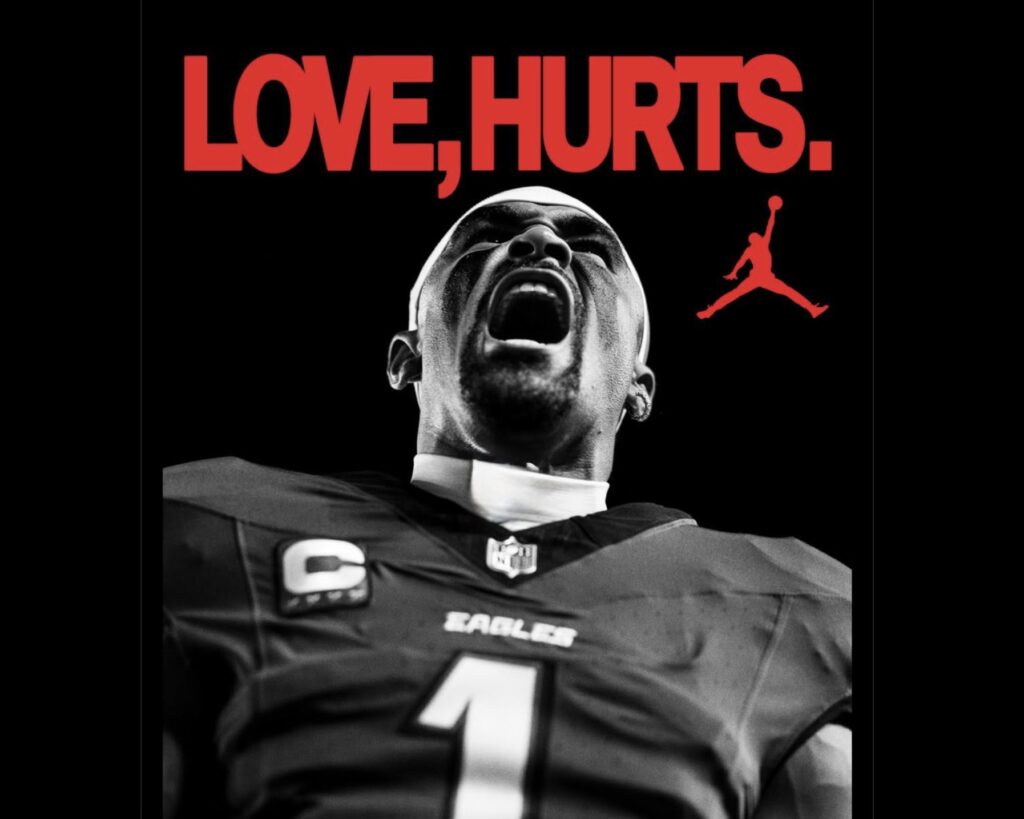
What began as a social-media dustup between a sportswear giant and an indie label has now reached federal court. Nike and Converse filed suit on Friday, asking a New York judge to declare that their “Love, Chuck” and “Love, Hurts” campaigns do not infringe any rights claimed by Love, Kelly Holdings LLC. The filing follows months of accusations from the Vermont-based brand, which alleges that the companies co-opted its “Love, Kelly” and “Dear Love” branding.
In their November 14 complaint, Nike and Converse frame the matter as a straightforward trademark dispute rooted in common words, limited commercial use, and no likelihood of confusion. Love, Kelly, for its part, has challenged the brands’ use of “Dear ___,” and “Love, ___,” demanded the campaigns be pulled, and taken to social media to accuse the companies of “stealing” its “proprietary branding concepts.”
Two High-Profile Campaigns
The conflict centers on two major 2025 campaigns. Converse’s “Love, Chuck,” launched in February, framed ads as love-letter exchanges tied to Chuck Taylor—a concept Nike says grew out of earlier internal “love letter” work. Around the same time, Jordan Brand’s “Love, Hurts.” rolled out after Jalen Hurts’ Super Bowl LIX MVP win, drawing on Philadelphia’s “City of Brotherly Love” identity.
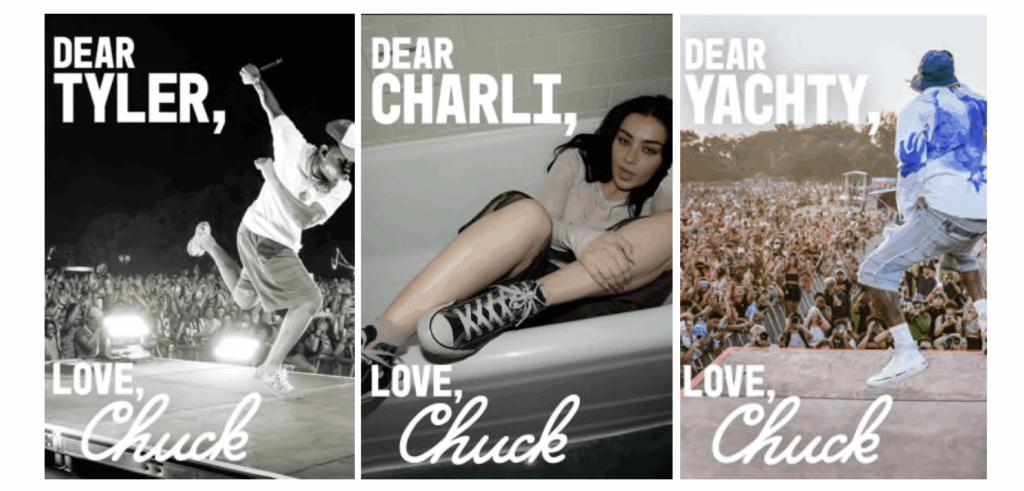
Shortly after these launches, Love, Kelly’s founder accused Converse – and later Nike – of copying the brand. The company filed trademark applications for “LOVE, KELLY” and “DEAR LOVE” in August, and issued a demand letter objecting to Nike’s and Converse’s use of the “Dear ___,” and “Love, ___,” marks, and demanding that Nike and Converse “cease their marketing campaigns and pay [it] vast sums of money.”
A Lack of Legal Foundation
Instead of pausing the campaigns and paying, Nike argues that Love, Kelly’s case is without merit, putting forth the following claims about why Love, Kelly cannot block it – or anyone – from using “Dear” or “Love” in ordinary, letter-style forms …
> The terms are common wording, not source identifiers. Nike and Converse argue that “Dear ___” and “Love, ___” cannot operate as trademarks because they are ordinary, generic components of written communication used to identify a sender and recipient, not a commercial source. Nike and Converse also point to Love, Kelly’s own social-media commentary to show the lack of distinctiveness. In particular, they point to a since-edited post where Love, Kelly’s founder said the brand had started a “love letter branding trend.” Nike characterizes this as an admission that the phrases function as thematic concepts, not trademarks, undermining any infringement theory.

> Love, Kelly’s commercial use is minimal. Nike claims that Love, Kelly has only made limited and inconsistent use of the “LOVE and “DEAR” phrases, citing minimal sales, short periods of use, and a lack of significant advertising. The Swoosh also highlights the inconsistent presentation of the alleged branding by Love, Kelly, appearing in different fonts and styles across events and products, which it argues prevents the phrases from acting as source identifiers.
> The marketplace is saturated with similar “Dear” and “Love” uses. According to Nike, even robust use would not give Love, Kelly exclusive rights because the market is saturated with “LOVE-” and “DEAR-” formative marks. Nike and Converse point to thousands of similar uses, as well as Nike’s own 2020 “Dear World” / “Love, Football” campaign, as evidence that love-letter-style constructions are widely used. Love, Kelly “operates in a crowded field,” it claims, “and its conceptually weak marks fail to act as source identifiers for its business.”
> Lack of confusion. Finally, Nike argues that even if Love, Kelly had rights in “LOVE” and “DEAR”-formative terms, the way the parties actually use the words – via different visuals, products, scale, meaning, etc. – makes consumer confusion implausible. As for actual confusion, Nike and Converse say that they “are not aware of any” since the campaigns launched in February, and in fact, the only reactions they have seen are comments generated “in an apparent reaction to [Love, Kelly’s] accusatory social media posts and call to action to his followers.”
Nike points to Love, Kelly’s social-media calls for followers to accuse Nike of “theft,” which triggered a wave of “trolling” on Nike’s accounts. Comments like “justice for love, Kelly” and “this is stolen,” the company says, reflect orchestrated harassment, not marketplace confusion. Yet Love, Kelly’s demand letter “incredibly” characterizes these posts as evidence of confusion, Nike says.

The lack of confusion is due to several factors, Nike claims: the parties’ uses of “Dear ___,” and “Love, ___” are “distinctly dissimilar when viewed as they appear in the marketplace,” the companies offer different goods and services, and Nike acted without bad faith. Love, Kelly’s suggestion that a brief 2024 fashion-show collaboration between Love, Kelly and a small Converse Entertainment Marketing team morphed into “a company-wide scheme to steal [Love, Kelly’s] brand,” Nike says, is “unfounded and incorrect.”
Against that backdrop, Nike and Converse want the court to declare that their use of “Dear ___,” and “Love, ___” is lawful, that the “Love, Chuck” and “Love, Hurts” campaigns do not infringe any rights that Love, Kelly may have, and that Love, Kelly does not possess enforceable common-law trademark rights in “Love, Kelly” or “Dear Love.” Nike also seeks to shut down the threat of ongoing disruption. The complaint highlights the continued social-media accusations and legal demands create a “live controversy” that makes a declaratory judgment necessary.
THE BOTTOM LINE: Nike and Converse frame the dispute as one about the limits of trademark law in the face of common language and shared creative themes. In their view, “Dear” and “Love” are everyday words that no single brand can monopolize, especially when used inconsistently and on a small scale. Paired with the absence of consumer confusion and the crowded field of similar phrasing, the companies say the law simply does not support Love, Kelly’s claims.
The case, they argue, is less about copying and more about drawing a clear boundary between protectable trademarks and the broader creative vocabulary that remains open to all.
The case is Nike Inc. et al. v. Love, Kelly Holdings LLC, 1:25-cv-09516 (S.D.N.Y.).
Share