

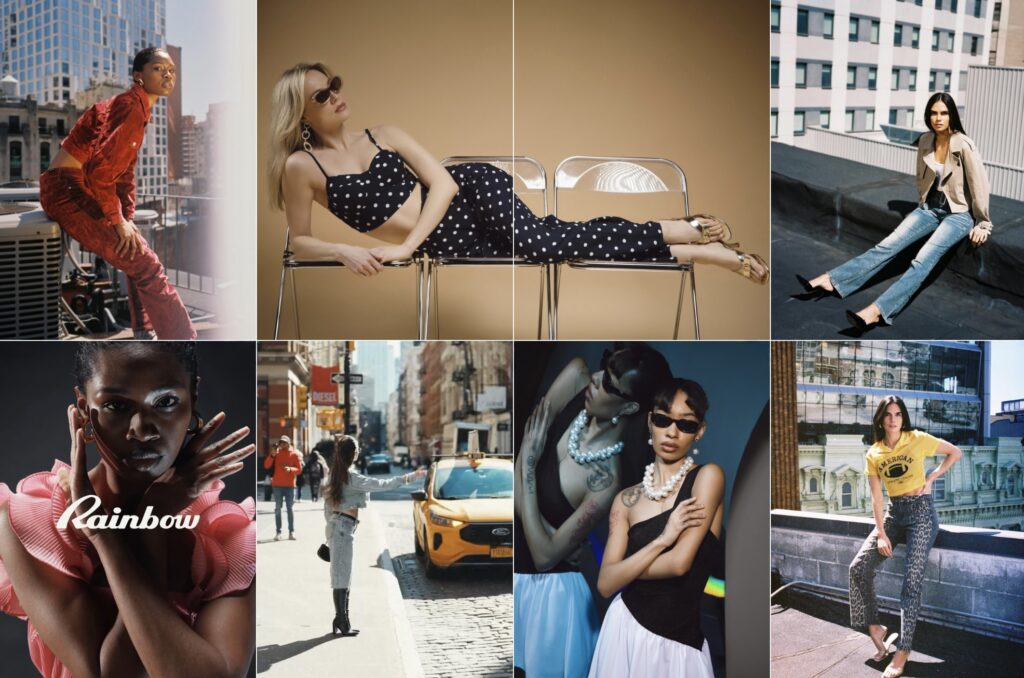
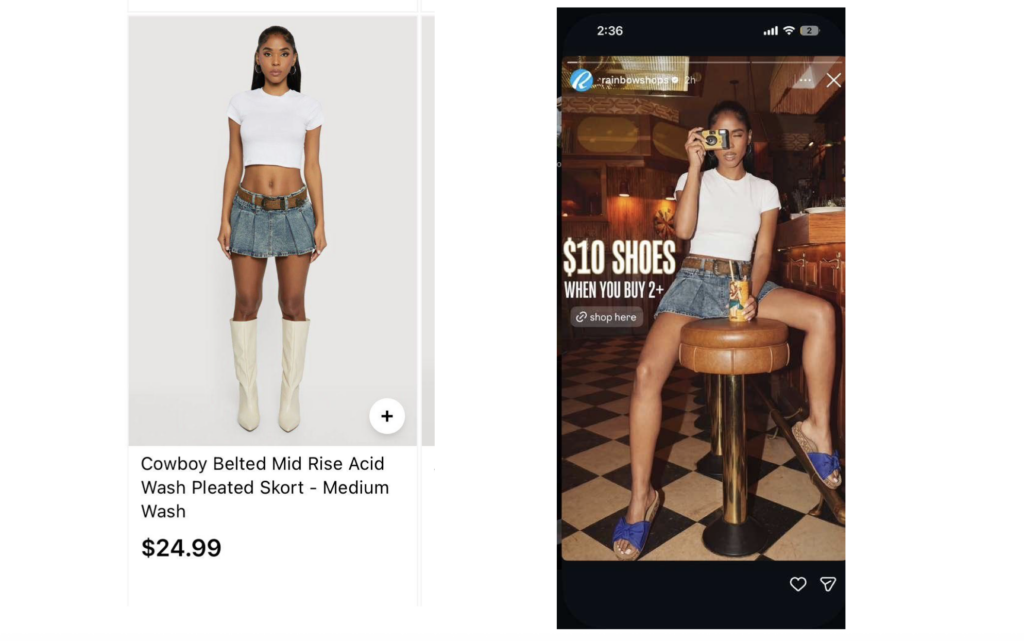
Rainbow USA is urging a New York state court to dismiss a model’s lawsuit over AI-generated ad images, arguing that the parties’ contract grants it the right to alter, transform, and composite her likeness for advertising purposes. The case stems from model Francheska Pujols’ claim that Rainbow used artificial intelligence to create new images depicting her in poses, settings, and compositions that were not part of the original photoshoot – and that she never authorized.
The Background in Brief: Pujols filed suit in New York state court in June 2026, accusing Rainbow of exceeding the scope of their September 2024 modeling release by using AI to create altered versions of the original photographs she posed for and approved. According to Pujols’ complaint, the agreement permitted Rainbow to make certain modifications to existing photographs, but it did not authorize the creation of entirely new AI-generated depictions of her. She alleges that Rainbow, nonetheless, used AI to create images that retained her recognizable likeness but digitally altered features, such as her hair, clothing, body positioning, backgrounds, poses, and visual compositions.
On July 16, the court denied Pujols’ motion for a preliminary injunction, declining to immediately bar Rainbow from using the challenged images while the litigation proceeds.
An Old Contract Meets New Tech
In a memo filed on July 8, Rainbow frames the case as turning less on AI than on the terms of the parties’ existing contract. Rainbow asserts that the parties’ 2024 Freelance Model Waiver/Release/Indemnification Agreement grants it the right to broadly use Pujols’ images “whether intact or in part, composite or distorted in character or form, cropped or altered, without restriction as to changes or transformations.” It also permits Rainbow to use the images in composite works, waives the model’s right to inspect or approve finished advertising, and releases the company from liability arising from “blurring, distortion, alteration, optical illusion, or use in composite form,” the company claims.
Taken together, Rainbow argues, those provisions give it broad creative discretion over the finished imagery and imposes no contractual limits on the technologies it can use to alter the images. As the retailer puts it, the agreement “does not prohibit or restrict the defendant from using any technology, whether it be photoshop, AI or any other technological enhancements.”
As such, Rainbow maintains that the dispute turns on the scope of the parties’ contract – not the novelty of the technology.
Existing Law, Not New AI Rules
Perhaps the most notable aspect of Rainbow’s filing is that it treats AI as secondary to the terms of the parties’ contract. Although the lawsuit raises some potentially novel questions about the use of generative AI, Rainbow does not frame the dispute as requiring a novel legal analysis. Here, Rainbow argues that ordinary principles of contract interpretation already provide the answer. Instead, it relies on decades of New York contract and right-of-publicity precedent to argue that courts have long enforced model releases according to their plain language.
The retailer maintains that the same principles apply here because the rights granted under the parties’ agreement encompass the challenged uses. On that basis, it contends that Pujols’ claims under New York Civil Rights Law §§ 50-51, the Lanham Act, and related state-law theories should be dismissed.
THE BIGGER PICTURE: Rainbow’s filing offers an early example of how brands may defend AI-related advertising claims by relying on existing contractual language. Together with the case that model Molly Tranchin recently filed, which centers on whether lingerie-maker EBY exceeded the scope of their agreement by using AI to alter an influencer’s content, it suggests that some of the earliest AI advertising disputes may turn less on the novelty of generative AI than on a more familiar question: what rights did the parties’ contracts actually grant?
The case is Pujols v. Rainbow Shops, Inc., 157543-2026 (N.Y. Sup.).
Share