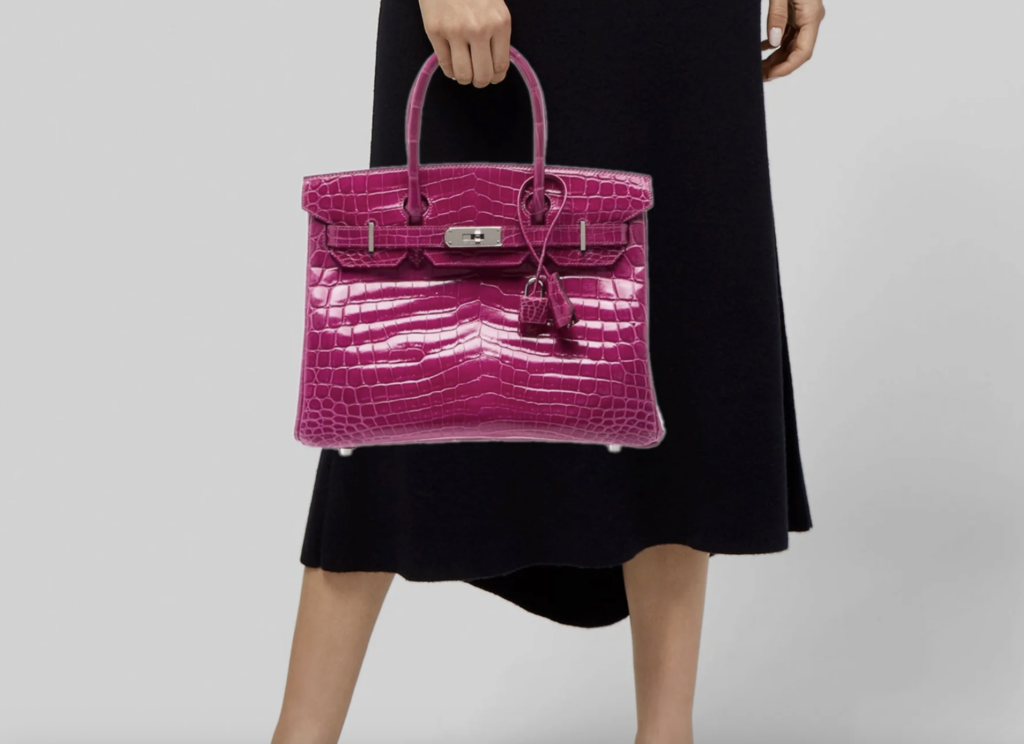



A UK High Court has ordered an influencer and her company to pay £213,000 to LVMH and four of its brands after finding they sold counterfeit luxury goods. The damages award follows claims by Fendi, Loewe, Christian Dior, Celine, and LVMH that Georgia Aldridge operated an online business selling counterfeit luxury products sourced, at least in part, through AliExpress. In assessing damages, the court considered evidence that at least some of those products were not ordinary knockoffs, but higher-quality counterfeits – or “superfakes.”
The ruling stems from a trademark case that LVMH and its brands filed against Aldridge and her company, Rolo Fashion Ltd., and follows a default judgment entered by the court last year establishing that Aldridge infringed the companies’ trademarks by selling counterfeit luxury goods.
Not All Counterfeits Are the Same
In an order this month, the court determined the damages stemming from its earlier infringement ruling. Because liability had already been established, the court’s task was not to determine whether infringement occurred, but how the brands’ damages should be measured. In doing so, the court considered evidence distinguishing between higher- and lower-quality counterfeits, rejected the brands’ allegations of reputational harm, and declined to assume that every counterfeit transaction displaced the sale of an authentic luxury product.
One of the key issues in the court’s damages analysis was whether the quality of the counterfeit goods at play affected the nature of the brands’ losses. Nicolas Lambert, LVMH’s head of online brand protection, testified that counterfeit goods range from low-quality fakes to higher-quality products known within online communities as “superfakes,” “dupes,” “1 to 1” and “mirror quality.” The distinction was central to the LVMH-owned brands’ argument that higher-quality fakes were more likely to displace genuine sales than inexpensive knockoffs.
According to Lambert, the higher prices and greater attention to detail associated with those products made consumers more likely to mistake them for genuine luxury goods. The brands argued that those sales displaced purchases of authentic products, as opposed to merely “feeding a distinct market” for counterfeit goods.
Rather than focusing on what the products were called, the court considered whether differences in the quality of counterfeit goods affected the nature and extent of the brands’ alleged losses. It accepted the brands’ argument in part that some counterfeit transactions displaced genuine purchases while others did not. The court agreed that the brands had suffered lost sales; the dispute was how many counterfeit transactions actually displaced purchases of authentic goods.
Judge Richard Hacon estimated that approximately 713 sales by Aldridge resulted in lost sales of genuine products, awarding roughly £200,000 in lost profits. The court did not accept that every counterfeit sale represented a lost sale of an authentic product. On the other hand, he found that 4,039 additional transactions did not deprive the brands of corresponding sales and instead warranted a further £13,000 based on a hypothetical licensing fee.
Reputational Harm
The brands also sought damages for reputational harm, arguing that Aldridge’s sales diminished the value of their trademarks. But the court was unpersuaded. Judge Hacon found no evidence that purchasers believed the counterfeit goods originated with the brands, had been authorized by them, or otherwise reflected the quality of their genuine products. Instead, he concluded that buyers were more likely to understand that they were purchasing counterfeit products from unauthorized sellers operating without the brands’ approval.
Because consumers understood they were purchasing counterfeit goods, the court found no basis to conclude that they attributed the quality of the products – or Aldridge’s conduct – to the brands. As such, the court rejected the brands’ reputational harm theory as speculative and unsupported by the evidence.
The decision does not foreclose reputational damages in future counterfeiting cases. It does, however, make clear that reputational injury will not necessarily be presumed simply because trademark infringement has occurred. Even in a counterfeiting case, brands must show how the challenged sales actually altered consumer perceptions or otherwise damaged the goodwill associated with their marks.
THE BIGGER PICTURE: The case ultimately provides a look at how today’s counterfeit market has evolved. The products at issue were sourced, at least in part, through AliExpress, sold through Instagram and a dedicated WhatsApp group, and dropshipped. At the same time, the damages evidence presented by LVMH reflected a marketplace in which counterfeit sellers use terms like “superfakes” to distinguish higher-end replicas from ordinary knockoffs.
While the decision is an enforcement victory for LVMH and its brands, it also makes clear that proving trademark infringement does not automatically establish every category of economic harm. Even after liability had been established, the court required evidence tying lost profits, lost licensing income, and reputational harm to the defendants’ conduct.
The case is Fendi Italia SRL v. Rolo Fashion Ltd., [2026] EWHC (IPEC) 1703 (Eng.).
Share