

Hermès continues to hold its place at the pinnacle of luxury, delivering industry-leading margins, outpacing peers in top-line growth, and commanding some of the most devoted clientele in global retail. Yet, even amid consistently strong financial performances, a quiet but growing debate is unfolding around the sustainability of the Hermès business model – particularly its heavy reliance on a few iconic products and its increasing technological lag relative to peers.
With luxury spending softening in key regions and digital transformation reshaping how brands engage with consumers, Hermès’ enduring success now raises a new kind of question: How does a model built on scarcity, control, and legacy craftsmanship – and anchored so heavily in a few iconic leather goods – fit into a market that rewards agility, data fluency, and category breadth?
The Leather Core: A Source of Power and Risk
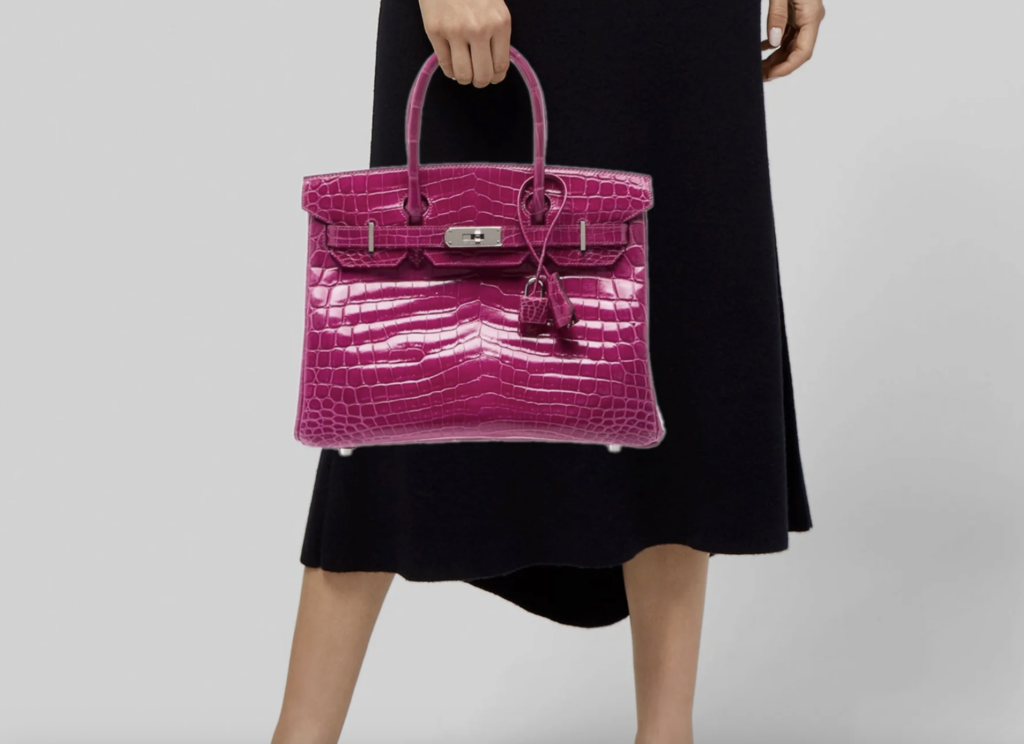
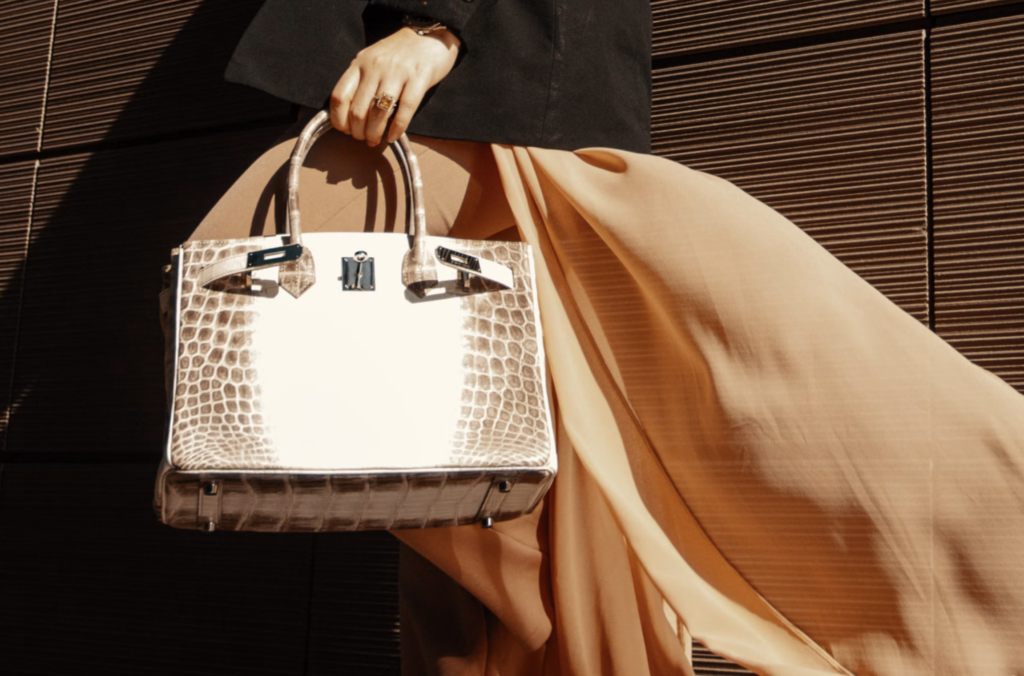
Few products have done more to shape the modern luxury economy – and a single company’s revenue stream – than the Birkin. Introduced in 1985, the Birkin has become both a status symbol and an economic engine, anchoring what is now a multi-billion-euro business built largely around leather goods. But this concentration may increasingly represent a structural vulnerability.
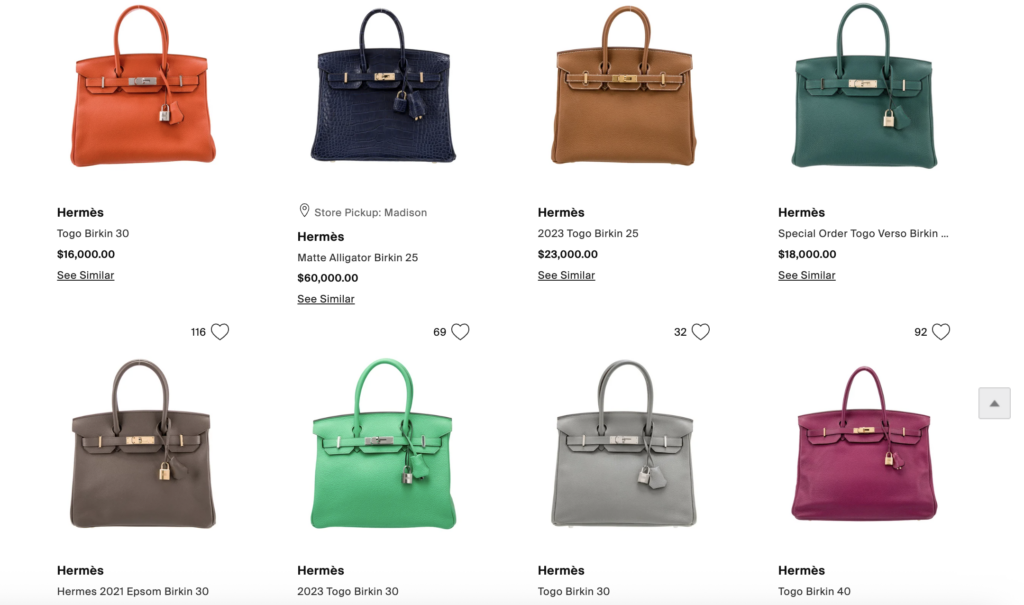
With a well-oiled Birkin-centric model that has served Hermès so well for decades, it is worth wondering how long Hermès can maintain it. The question is not rhetorical. Analysts and enthusiasts alike have noted that the aura of exclusivity surrounding Birkins – along with Kelly and Constance bags – is being challenged by a changing luxury ecosystem. Social media, robust resale platforms, and rental services have dramatically expanded the visibility and circulation of bags that were once nearly impossible to access.
At the same time, average resale premiums for Hermès bags have fallen significantly since their peak in 2017, according to Bernstein Research, suggesting a weakening in their secondary-market mystique.
Adding to the complexity, Hermès reportedly requires clients to build a significant history of purchases in non-handbag categories in order to access its most coveted leather goods. This gatekeeping strategy has historically driven revenue across the business and incentivized spending in its ready-to-wear, jewelry, beauty, and homewares categories. The roughly 150,000 Birkin and Kelly purses that Hermès produces annually now account for approximately 25 percent of total company sales, per Bernstein estimates.
But as Hermès Birkin, Kelly, and Constance bags become increasingly ubiquitous, the scarcity that underpins their symbolic value risks projecting a level of exclusivity that no longer holds up in practice. And in a brand architecture where leather is the gravitational center, any erosion of that mystique could have ripple effects beyond the product itself, potentially influencing the customer flow-through to other categories, as well.
The Tech Gap: Tradition at a Cost
But product concentration is not the only challenge Hermès faces as the market evolves. Another potential pressure point is Hermès’ approach to technology and data infrastructure. In an industry where peers like LVMH, Richemont, and even smaller luxury players like Brunello Cucinelli are leaning heavily into AI-powered demand forecasting, predictive CRM, and digital allocation tools, Hermès remains relatively analog.
According to TFL sources, Hermès does not make meaningful use of artificial intelligence and over a century’s worth of consumer data that it has remains largely underutilized. In fact, as of 2025, less than 20 percent of Hermès’ work force consisted of roles outside of the manufacturing and sales realm, which sheds light on the company’s overarching focus on craftsmanship and retail execution over digital transformation or technological innovation.
This allocation reflects Hermès’s deep-rooted commitment to its artisanal heritage – though it may also signal an area of untapped strategic potential.
While Hermès may not have needed technology-driven gains in the past, as consumer behavior becomes more fragmented and regionally volatile, the ability to read demand shifts in real time is becoming an operational necessity. Hermès’ preference for artisanal intuition over algorithmic decision-making may preserve brand mystique, but it also limits responsiveness in an increasingly dynamic market.
A Solid Quarter, But a Narrower Path
None of this is to say Hermès is faltering. The company is still expected to report Q2 revenue growth of approximately +8.3 percent, according to Jefferies estimates, with Americas up +12 percent, Japan +14 percent, and EMEA +9.7 percent. The only weak spot remains APAC, where Chinese luxury demand continues to lag post-COVID. And profitability remains world-class. Jefferies forecasts H1 EBIT of €3.28 billion and margins of 40.9 percent, even with inflation and FX weighing on gross margin. Price increases in the U.S. from May 1 are expected to offset some of that pressure, but not all.
What is at stake now is not performance in isolation, but the shape of growth going forward. With earnings estimates for 2026 trimmed and non-leather expansion remaining modest, even top-tier execution may not be enough to justify a return to Hermès’s former 60x earnings multiple. At a current P/E of 50x and near its €2,460 price target, the brand may have less room to impress investors unless it broadens its growth narrative.
What Comes Next?
To maintain its edge, Hermès may need to act more decisively on a few fronts, starting with a push to diversify beyond leather with compelling stories in ready-to-wear, watches, and beauty – not merely as line extensions, but as standalone drivers of identity and revenue. There is also the tech issue. Hermès may be well-suited to integrate advanced technology more deeply, using AI and consumer data to respond faster to demand shifts, optimize allocation as it expands product variety, and personalize client engagement.
Still yet, the company should reaffirm scarcity of its icons (namely, the Birkin and Kelly bags) not just through tight distribution, but by addressing visibility saturation in the resale and rental ecosystems – spaces that Hermès neither controls nor fully benefits from. Hermès does not operate, partner with, or profit directly from these platforms, even as Birkins and Kellys flood luxury resale sites and high-end rental services.
Unlike brands that have embraced the secondhand market through certified pre-owned programs (Rolex stands out here), Hermès has remained deliberately aloof. The result is a strategic gap: the company has limited ability to shape the narrative or curate the customer experience around these transactions; it does not monetize the booming aftermarket for its products; and yet, it still bears the risk of brand dilution – as its most iconic pieces become increasingly visible, accessible, and, paradoxically, less mystique-laden.
THE BOTTOM LINE: Hermès remains best-in-class by almost every traditional measure. But the world around it is changing – and quickly. As the brand prepares for another quarter of solid results, the deeper question lingers: can a company defined by scarcity and restraint continue to lead in an era driven by speed, data, and decentralization? So far, the answer has been yes. But it may not be “yes” forever.
Share