

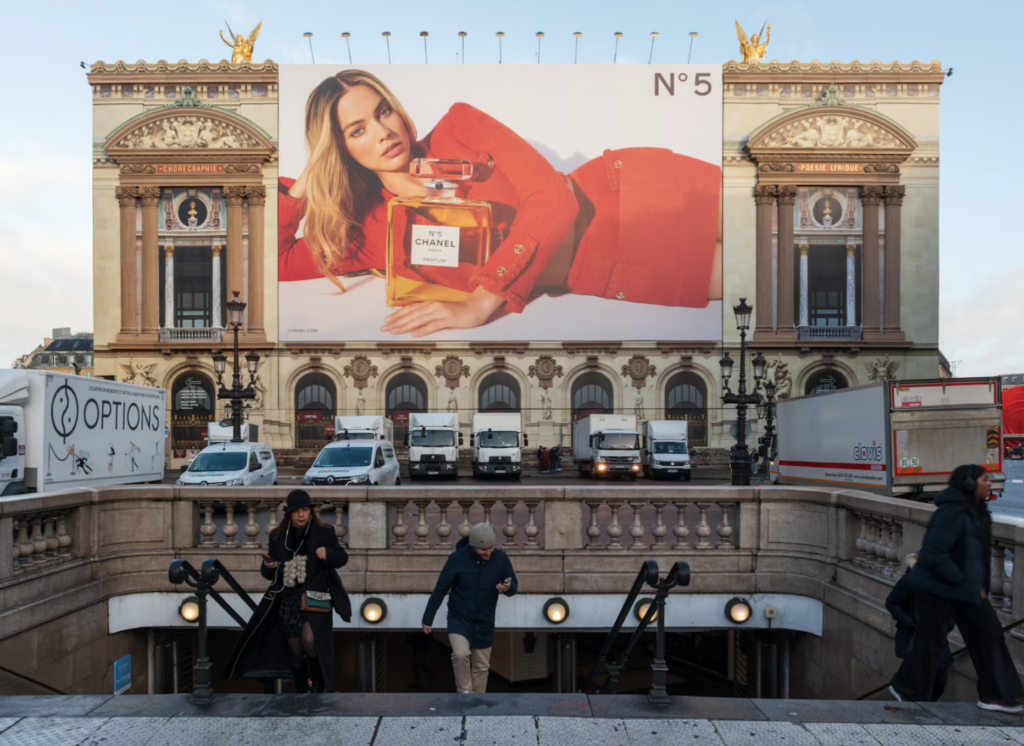
Chanel has prevailed in a trademark opposition over its No. 5 perfume bottle, blocking a rival fragrance company’s attempt to register a similar bottle design in the EU. In an October 9 decision, the European Union Intellectual Property Office (“EUIPO”) Opposition Division upheld Chanel’s opposition to an application filed by Chaos Perfumes, finding that the contested design would take unfair advantage of the reputation of Chanel’s earlier French trademark registration for its 3-D bottle shape. The finding came despite the designs being visually and conceptually similar to only a low degree.
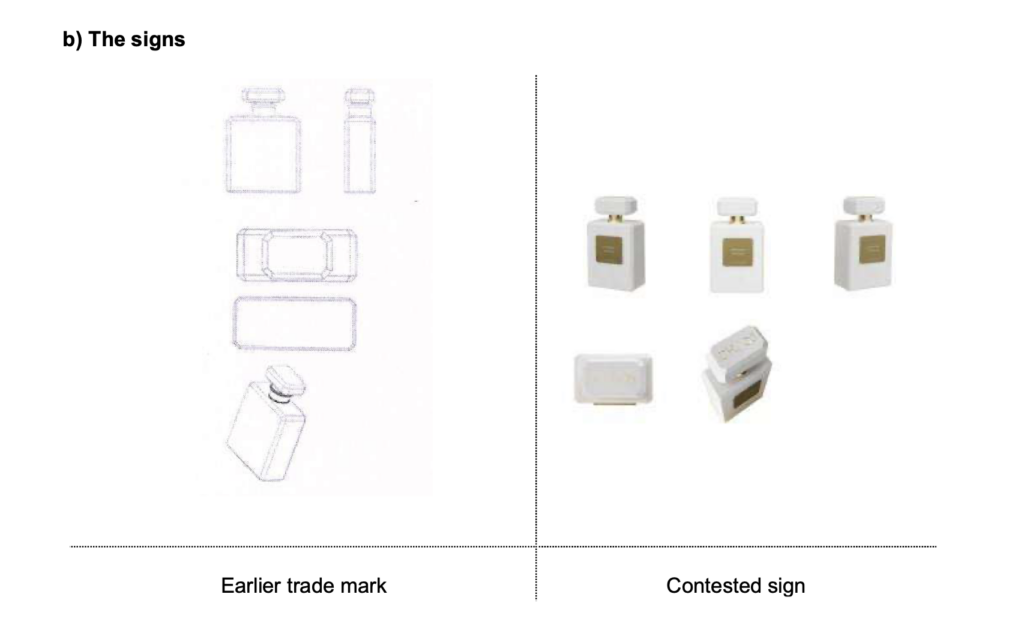
The dispute stems from an April 2024 application by Romanian company Chaos Perfumes to register a 3-D mark depicting a white-and-gold bottle bearing the words “CHAOS ANGELIC TOUCH EAU DE LIGHT.” Chanel opposed the application that September, arguing that the design incorporated recognizable features of its registered bottle shape and would benefit from its reputation.
Establishing Rights in the Bottle Shape
A central issue was whether Chanel could establish genuine use and reputation for the bottle shape independently of the CHANEL and No. 5 names. Chaos Perfumes argued that consumers primarily perceive perfume bottles as packaging rather than indicators of commercial origin, and that Chanel’s evidence established the reputation of its fragrances and brand rather than the bottle shape itself. It also claimed that Chanel’s historically innovative design had become conventional perfume packaging.
The EUIPO found that Chanel had demonstrated genuine trademark use and a reputation for the bottle shape in France. Its evidence included advertising, press coverage, exhibitions, and commercial records. A 2016 survey of 2,438 women in France showed that 72 percent spontaneously associated an unbranded image of the bottle with Chanel. The EUIPO also considered the bottle’s appearances in art, including works by Andy Warhol.
The evidence showed that Chanel had presented the bottle shape to consumers in a manner capable of indicating commercial origin.
Limited Similarity, Established Reputation
The EUIPO found that Chanel’s bottle shape has low inherent distinctiveness because it consists of a perfume container. It also identified differences between the designs, including Chaos Perfumes’ wording, colors, and labels. Both bottles, however, featured a compact rectangular body, rounded corners, a short central neck, and a broad, flattened stopper. The EUIPO found the designs visually and conceptually similar to a low degree.
Given Chanel’s reputation and the identity of the goods, the EUIPO concluded that French consumers would likely make a mental link between the designs. It also found that the association would give Chaos Perfumes an unfair commercial advantage by transferring some of the recognition and image associated with Chanel’s bottle to the rival product, making it easier for consumers to recognize and remember.
The EUIPO upheld Chanel’s opposition under Article 8(5) of the EU Trade Mark Regulation and rejected Chaos Perfumes’ application in its entirety.
THE STRATEGY: As packaging becomes a bigger part of the product experience, and part of what makes one product more desirable than another, brands have a greater incentive to build trademark rights in a product’s appearance. The proliferation of lookalike packaging in the dupes market reflects that commercial appeal, but packaging that attracts consumers does not necessarily serve a source-identifying function.
After all, securing and enforcing trademark rights in product packaging, particularly where those rights depend on acquired distinctiveness or reputation, can require substantial evidence that consumers associate the packaging itself with a particular source. That can be a high bar for brands, potentially involving years – or as in Chanel’s case, decades – of consistent use and marketing investment. Chanel’s consumer survey and longstanding promotional record were particularly important here, demonstrating recognition of the bottle shape independently of the CHANEL and No. 5 names.
Share