

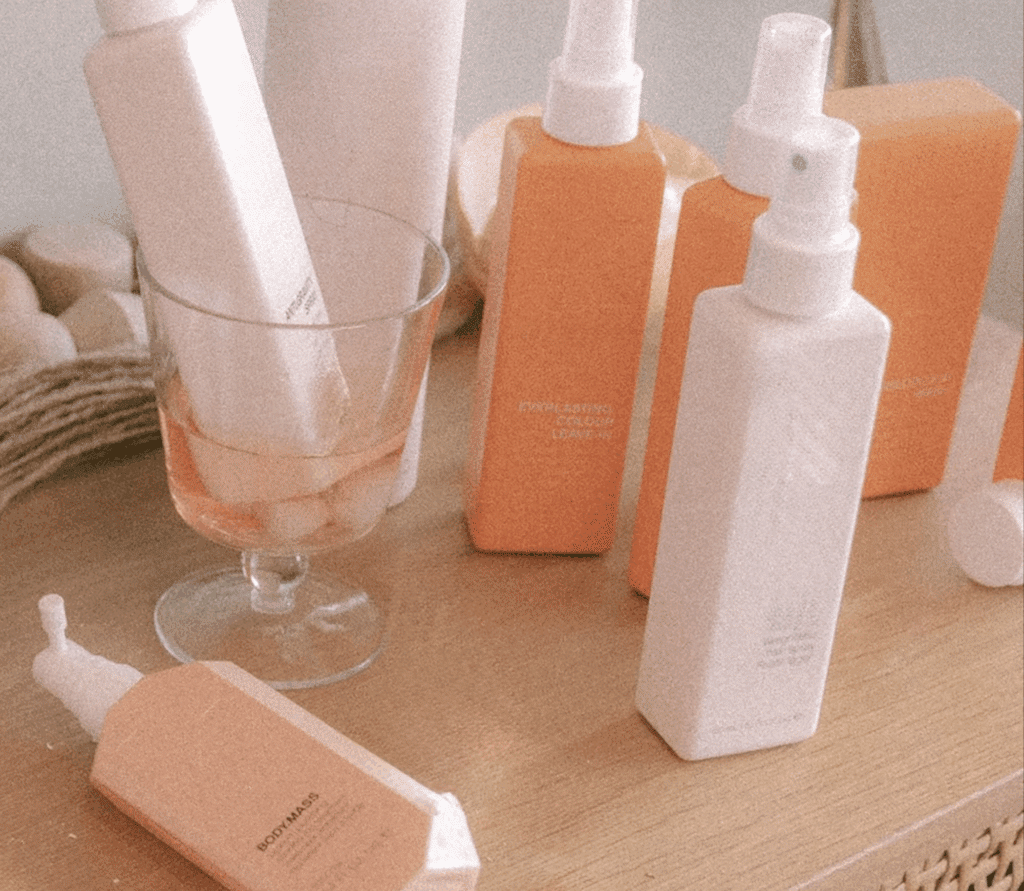
A lawsuit in California is currently challenging a luxury haircare brand’s “Made in the USA” marketing on the basis that the products contain key ingredients sourced overseas – and a federal judge has allowed part of the case to proceed. In an order on July 31, Judge Gonzalo P. Curiel of the U.S. District Court for the Southern District of California granted in part and denied in part It’s a New 10’s motion to dismiss, finding that the consumer plaintiff had plausibly alleged deceptive labeling under state law but had not yet shown that the products fall outside California’s statutory safe harbor for limited foreign content.
The Background in Brief: Plaintiff Maria Corona claims she purchased the company’s Silk Express Miracle Silk Leave-In at a Marshalls store in Carlsbad, California for $8.99, relying on the packaging’s metallic, capital-letter “MADE IN THE USA” statement. According to the complaint, which she filed in February, the product contains palm oil, camellia sinensis (tea) leaf extract, hydrolyzed silk, and silk amino acids – none of which originate from the U.S.
Corona alleges she would not have purchased the product had she known of its foreign content and sets out claims under California’s Consumer Legal Remedies Act (“CLRA”), Unfair Competition Law (“UCL”), and False Advertising Law (“FAL”), as well as breach of express warranty, unjust enrichment, negligent misrepresentation, and intentional misrepresentation.
Competing Standards, Safe Harbor
The case hinges on the interplay between the Federal Trade Commission (“FTC”)’s “Made in USA” rule and California’s “Made in the USA” statute. The FTC’s 2021 rule requires that “all or virtually all” of a product’s components be U.S.-made, with final assembly in the United States. California law, by contrast, allows the claim if foreign content does not exceed 5% of the wholesale value or up to 10% if certain domestic sourcing is impossible.
Corona argued that California’s safe harbor provisions are preempted by the stricter FTC standard. The court disagreed, holding that the two standards are not inconsistent, that Congress declined to preempt state law in this area, and that both frameworks share a consumer protection goal.
While the court found the complaint sufficiently alleged a violation of California’s baseline rule by claiming the products were “wholly or substantially” made from foreign ingredients, it dismissed the CLRA, UCL, and FAL claims for failing to plausibly plead that the foreign content exceeded the statutory thresholds. Simply listing foreign-sourced ingredients, the court said, is not enough; plaintiffs must allege facts showing those ingredients make up more than 5% or 10% of the product’s wholesale value.
Corona also sought to bring claims over all products on the company’s website. The court allowed her to proceed with claims involving four other named products that allegedly share the same “Made in the USA” representation and similar foreign-sourced ingredients but dismissed claims involving unspecified products as overly broad.
The judge granted Corona 21 days to amend her complaint to include more specific allegations regarding the value of foreign content. Several non-consumer fraud claims, including breach of warranty and misrepresentation, remain intact.
TL/DR: This case underscores the difficulty of challenging “Made in USA” claims in California: it is not enough for plaintiffs to point to foreign-sourced ingredients: They must show that those inputs make up more than 5–10 percent of a product’s value. At the same time, the decision confirms that California’s safe harbor law and the FTC’s stricter national standard can coexist, leaving brands to navigate both frameworks and highlighting the heightened need for precise substantiation when marketing origin claims.
The case is Corona v. It’s a New 10, LLC, 3:25-cv-00377 (S.D. Cal.).
Share