



More than a decade after settling a trademark dispute over PINK, Victoria’s Secret and Thomas Pink are back in court on both sides of the Atlantic. This time, the fight takes the form of a U.S. trademark infringement lawsuit over Thomas Pink’s PINK-branded womenswear and related proceedings before English courts over whether the companies’ 2015 settlement bars Victoria’s Secret from pursuing those claims.
Victoria’s Secret filed suit in federal court in Ohio in September, alleging that Thomas Pink’s launch of a PINK-branded women’s athleisure line infringes its trademark rights. Thomas Pink, in turn, sought to block the lawsuit via proceedings in England, where courts have exclusive jurisdiction to interpret the settlement agreement. The British shirtmaker argued that the agreement prevents Victoria’s Secret from asserting trademark claims against the disputed products sold or licensed through its business, including in the U.S.
In a November 5 judgment, the English High Court refused Thomas Pink’s request for an anti-suit injunction, finding that the 2015 settlement does not bar Victoria’s Secret’s U.S. trademark infringement claims. The ruling turned on the interpretation of “TP Business” in the companies’ settlement agreement. Thomas Pink argued that the term encompassed products sold through its licensing arrangements, but the judge found that the agreement’s protections were tied to the THOMAS PINK brand, rather than the company’s broader commercial activities.
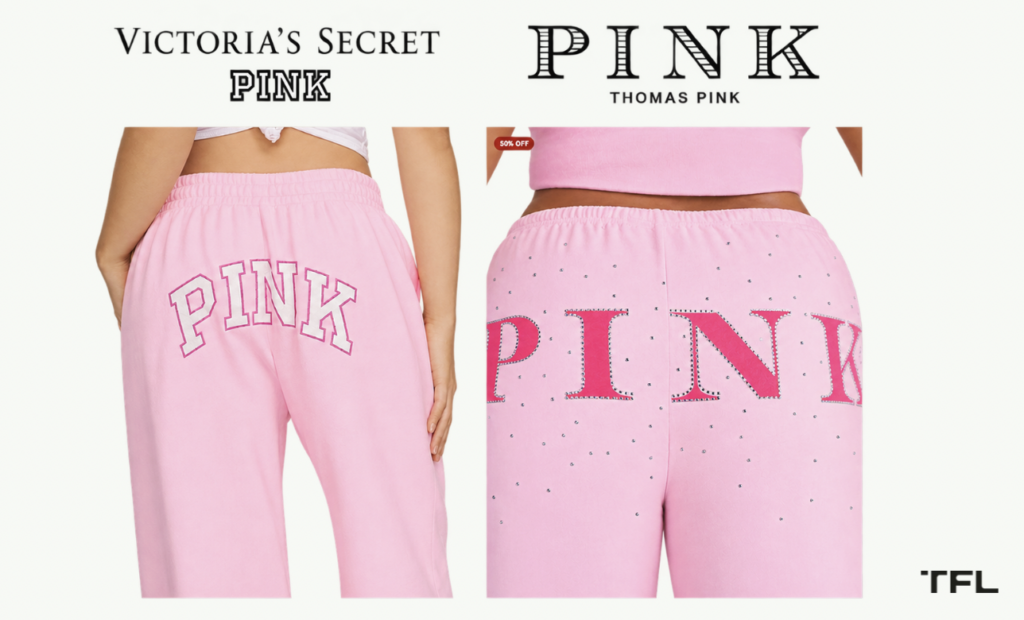
The court also considered the parties’ positions in 2015. Victoria’s Secret already had an established PINK apparel business in the U.S., while there was no evidence that Thomas Pink sold PINK-branded products there. Against that backdrop, the judge found it unlikely that Victoria’s Secret would have agreed to give up its ability to challenge Thomas Pink’s use of PINK on competing products in the U.S.
The Ohio complaint also points to more recent dealings between the companies. Victoria’s Secret alleges that it consented to certain Thomas Pink trademark registrations in 2025 and 2026, but that those consents did not extend to the PINK marks now being challenged. According to the complaint, Thomas Pink did not disclose its plans to use PINK alone on women’s casualwear and athleticwear when seeking those consents.
A Trademark Fight Comes Full Circle
The latest clash reverses the companies’ positions in an earlier legal battle. In 2014, Thomas Pink sued Victoria’s Secret over its use of PINK on clothing and storefronts in the UK, culminating in a worldwide settlement and coexistence agreement in July 2015. Under that agreement, Victoria’s Secret agreed to rebrand its PINK stores outside North America as “Victoria’s Secret Pink,” with all three words appearing in the same size, font, color, and texture, subject to specified exceptions. Similar restrictions applied to advertising, websites, and social media, while product labels and tags on goods offered for sale outside North America were required to identify Victoria’s Secret alongside PINK or use the word as part of a permitted slogan.
Beginning in January 2016, Victoria’s Secret was also required to pay Thomas Pink royalties of 7.5 percent of the factory cost of certain PINK-branded products destined for Europe. Products bearing only “Victoria’s Secret Pink” in the prescribed format were exempt, as was women’s lingerie.
The settlement also restricted when either company could assert its trademark rights against the other, subject to exceptions based on how PINK was used and the products sold under the mark.
THE STRATEGY: The English court’s ruling has implications for brands expanding through licensing. Following its 2024 acquisition by Icon Luxury Group and CP Brands Group, Thomas Pink has been pursuing opportunities in new categories and markets. The latest bout of litigation illustrates a potential complication with that strategy: Owning trademark rights and having a coexistence agreement in place does not necessarily mean that agreement protects new products launched under the mark.
For counsel, the issue extends to how coexistence agreements and subsequent trademark consents are negotiated and drafted. Provisions tied to an existing business or brand may become contentious when a company expands into new categories, licenses its marks, or enters markets where another trademark owner operates. The dispute also illustrates the importance of distinguishing consent to register a particular mark from authorization to use other marks or expand into additional product categories.
The ruling also highlights a distinction between contractual protection and substantive trademark rights. The English court found that the settlement does not prevent Victoria’s Secret from pursuing its U.S. claims against the disputed products. Whether those products actually infringe Victoria’s Secret’s trademarks remains for the Ohio court to decide.
Share