

Louis Vuitton is making headlines after securing a trademark victory against Chinese bubble tea chain Molly Tea. But the dispute offers far more than another example of a luxury brand successfully enforcing its trademarks. It illustrates a defining feature of Louis Vuitton’s long-standing brand protection strategy: over the course of decades, the French luxury goods giant has built a layered trademark portfolio covering not only its iconic Monogram canvas, but also the individual elements that comprise the design. Perhaps more significantly, the case highlights some of the increasingly complex legal, commercial, and reputational questions that accompany aggressive trademark enforcement in an era of global lifestyle brands and social media.
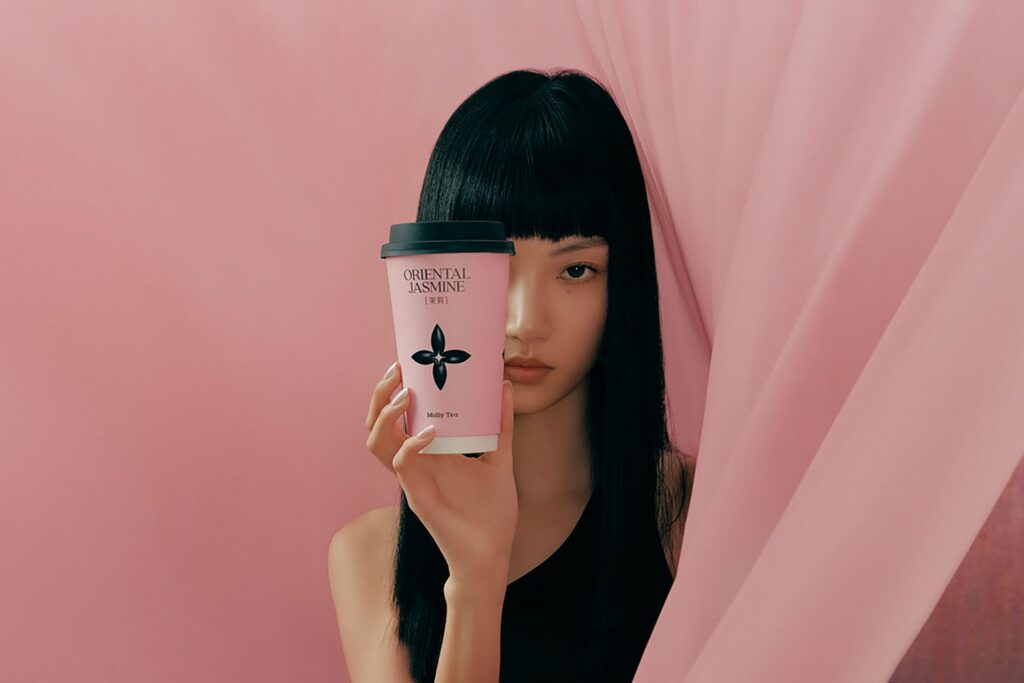
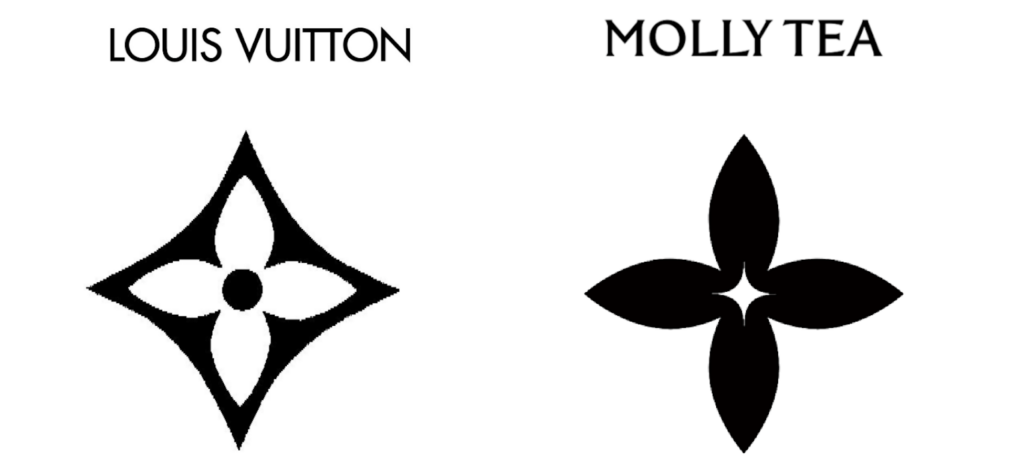
In a case centering on Molly Tea’s use of a “confusingly similar” quatrefoil logo, the Suzhou Intermediate People’s Court held that the Chinese bubble tea chain infringed seven of Louis Vuitton’s registered trademarks by using a floral motif that closely resembles the LVMH-owned brand’s protected Monogram Flower trademark. The challenged logo appeared across Molly Tea’s product packaging, promo materials, and other aspects of its branding.
The court ordered Molly Tea to pay more than 10.3 million yuan (approximately $1.5 million) in damages and legal fees and to publish corrective statements across its website and official social media accounts. The company has said it intends to appeal.
Although Louis Vuitton and Molly Tea operate in different industries, that distinction is less significant than it might once have been. Luxury houses increasingly extend their brands into hospitality ventures, blurring the traditional boundaries between fashion, food, travel, and lifestyle. As those lines continue to blur, disputes involving seemingly unrelated goods and services are becoming a more natural consequence of luxury brands’ evolution into broader lifestyle businesses.
A Longstanding Enforcement Approach
The headline-making dispute centered on a single floral logo, but it reflects Louis Vuitton’s long-running strategy of securing trademark rights in – and registrations for – its iconic Toile Monogram along with the individual elements that comprise the design, including its intertwined “LV” initials and signature floral motifs. As a result, the company is not limited to asserting rights in the Monogram as a whole; it can also pursue claims based on individual design elements that function as trademarks in their own right.
The strategy is not a new one. In a 2018 lawsuit against New York apparel wholesaler i-Fe Apparel, for example, Louis Vuitton asserted trademark claims for its Toile Monogram, as well as for the “LV” initials and the individual flower devices incorporated into the pattern. Those registrations enabled the company to assert multiple infringement, counterfeiting, and dilution claims based on different portions of its trademark portfolio.
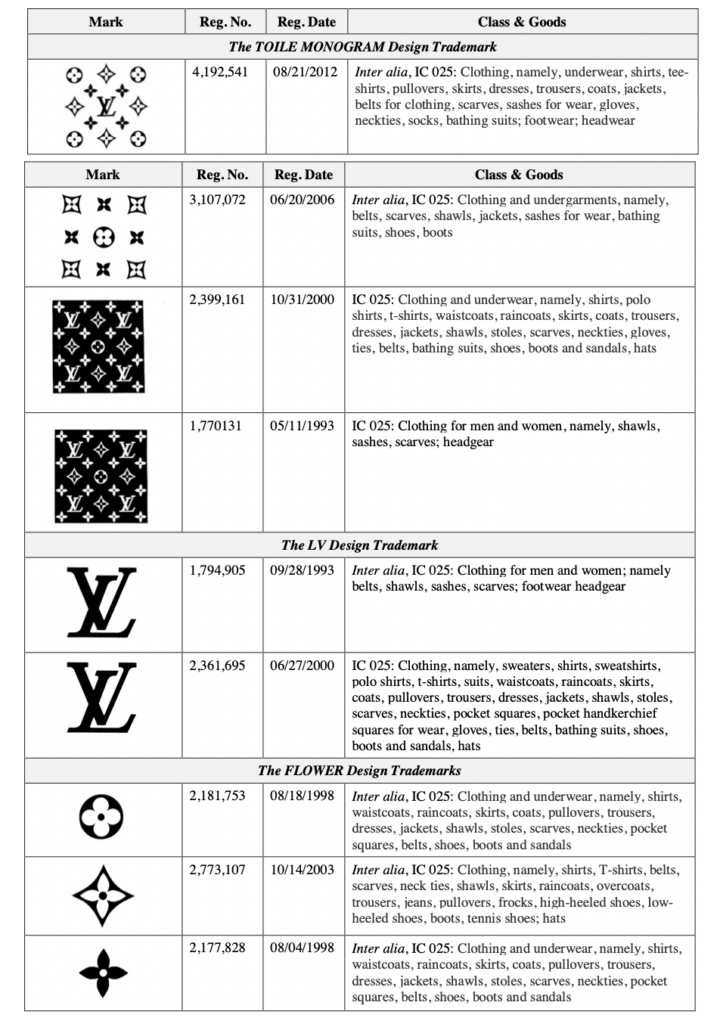
The Molly Tea dispute further illustrates the practical value of that approach. Rather than alleging that the Shenzhen-headquartered company copied its Monogram canvas in its entirety, Louis Vuitton based its claims on the alleged appropriation of a single floral motif.
The significance of that strategy lies in recognizing how consumers perceive the Louis Vuitton brand. Rather than treating the Monogram as a single composite design, the company has built a trademark portfolio of the individual visual cues that consumers recognize as independently signaling Louis Vuitton. That, in turn, gives the company greater flexibility to challenge uses that co-opt portions of its visual identity without reproducing the Monogram in its entirety.
Beyond the Courtroom
Perhaps more significantly, the case reveals one of the challenges of modern trademark enforcement: Winning in court does not necessarily mean winning in the court of public opinion. Although Louis Vuitton prevailed before the Suzhou court, the decision has generated significant criticism across social media. Many consumers have questioned how a luxury brand could claim exclusive rights in a four-petal floral motif. Others argued that similar designs have long appeared in traditional Chinese decorative arts and architecture. Still yet, others have argued that there is little likelihood of confusion between a bubble tea chain and one of the world’s largest luxury brands.
Whether those arguments have legal merit is another matter entirely. Trademark rights – and corresponding infringement claims – generally turn on the scope of the protection a trademark owner has acquired through use and registration and whether the challenged use infringes those rights under the applicable legal standard. Historical inspiration and broader questions of cultural ownership tend to fall well outside that analysis.
Even so, the outsized public reaction reveals a growing tension in modern trademark law. As luxury companies build increasingly sophisticated trademark portfolios aimed at protecting the individual building blocks of their brands, public debate often centers less on trademark law than on questions of fairness and ownership. And with courts and consumers often asking different questions, that disconnect can make even legally successful enforcement actions vulnerable to public criticism.
THE BOTTOM LINE: The Molly Tea dispute is ultimately a reminder that modern brand protection extends well beyond securing registrations and prevailing in court. As trademark portfolios become more sophisticated and enforcement plays out before global audiences online, companies must manage not only legal risk, but reputational risk as well.
For today’s luxury brands, the most effective trademark strategies continue to require managing both legal risk and reputational risk.
Share