


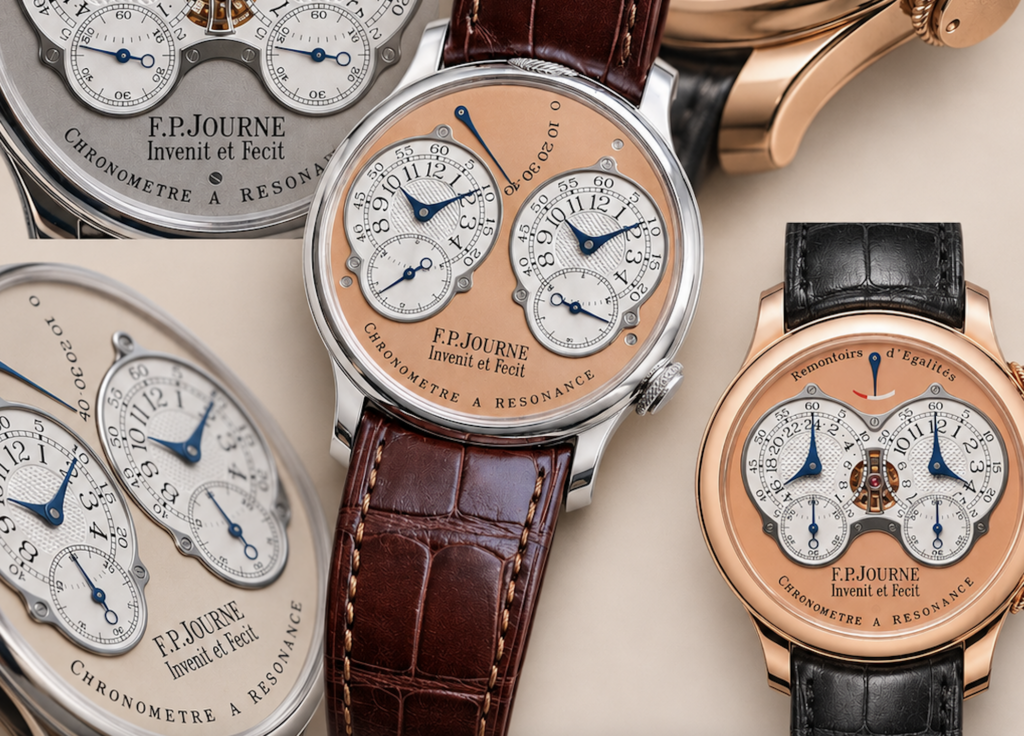
A rare F.P. Journe watch is heading to auction in Geneva this weekend, with the timepiece expected to fetch as much as CHF 1 million (approximately $1.22 million). The impending sale is not without a backstory. The watch made headlines this summer when F.P. Journe publicly challenged Phillips’ suggestion that the early Chronomètre à Résonance was potentially the first commercially delivered example of the model, prompting the auction house to revise its marketing following an August Instagram post by the watchmaker.
The social media-centric clash was swiftly resolved, but in the process, it raised broader questions about the roles that manufacturers and secondary-market sellers play in documenting the histories of collectible luxury goods – and who has access to the information that shapes those accounts.
A Clash Over What Came First
The clash between F.P. Journe and Phillips got its start in July, when the auction house announced that a pre-production Chronomètre à Résonance, numbered 022/99R, would be offered at an auction in Geneva. Phillips described the watch as the “earliest commercially numbered” Résonance, acquired by its original owner in 1999, and its watch specialists called it “in all likelihood, the very first one delivered.”
The claim was swiftly met with scrutiny. Watch publication Hodinkee, for one, reported that François-Paul Journe had previously been unable to recall which pre-production Résonance was delivered first. Then on August 25, F.P. Journe challenged Phillips’ account, publishing a statement from its founder on Instagram saying that the first Résonance was delivered in March 2000, while No. 022/99R was delivered in June 2000 – after several others.
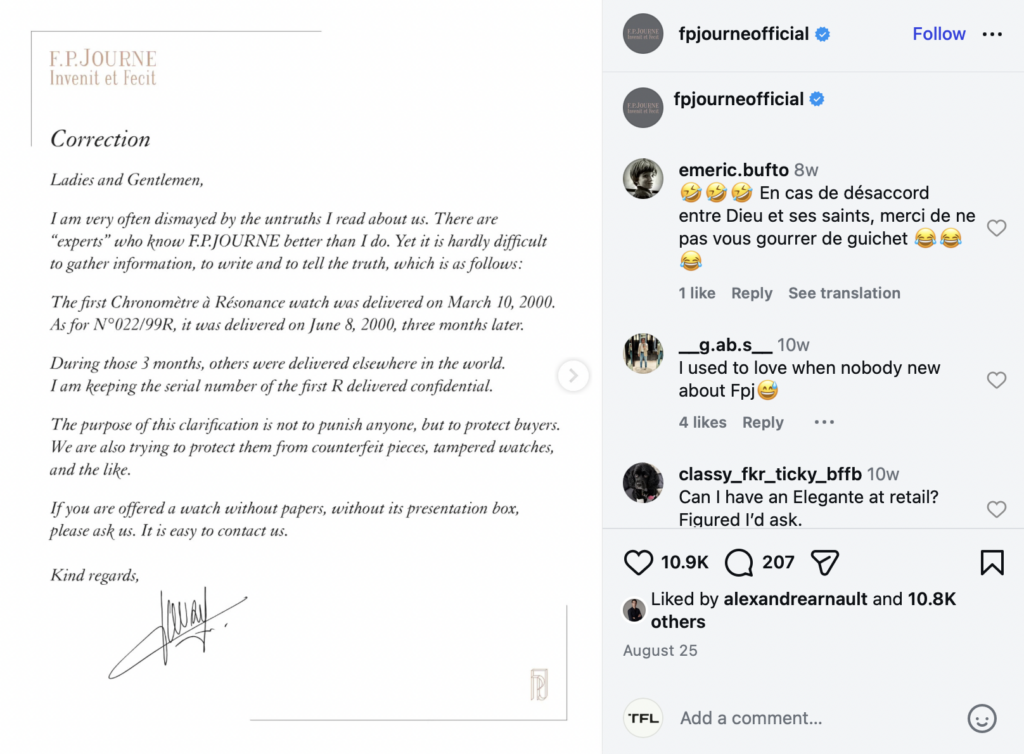
Phillips subsequently revised its marketing to describe the watch as the lowest commercially numbered Résonance and one of the earliest delivered. In a subsequent Forbes interview, a Phillips watch specialist attributed the mistake to an assumption that the watch’s 1999 case date reflected its delivery year and maintained that the correction did not diminish its historical importance or value.
Who Controls the Historical Record?
The episode highlights the overlapping – and sometimes contentious – roles that manufacturers and secondary-market sellers play in documenting the histories of collectible luxury goods. While brands may hold exclusive records about a product’s origins, auction houses and other resellers contribute research and sales histories that help shape its commercial record, often to the brands’ benefit. Phillips, for example, has sold three Résonances for approximately $23 million combined in 2026, including a Souscription No. 007 that fetched $13.9 million, establishing benchmarks for future sales.
The dispute also illustrates the differences in access to information between manufacturers and independent sellers. Phillips developed its account of the watch’s history before F.P. Journe supplied the delivery dates that prompted the correction. Without access to certain manufacturer records, which many brands treat as proprietary, auction houses and dealers may be unable to independently verify aspects of a product’s history. (It is worth noting that F.P. Journe expressly invited owners of watches lacking papers or presentation boxes to contact the company for authentication purposes.)
Somewhat similar issues have arisen in connection with secondary-market litigation. Chanel’s cases against luxury resellers, for instance, have involved disputes over authentication, the information available to independent sellers, and the extent to which third party “experts” can reliably make determinations and claims about a product’s authenticity.
While the Journe dispute concerns delivery history rather than authenticity, both contexts shed light on how access to manufacturer-held information can affect secondary market representations.
THE BIGGER PICTURE: The commercial implications extend beyond a single watch. Claims about a collectible’s provenance and place in a manufacturer’s history can influence its desirability and market value, particularly when collectors pay premiums for early production examples. The F.P. Journe dispute illustrates the importance of distinguishing between manufacturer records and historical claims developed through secondary market research.
For luxury brands and secondary market sellers, alike, the case underscores the importance of accurate historical information in a market where provenance and perceived rarity can directly influence commercial value.
Share