

The FIFA World Cup may crown national champions, but it also reinforces the value of one of football’s most important business assets: football club brands. As merchandising, licensing, sponsorships, and other commercial businesses have come to account for a significant share of club revenues, Europe’s biggest teams now resemble sophisticated consumer brands whose value depends almost as much on intellectual property and brand equity as it does on performance on the pitch.
According to Deloitte’s latest Football Money League, the world’s 20 highest-revenue football clubs generated a record €12.4 billion during the 2024-25 season. Real Madrid C.F. alone generated nearly €1.2 billion in revenue, including approximately €594 million from merchandising, sponsorships, retail, and other commercial activities. Those figures illustrate the scale of football’s commercial economy. More importantly, they highlight a broader shift in the nature of football clubs themselves. Increasingly, their value is driven not only by what happens on the pitch, but also by the intangible assets that underpin global consumer brands: trademarks, cultural relevance, and consumer loyalty.
Brands Beyond the Pitch
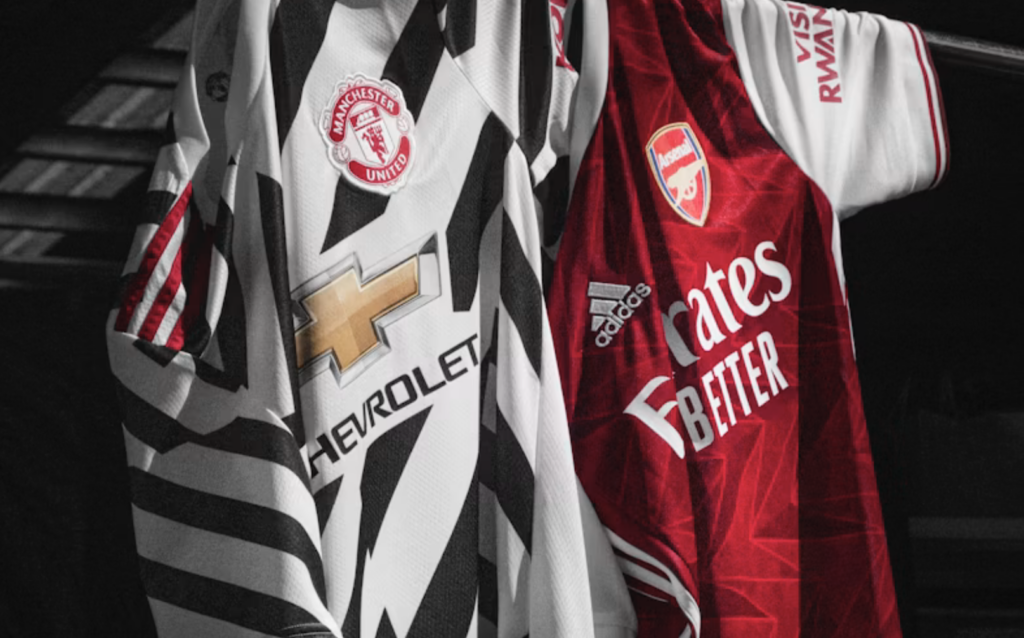
As merchandising, licensing, sponsorships, and other commercial activities have become meaningful components of football clubs’ business models, the value of club brands has grown accordingly. Club names, crests, colors, and visual identities do not just identify the club; they are the foundations of the commercial ecosystems that extend well beyond football games and teams.
That strategy continues to reach further into the lifestyle realm. Clubs that once focused primarily on selling official team merchandise now routinely pursue partnerships that position them within broader consumer culture. Paris Saint-Germain F.C., for one, collaborates with Dior, maintains a long-running deal with Jordan Brand, and has expanded into hospitality through its work with Novotel. Manchester United F.C., meanwhile, ventured into digital experiences through gaming partnerships and officially licensed collectibles.
Taken together, these initiatives reflect a broader shift as Europe’s biggest clubs position themselves as multi-category consumer brands rather than simply football clubs. In other words, they are not simply managing football teams – they are managing some of the world’s most valuable sports brands.
The Business of Brand Protection
As clubs extend their brands into new categories, the intellectual property that supports those businesses becomes increasingly valuable. Protecting those assets has become a critical part of modern football. That value is evident in how clubs enforce their intellectual property rights.
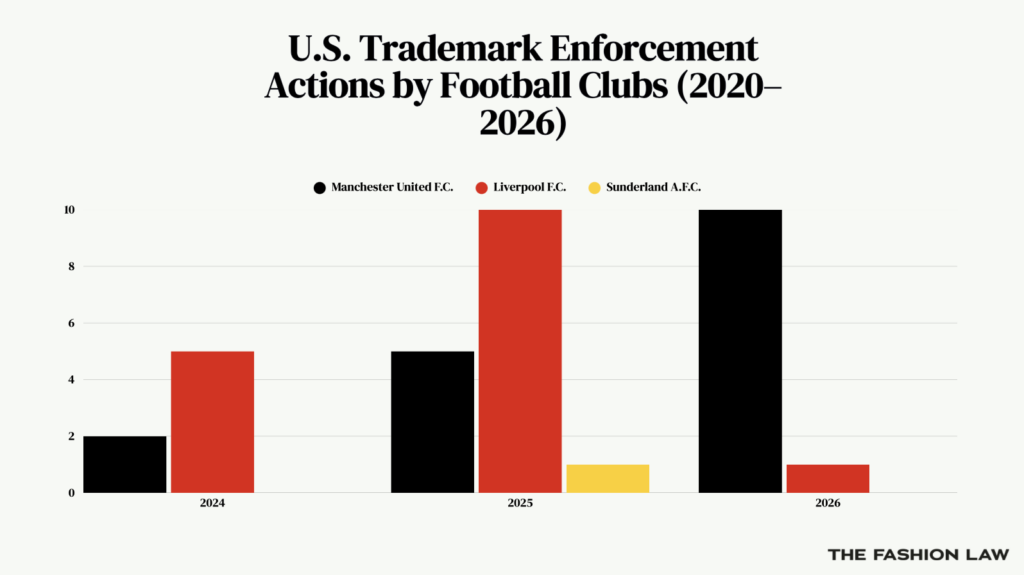
According to TFL’s review of U.S. federal court dockets, Manchester United has filed in at least 31 trademark infringement actions since 2020, while Liverpool has waged at least 30. Many target online sellers and Schedule A defendants accused of trademark infringement and counterfeiting, underscoring that brand enforcement has become an ongoing component of these clubs’ commercial strategies rather than an occasional response to infringement.
In some respects, football clubs are following a playbook long familiar to luxury houses. Intangible assets are leveraged to sell goods and services and as brands become more widely-known and valuable, protecting the intellectual property behind them becomes progressively more important.
Just as luxury companies do not aggressively enforce intellectual property because they are litigious (they do so because brand equity is among their most valuable assets), football clubs face the same commercial reality. Their trademark portfolios support merchandising, licensing, sponsorships, collaborations, and other businesses that have become significant contributors to enterprise value. Viewed in that light, these lawsuits are not simply legal disputes but strategic efforts aimed at protecting valuable commercial assets.
The World Cup highlights that decades-long transformation. While national teams compete for football’s biggest prize, the tournament simultaneously amplifies the brands of the clubs behind many of its biggest stars.
THE BOTTOM LINE: The World Cup may showcase football’s biggest stars, but it also highlights a broader transformation in the business of football. Europe’s most famous clubs increasingly resemble sophisticated consumer brands whose value depends not only on success on the pitch but also on the intellectual property, licensing strategies, and brand equity they build – and protect – off it.
Share