



Today’s read: 6 minutes
July 10, 2026: Retail companies spent the past couple of weeks making decisions that are likely to shape their businesses for decades (rather than quarters) to come – and I am hoping to fit it all in post-holiday weekend.
Two of the biggest recent stories centered on different businesses but reflected remarkably similar thinking.
> Gucci resolved its beauty dispute with Coty and cleared the way for an accelerated transition to L’Oréal under a new 50-year exclusive beauty license – an unusually long partnership that effectively removes one of luxury’s largest beauty businesses from the traditional cycle of license renewals. Rather than periodically reassessing who should operate Gucci Beauty, Kering has chosen a partner expected to help shape the business for decades.
> A long-term mindset appears to be emerging at Armani. Recent reporting has questioned whether bringing former Miu Miu design director Dario Vitale to Emporio Armani makes sense before an ownership transaction. In my view, that framing misses the much more interesting possibility: Armani appears to be strengthening the business first, with any minority investment or public listing likely to follow under more favorable conditions.
That reading of the situation – rather than the prevailing view that Armani is preparing for an imminent sale – makes Vitale’s impending appointment entirely logical. It suggests the company is strengthening one of its most commercially significant brands before bringing in outside investors.
>> The takeaway: Whether it is decades-long licensing partnerships or creative leadership appointments, luxury’s focus is on strengthening long-term enterprise value before the next chapter begins.
A few recent disputes asked essentially the same question: how little branding does a consumer need before they recognize a particular source?
> Loro Piana’s latest victory in Italy reinforces the growing judicial recognition that a product’s overall appearance – not merely its logos or individual design elements—may function as a legally protectable source identifier.
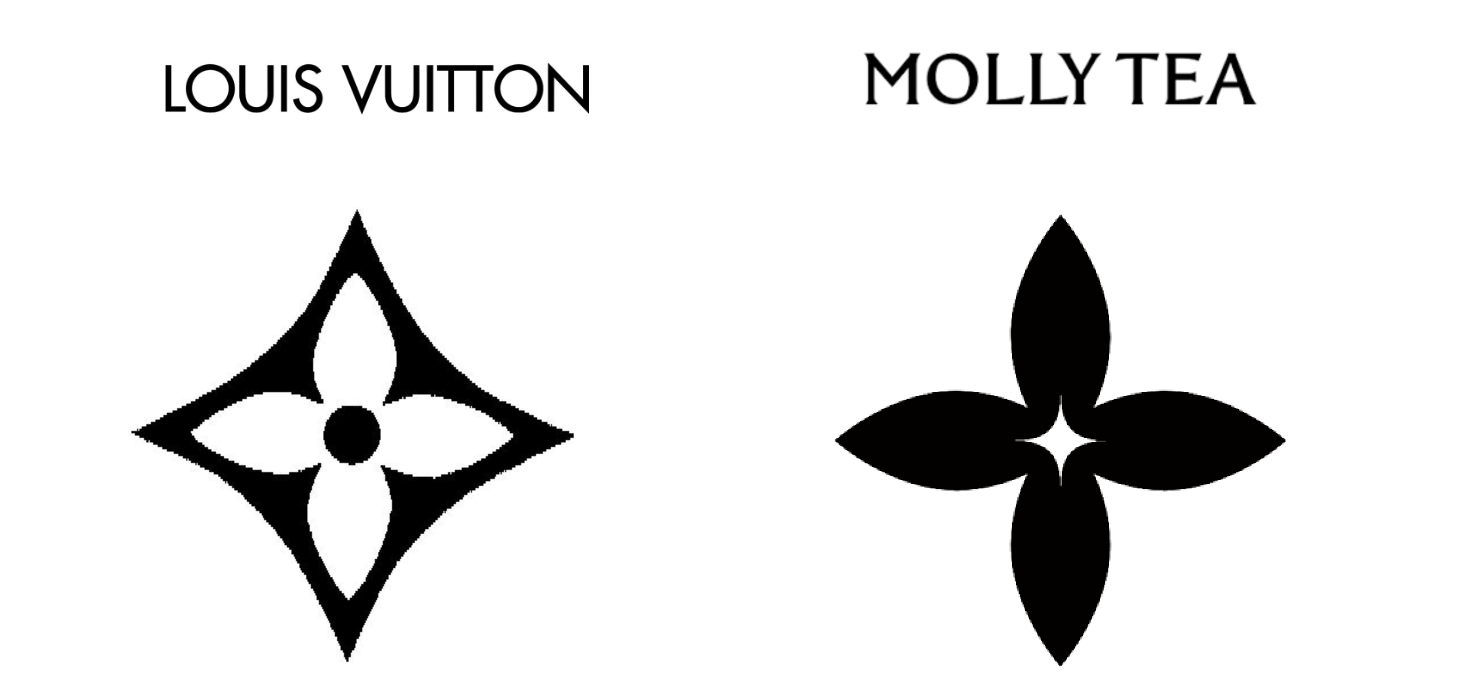
> Louis Vuitton’s win against Molly Tea likewise reflects a long-standing strategy of securing trademark rights not only in its iconic Monogram canvas but also in the individual visual elements that comprise it, allowing the company to challenge the use of a single floral motif.
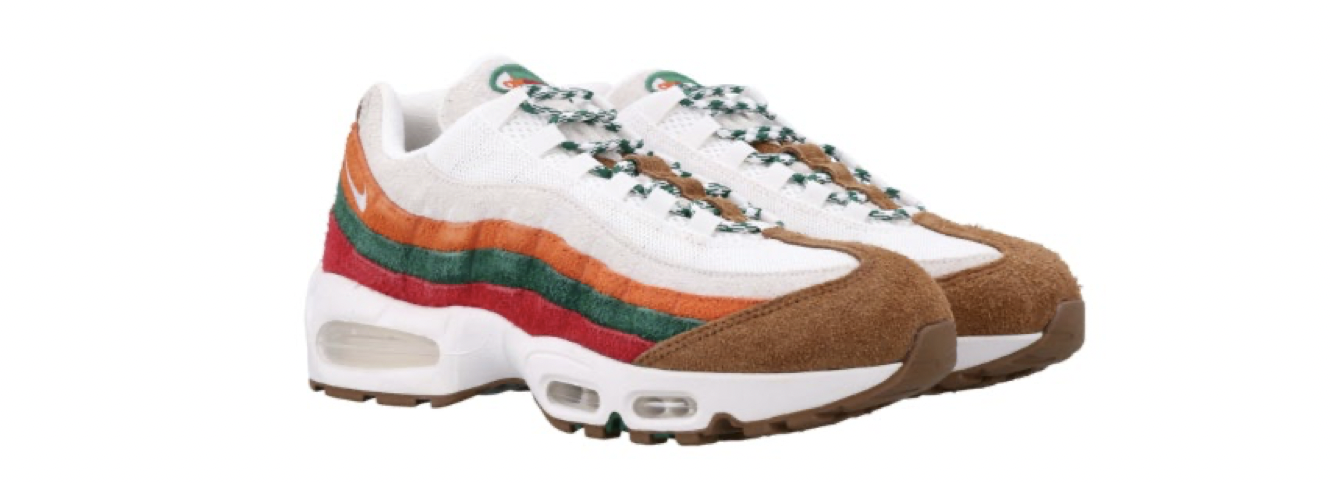
> Meanwhile, 7-Eleven’s newly-filed lawsuit against Nike argues that consumers recognize its orange, green, and red stripe combination as identifying a single commercial source, independent of the company’s name or logo.
>> The takeaway: Whether the issue is a shoe silhouette, a floral motif, or a color combination, the underlying question is increasingly the same: when does a visual cue stop being design and start functioning as a trademark?
A couple of this week’s trademark stories highlight the importance of what happens outside the courtroom. In Louis Vuitton’s case against Molly Tea, the French luxury house prevailed in court but immediately found itself on the opposite end of the court of public opinion, with many consumers questioning the extent of its rights in a four-petal floral motif.
At the same time, Coty’s motion to dismiss relies in part on Squish’s earlier representations to the USPTO that its SQUISH mark could peacefully coexist with an existing SQUISHY registration – arguments that Coty says are difficult to reconcile with Squish’s current claim that consumers are likely to confuse SQUISH with Covergirl’s SQUISHY GLAZE branding. Whether those arguments ultimately succeed remains to be seen, but the motion highlights how positions taken during trademark prosecution may later resurface in infringement litigation.
>> In practice: Trademark strategy does not begin – or end – in court. Positions taken before the USPTO, public messaging, and consumer perception can all shape the outcome of a dispute and the narrative that follows.
Reformation’s IPO filing offers one of the clearest signs yet that AI is becoming part of the core investment story for fashion companies. Rather than presenting artificial intelligence as a consumer-facing feature, Reformation’s S-1 presents it as operational infrastructure supporting merchandising, inventory allocation, demand forecasting, and product development – while also identifying AI as an enterprise risk requiring governance and oversight.
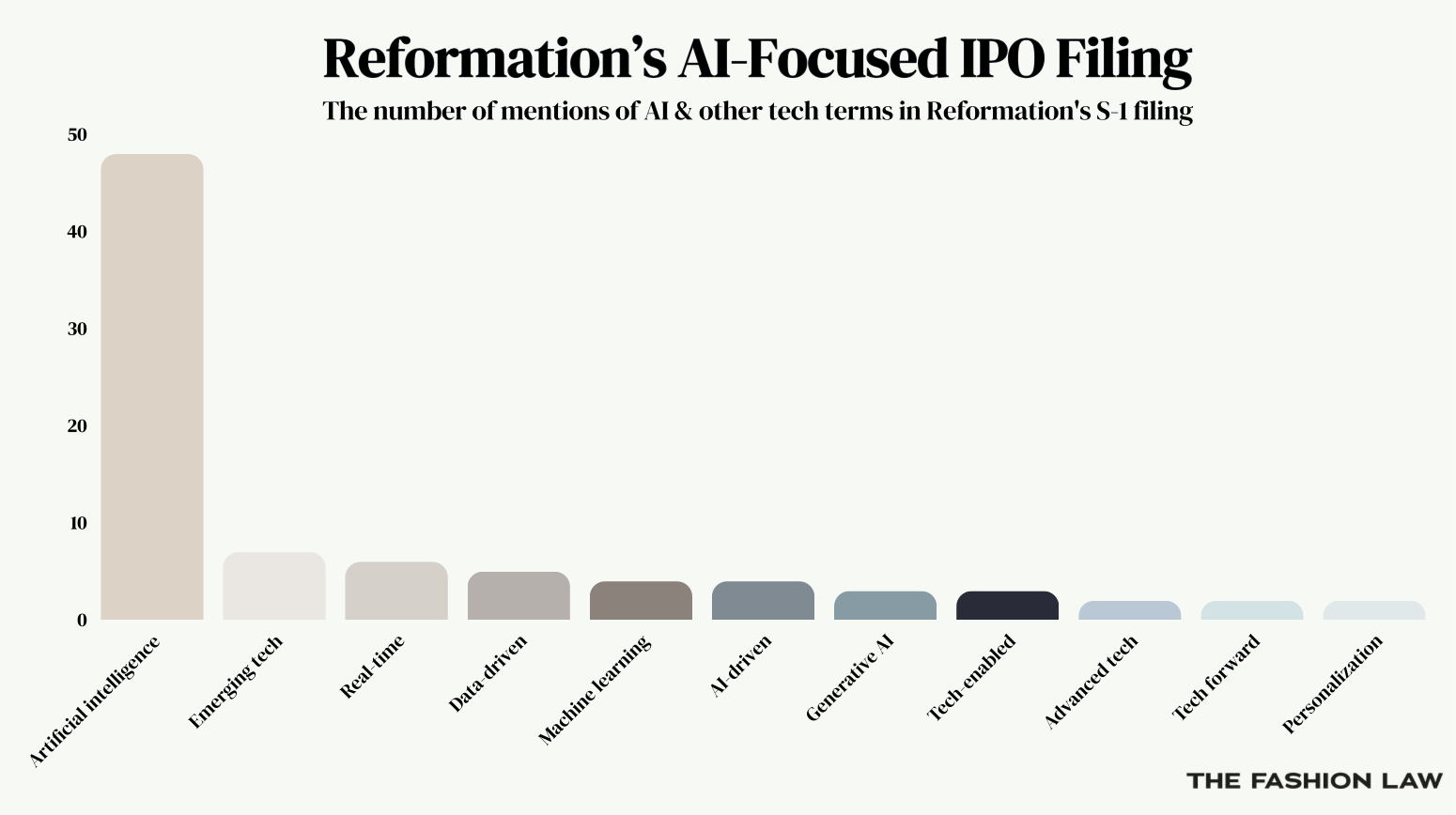
>> The takeaway: AI is swiftlybecoming a governance issue, not just an innovation initiative. As companies embed AI more deeply into core operations, investors and regulators are likely to expect clearer explanations of how those systems are managed, monitored, and disclosed.
This week’s stories were ultimately about long-term value creation.
Gucci and Armani appear to be investing in the businesses they expect to monetize in the future. Loro Piana, Louis Vuitton, and 7-Eleven illustrate how brands are seeking protection for the visual cues that define their identities. Squish Beauty’s dispute with Coty shows that trademark strategy often begins long before litigation, while Reformation’s IPO filing suggests that AI is evolving from a consumer-facing innovation into a core operational and governance issue.
Taken together, these developments point to a common theme: companies continue to invest not only in products and brands, but in the assets, systems, and legal strategies they believe will create long-term enterprise value.