

Loro Piana has secured another legal victory in its campaign to protect the appearance of its hot-selling White Sole footwear. In a preliminary injunction, the Court of Turin barred Paris-based Parijan SAS from manufacturing and marketing footwear that replicates Loro Piana’s Summer Walk and Open Walk shoes, finding that the products unlawfully appropriated the distinctive character and commercial reputation of Loro Piana’s White Sole line.
The ruling is the latest in a series of favorable decisions for the LVMH-owned brand and provides further support for an increasingly significant proposition in luxury brand enforcement: that a product’s overall appearance – not merely its trademarks or individual design elements – may function as a legally protectable source identifier.
When Product Design Becomes Brand Identity
The case centered on several suede loafers sold by Parijan that Loro Piana argued replicated the appearance of its Summer Walk and Open Walk footwear. In its order, which was issued on May 12 and only recently made public, the Court of Turin recognized protection for the Loro Piana shoe models based on their shape, overall appearance, and the unique combination of visual elements that define their identity. Rather than evaluating the products on a feature-by-feature basis, the court assessed the cumulative effect of the White Sole line’s signature characteristics, including the light-colored rubber sole contrasted against suede uppers, the deconstructed silhouette, faux welt, tone-on-tone stitching, and distinctive tread grooves.
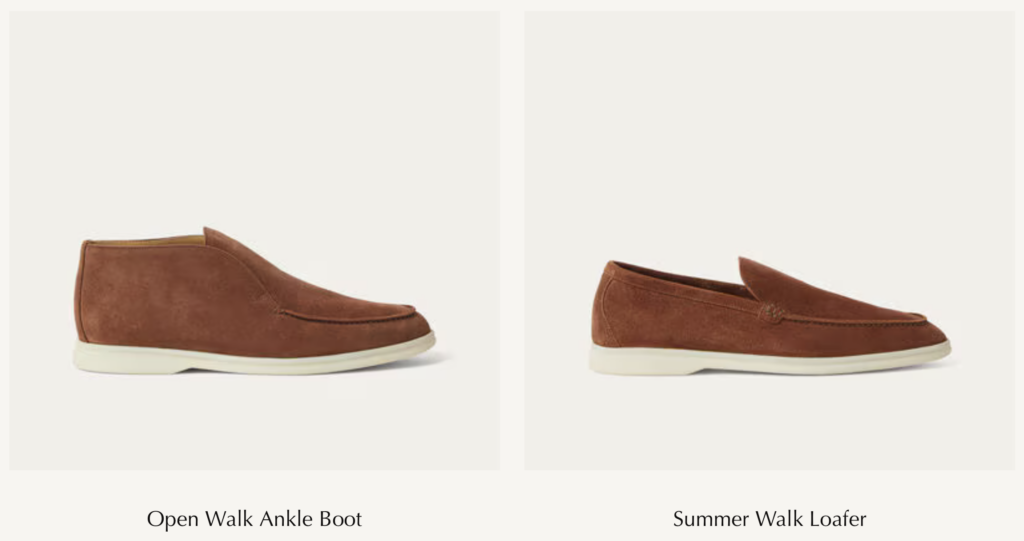
In doing so, the court sided with Trevisan & Cuonzo-represented Loro Piana, treating its White Sole collection’s distinctive appearance as more than the sum of its individual design elements. Rather than evaluating each feature in isolation, it focused on the overall visual identity created by their combination.
The court likewise rejected Parijan’s argument that differences in materials, construction, and overall product quality were sufficient to distinguish its footwear. Those distinctions, the judges reasoned, are often difficult for consumers to perceive in the context of online shopping, where purchasing decisions are driven primarily by a product’s visual appearance rather than close physical inspection.
Against that backdrop, the court held that consumers were likely to perceive Parijan’s shoes as lower-priced alternatives to Loro Piana’s originals, enabling the company to benefit unfairly from the distinctive character and commercial reputation associated with the White Sole collection.
Looking Beyond the Product Itself
While courts have long evaluated the “overall impression” created by competing products in trademark and unfair competition disputes, the Turin decision is notable for the weight it places on that analysis in the context of luxury footwear sold online. Rather than treating technical differences in quality or manufacturing as dispositive, the court assessed the products as consumers are most likely to encounter them – in digital marketplaces, where visual appearance frequently becomes the primary basis for purchasing decisions. That reasoning reflects the realities of today’s online retail environment, where dupes increasingly compete by replicating a luxury brand’s aesthetic rather than its trademarks.
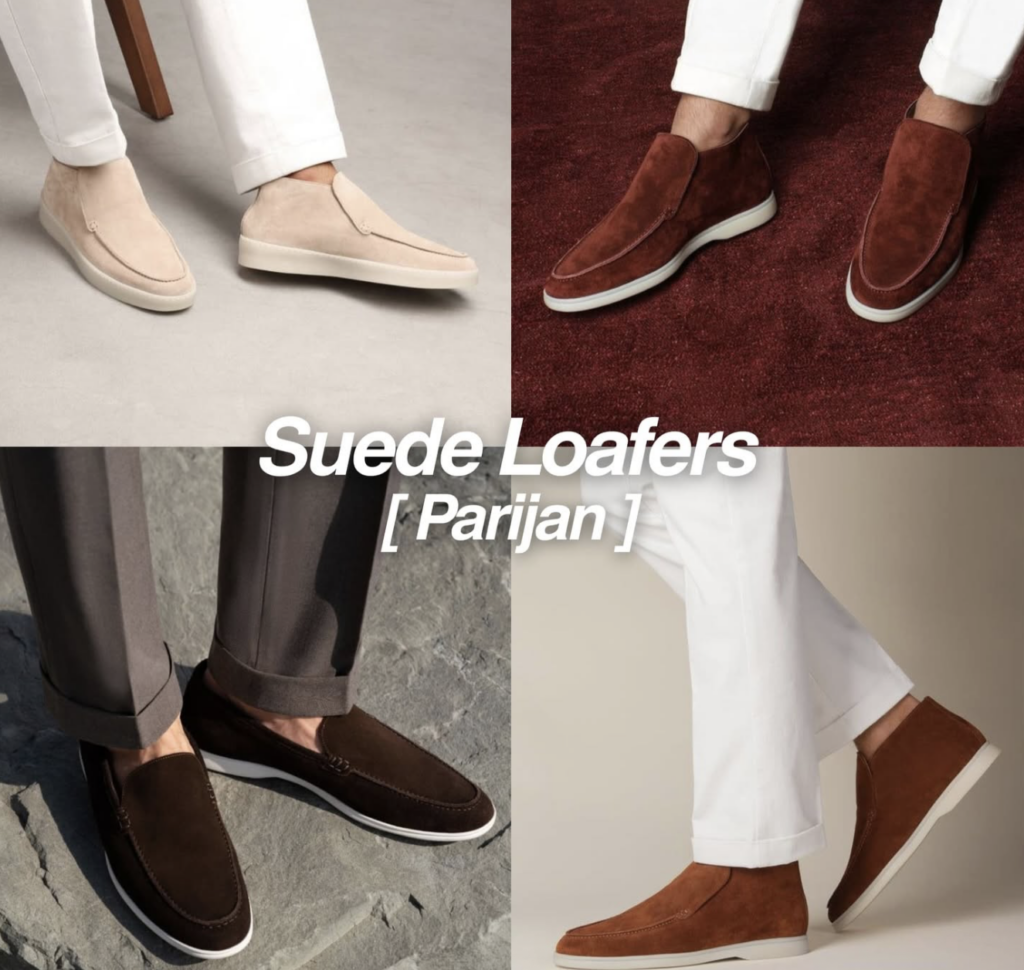
The court also looked beyond the footwear itself. In addition to finding that Parijan’s products closely replicated the appearance of Loro Piana’s White Sole shoes, it pointed to the company’s marketing practices, including its use of creators and influencers closely associated with Loro Piana, such as Gstaad Guy. Taken together, the product design and surrounding marketing reinforced the court’s conclusion that Parijan was seeking to position its footwear as a lower-priced alternative while capitalizing on Loro Piana’s commercial reputation.
The latest injunction forms part of a broader enforcement campaign aimed at protecting Loro Piana’s expanding footwear business. In recent years, the company has secured similar injunctions from both the Court of Turin and the Court of Bari involving copycat versions of its Open Walk, Summer Walk, and Tennis Walk footwear. Yet, the market remains saturated with lookalike versions of the brand’s signature shoes, underscoring both the commercial appeal of the White Sole line and the ongoing challenges of policing it. Viewed together, the decisions are steadily building judicial recognition for the White Sole collection as a distinctive product identity rather than simply a collection of individual design features.
THE BIGGER PICTURE: The broader implications extend beyond Loro Piana. As certain luxury brands continue to rely on understated design (“quiet luxury” endures) rather than prominent logos, some of their most commercially valuable assets are becoming the recognizable visual languages reflected in their products themselves. That shift has created a corresponding challenge for brand owners: competitors can often replicate much of the look and feel of an iconic product while steering clear of the logos and trademarks that have historically made infringement claims more straightforward.
With that in mind, the Turin decision adds to a growing body of European case law recognizing that the overall visual identity of an iconic product may itself function as a legally protectable source identifier.
Share