

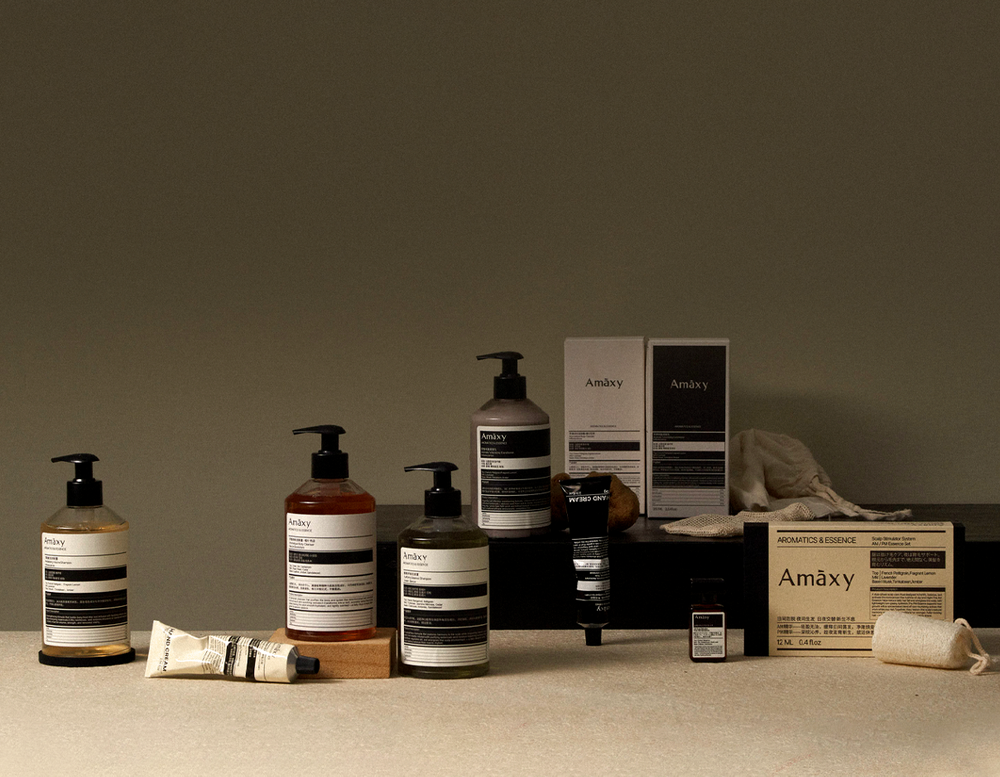
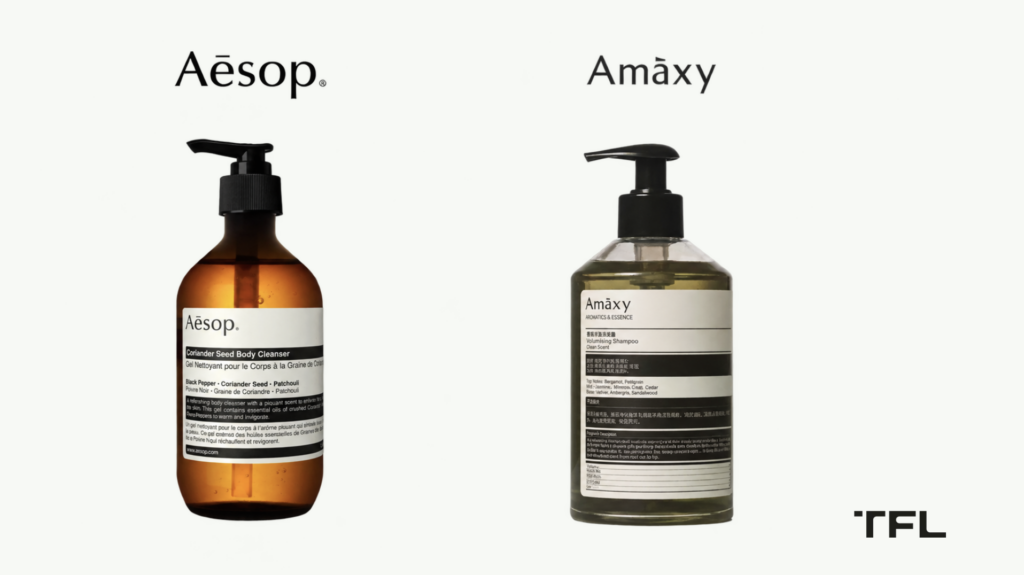
Aesop is suing a group of Chinese companies over the use of “copycat” product packaging as part of its efforts to combat lookalike products in China. The L’Oréal-owned skincare company filed an unfair competition lawsuit against seven companies associated with AMAXY, alleging that their personal care products packaging resembles its own recognizable packaging, namely, the combination of amber bottles, black dispensers, and cream or off-white rectangular labels.
Protecting the Package
In the complaint that it filed with the Shanghai Fengxian District People’s Court, Aesop alleges that AMAXY’s use of brown or amber bottles, black pumps, and minimalist rectangular text labels creates an overall packaging appearance that is confusingly similar to its own. Although AMAXY’s products bear its own brand name and feature other differences in label design, Aesop alleges that the overall presentation is likely to cause confusion among consumers as to the source or nature of the AMAXY goods.
Aesop sets out claims under Article 7 of China’s Anti-Unfair Competition Law, which prohibits the unauthorized use of packaging or decoration identical or similar to that of another business, where the packaging or decoration has acquired a certain level of market recognition and the challenged use is likely to cause confusion about the products’ commercial origin or affiliation.
Not the first suit of its kind, Aesop has prevailed on similar claims amid a rise of Aesop-inspired packaging by unaffiliated companies in China’s personal-care market. In a case that it previously lodged against Chinese personal-care brand ANRUZ, Aesop prevailed on appeal, with the Shenzhen Intermediate People’s Court held that its particular combination of packaging features had acquired the requisite market recognition. Finding that the defendants’ use of similar packaging amounted to unfair competition, the appellate court ordered them to refrain from offering up infringing goods and awarded Aesop RMB 600,000 (approximately $84,000) in economic losses and enforcement expenses.
While that earlier ruling is not binding on the Shanghai court, which is scheduled to hear the case on November 12, it, nonetheless, demonstrates that combinations of commonly used elements may qualify for protection under Chinese unfair competition law.
THE BIGGER PICTURE: Aesop’s lawsuit comes amid a steady string of disputes over the extent to which brands can prevent competitors from adopting similar product packaging. In the U.S., Van Leeuwen Ice Cream secured a trade dress infringement win against Rebel Creamery in July, after a federal court found that its particular combination of packaging features was protectable and that Rebel’s competing packaging was likely to cause consumer confusion.
Recent European decisions illustrate the different grounds upon which packaging rights may be established and enforced. In October, Chanel successfully opposed a rival perfume bottle trademark application under Article 8(5) of the EU Trade Mark Regulation, with the EUIPO finding that a third party’s mark would take unfair advantage of the reputation of Chanel’s No. 5 bottle shape, despite limited similarity between the designs. Dior, on the other hand, failed to establish the inherent distinctiveness of its Dior Addict packaging before the EUIPO’s Board of Appeal in 2025, although its claim of acquired distinctiveness remains to be examined.
These cases (and others) involve different legal standards but raise related questions about the protection afforded to product packaging.
A combination of otherwise commonplace design features may qualify for protection when it satisfies the applicable requirements, but the scope of those rights depends on the particular configuration, the evidence supporting protection, and the legal basis of the claim. For brands developing consistent visual identities across product lines, those distinctions determine how far they can go in challenging competitors’ use of similar packaging.
Share