


In what is likely to be a closely watched test of how far copyright law can reach in the dupe economy, David Yurman Enterprises LLC has filed suit against The TJX Companies, Inc., accusing TJ Maxx and Marshalls’ parent company of selling jewelry that is “virtually indistinguishable” from its federally registered cable designs. According to its newly-filed complaint, Yurman alleges that TJX not only manufactured, advertised, and offered for sale “blatant copies” of its copyrighted designs, but did so as part of a broader “growing trend of dupes” that “rewards predator companies … that knowingly imitate rather than innovate.”
“Blatant Copies” of an Iconic Design
Setting the stage in the complaint that it filed on February 11 in the U.S. District Court for the Southern District of New York, David Yurman says that it is “a world-renowned luxury jewelry design house known for its sculptural designs featuring an iconic cable motif,” which is not merely aesthetically distinctive, but legally protected. Yurman points to a portfolio of federal copyright registrations for its designs and emphasizes that jewelry designs qualify as protectable works of artistic craftsmanship.
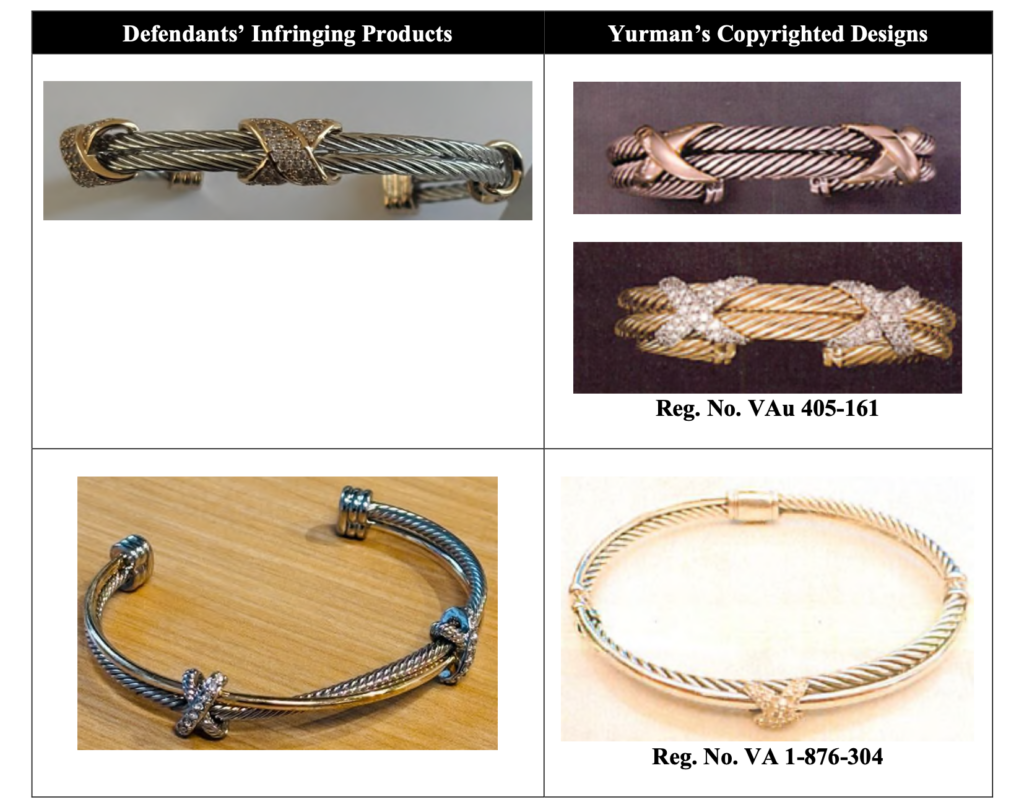
Against that backdrop, Yurman alleges that TJX is marketing and selling “blatant copies” (seemingly from third-party brands as distinct from its own label) of its copyright-protected designs. The similarities, it claims, are not incidental, as the accused products “copy nearly every element of Yurman’s genuine pieces such that they are virtually indistinguishable from Yurman’s valuable, artistic creations.”
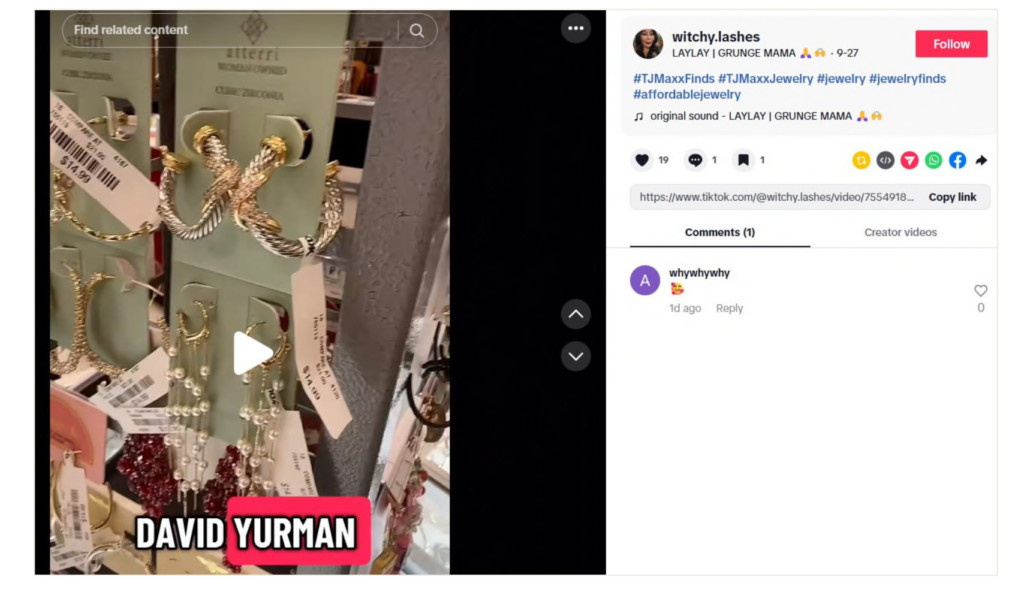
Beyond the products, themselves, Yurman spotlights TJX’s in-store marketing, quoting signage that reads: “same hot labels seen at the mall. but never at our prices.” Yurman maintains that this messaging reinforces consumer expectations that they may be purchasing genuine designer goods at a discount. Those expectations have spilled onto social media, the company claims, asserting that “consumers who have purchased [TJX’s] copies have taken to social media to broadcast that they found ‘David Yurman’ pieces and ‘David Yurman’ dupes at TJX Stores.”
In its filing, David Yurman includes screenshots of posts in which users tout “TJ Maxx Finds” alongside #davidyurman hashtags and describe their purchases as “look-a-like super find[s],” underscoring what Yurman characterizes as marketplace confusion. Indeed, Yurman asserts that “[o]n their face, the differences between [TJX’s] infringing products and David Yurman’s designs are so inconspicuous that many on social media have commented that they believe TJX is selling actual David Yurman products.”
The “Dupe” Economy on Trial
Zooming out, Yurman frames the case as part of a broader trend. “Like many successful brands,” the complaint states, it has had to confront the “proliferation of ‘dupes’ – copies of brand name goods that are meant to look just like the authentic designer version but without the designer price tag.” The company goes further, asserting that “[t]he growing trend of dupes – where an artist’s hard work is slavishly copied by unscrupulous third parties – undermines the entire nature of creative design and expression” and “rewards predator companies such as TJX that knowingly imitate rather than innovate.”
Yurman alleges that TJX acted with knowledge of its rights, claiming that the retailer “had access to Yurman’s copyrighted designs” through widespread advertising and sales, and that it manufactured and sold the accused products “with knowledge that such products are copies.” And despite sending TJX a letter in August 2025 identifying “numerous of the Infringing Products” and demanding that sales cease, Yurman claims that TJX “has continued to offer the infringing products for sale.”
With the foregoing in mind, Yurman brings a claim for copyright infringement and seeks injunctive relief, impoundment and destruction of the accused products, actual or statutory damages, disgorgement of profits, attorneys’ fees, and punitive damages.
THE BOTTOM LINE: While luxury brands routinely rely on trademark and trade dress law to combat dupes (with varying results), this case places copyright squarely at center stage, a potentially meaningful shift given that copyright protects creative expressions rather than source identifiers. If the court agrees that TJX’s bracelets are “virtually indistinguishable” from Yurman’s registered designs, the ruling could provide high-end jewelry brands with a more potent tool to challenge the booming dupe market – and in turn, force off-price retailers to reassess just how close is too close when it comes to designer-inspired goods.
The case is David Yurman Enterprises LLC v. The TJX Companies, Inc., 1:26-cv-01151 (SDNY).
Share