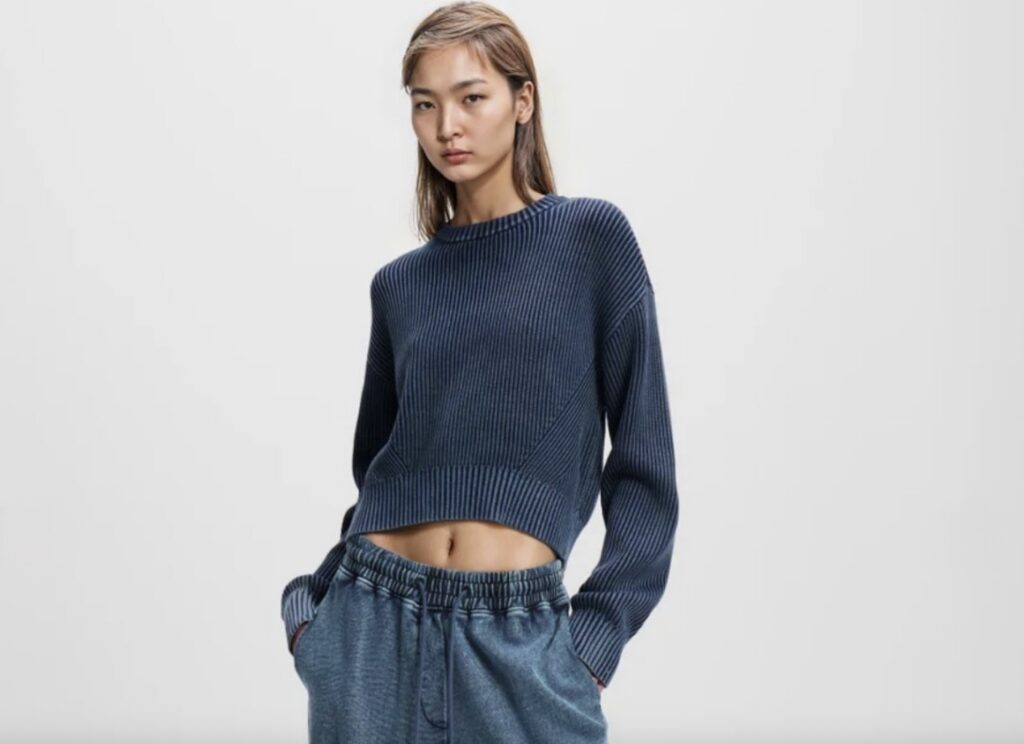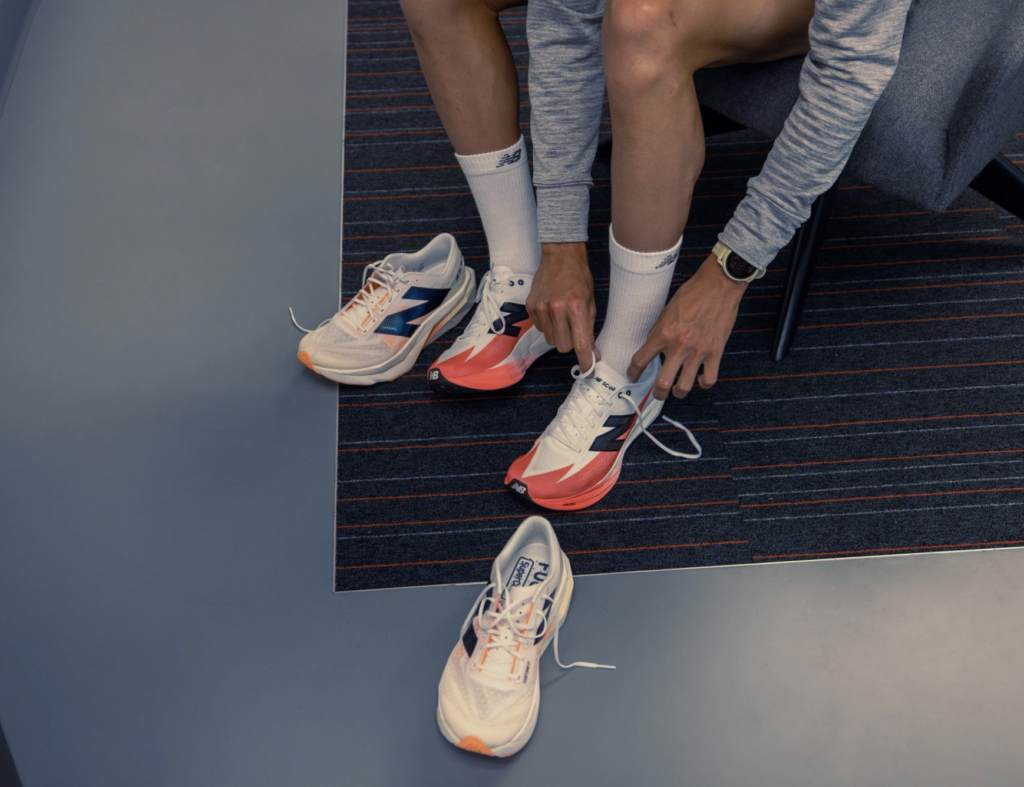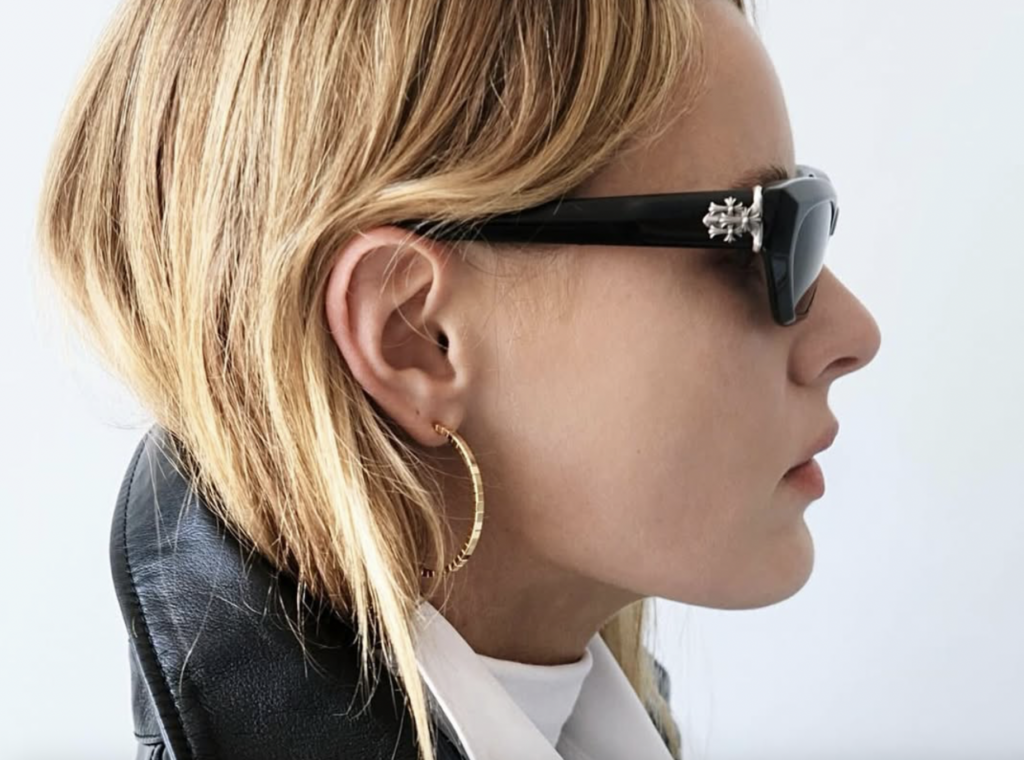


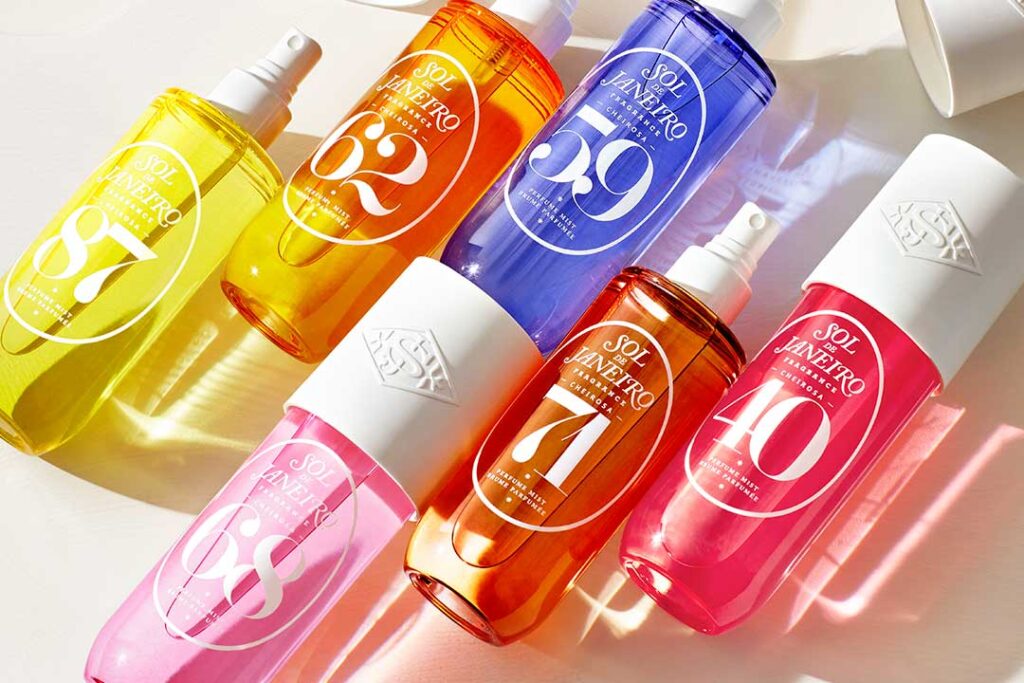
The market for dupes is rapidly expanding, with no signs of slowing down. TikTok is saturated with creators promoting “unbelievable” alternatives to luxury staples – from handbags to makeup to shoes. Fast fashion and beauty brands are refining the formula, releasing lookalike products with striking speed and precision – and in some cases, raising significant capital to scale businesses around the “luxury for less” model. Consumers are drawn to dupes not just for affordability, but for access – viewing them as clever alternatives rather than inferior knockoffs.
For brands, the dupe boom presents growing legal and business risks. As the aesthetic gap between luxury and mass-market continues to narrow – and as consumers become skeptical of the value proposition of luxury brands, the question becomes: how can companies protect their products in a market comfortable with imitation?
A Shifting Legal Landscape
An increasing number of dupe-related lawsuits are actively creating a legal roadmap for brand protection in the copycat economy. From trademarks and design patents to trade dress and false advertising, these cases are refining how companies enforce their rights. They are also exposing the limitations of traditional tools – especially in industries where once-distinctive designs have become commonplace.
The result is a more nuanced, multi-pronged legal playbook that reflects the realities of modern brand enforcement. Rather than relying on any single theory, brands are matching the claim to the conduct at issue – targeting names that evoke the original, appearances that function as source identifiers, protected designs, expressive elements and marketing claims that promote equivalence.
Trademarks: A First Line of Defense
In the dupe economy, imitation often begins with language. Increasingly, brands are asserting trademark infringement claims based on names and phrases that echo well-known products. These word marks can serve as a strong first line of defense – targeting sellers that rely on suggestive or phonetically similar naming to create brand adjacency.
In the case that Pacific Market International is waging against Five Below, for instance, the maker of Stanley drinkware argues that names like “Hydraquench” and “Hyperquench” infringe on its federally registered QUENCHER mark. PMI contends that these names were deliberately chosen by Five Below to trade on consumer recognition of its offering and cause confusion. The case underscores how word marks remain a powerful tool, especially when dupes sidestep logos but still lean heavily on brand familiarity.
Trade Dress: The Battle Over Appearance
Many brands are also turning to trade dress claims to protect the overall look and feel of their products, particularly given the fact that dupes rarely co-opt overt branding. In Coach v. Quince, for example, Coach alleges that Quince’s handbags replicate key design features of its Rogue and Soho Flap bags (such as hardware placement, stitching, and silhouette), arguing that these non-functional elements serve as source identifiers.
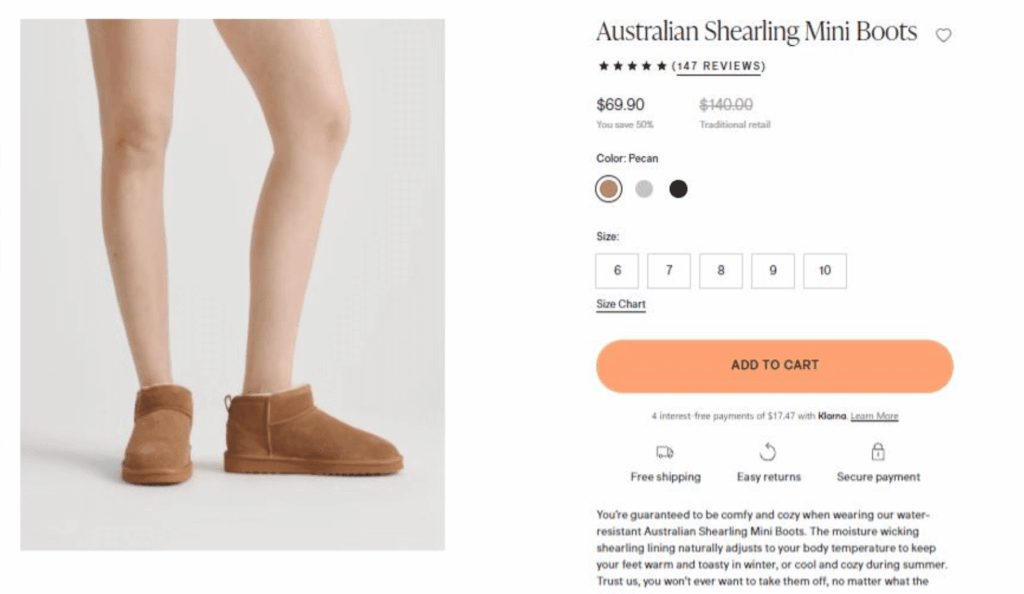
Yet, trade dress claims do not make for a sure-fire enforcement strategy. In its own case against Quince, UGG-owner Deckers alleged that the company infringed the appearance of its popular boot styles. The court rejected Deckers’ trade dress claims, finding features like low ankle height and exposed sheepskin too generic and widely adopted to qualify for protection. Deckers proceeded to trial on a design patent tied to its Classic Ultra Mini boot, but the jury ultimately found the asserted patent to be invalid, handing Quince a complete victory. Together, the rulings underscore how difficult it can be for brands to secure exclusive rights in product features that have become closely associated with an entire category.
A similar outcome emerged in Apollo Health and Beauty Care v. Sol de Janeiro, where a federal district court in New York dismissed trade dress claims over Sol de Janeiro’s Brazilian Bum Bum Cream packaging. Although the dispute stemmed from a Costco-sold “dupe” product designed to replicate the “entire sensorial” experience of the original, the court found the claimed packaging features to be functional and therefore unprotectable. The court held that the rounded jar improved usability and durability, the oversized lid enhanced grip and sealing, and the yellow-and-white color scheme helped distinguish product variants. Even the capitalized dark-gray lettering was deemed functional because it improved readability.
The decision reinforces that even deliberate copying does not give rise to trade dress infringement where the features at issue serve practical purposes or consist of common design elements.
> An added complication for trademark/trade dress infringement-asserting parties is the likelihood of consumer confusion. As seen in adidas v. Thom Browne, courts consider price and market segmentation when assessing infringement. When brands occupy different price tiers – like ALAÏA and Steve Madden – courts may find no actionable confusion. This presents a challenge for upscale brands seeking to hold low-cost dupe makers liable.
Design Patents: Protecting What You Can See
Design patents can be a powerful tool in the dupe enforcement toolkit. Unlike trade dress, they offer clearly defined protection without requiring proof of distinctiveness or consumer association, and they can be enforced even when logos are omitted. At the same time, recent litigation illustrates that they are not immune from challenge. As the Deckers-Quince dispute demonstrates, alleged infringers may attack the validity of the asserted patent itself, particularly where the claimed design incorporates features common within a broader product category.
In its suit against Costco, Lululemon alleged that the retailer copied the protected designs of several of its bestselling products, including its SCUBA hoodies and other apparel. The case also illustrates both the utility and practical limits of design patent enforcement. Since filing suit, Lululemon and Costco have resolved a number of product-specific claims through a series of settlements. Court-approved dismissals in 2026 eliminated claims relating to products sold under the Jockey, Danskin, and Kirkland brands, leaving only claims tied to a men’s zip-up jacket still pending.

Even so, the litigation underscores how design patents can provide brands with a concrete mechanism for challenging lookalike products where protectable design rights exist. In a landscape where aesthetics drive purchasing behavior, design patents may offer the strongest form of protection available to brands that have secured them.
Copyright: Defending Creative Expression
Copyright is also emerging as a tool in dupes disputes, especially in industries built on creative product design. In Dreams USA v. Five Below, the company behind the cult-favorite Sonny Angel dolls accuses the retailer of selling unauthorized “dupes” that are nearly identical in shape, style, and expression. The complaint points to figurines with similar facial features, proportions, and character themes, with Dreams arguing that Five Below’s products are substantially similar to its registered Sonny Angel Toy copyright.
Although copyright may not be an option for utilitarian goods, it offers robust protection for expressive elements where trade dress and design patents may fall short. For companies investing in character design, sculptural packaging, or collectible items, copyright provides a direct avenue to enforce creative rights and preserve brand identity.
False Advertising: The Emerging Legal Front
As dupe marketing becomes more sophisticated, so too does the legal response. Increasingly, brands are turning to false advertising claims under the Lanham Act – either instead of or in addition to traditional IP claims. Here, the question is not whether a product looks similar enough to confuse, but whether sellers are making deceptive claims about equivalence, quality, or performance.
Recent litigation suggests that false advertising is evolving from a supplemental claim into a primary enforcement strategy in dupe disputes, particularly where design and trade dress protections are unavailable or uncertain. This shift is already playing out in the courtroom. Sol de Janeiro’s lawsuit against MCoBeauty does not just attack its fragrance dupe packaging, but also targets influencer marketing claims that the product “smells exactly like” its scents and “lasts all day,” despite alleged differences in formulation and performance.
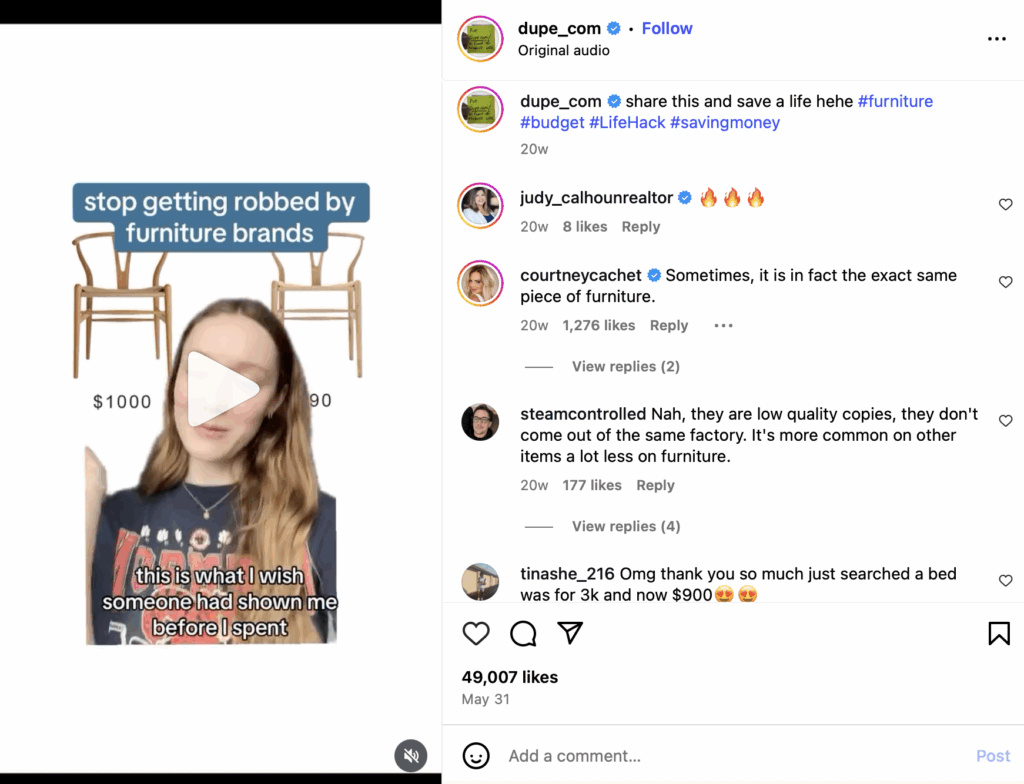
Similarly, Williams-Sonoma’s suit against Quince targets “Beyond Compare” charts and marketing language suggesting that Quince’s products are materially identical to those from Pottery Barn or West Elm. These claims go beyond aesthetics, striking at the credibility of dupe marketing itself.
False advertising claims offer brands several advantages. They bypass the need to prove distinctiveness or functionality and instead focus on whether statements are factually misleading and materially influence consumer decisions. In an era where influencer content and viral comparisons fuel dupe popularity, this approach enables brands to challenge the messaging – not just the product.
THE BOTTOM LINE: The rise of the dupe economy presents more than just a design challenge; it is increasingly a business and legal challenge, as well. As courts continue to clarify the boundaries of what is protectable, the most effective brand enforcement strategies are moving beyond single-claim approaches. Today’s legal playbook consists of a layered approach that combines trademark, trade dress, design patent, copyright, and false advertising claims to address the varied tactics used by dupe sellers. Increasingly, these cases demonstrate that no single form of protection guarantees success – making strategic, multi-pronged enforcement more important than ever.
Updated
April 1, 2026
This article was initially published on January 2, 2026 and has been updated to reflect developments in Deckers v. Last Brand, Apollo Health and Beauty Care v. Sol de Janeiro USA, and Lululemon Athletica Canada Inc. v. Costco Wholesale Corp.
Share