

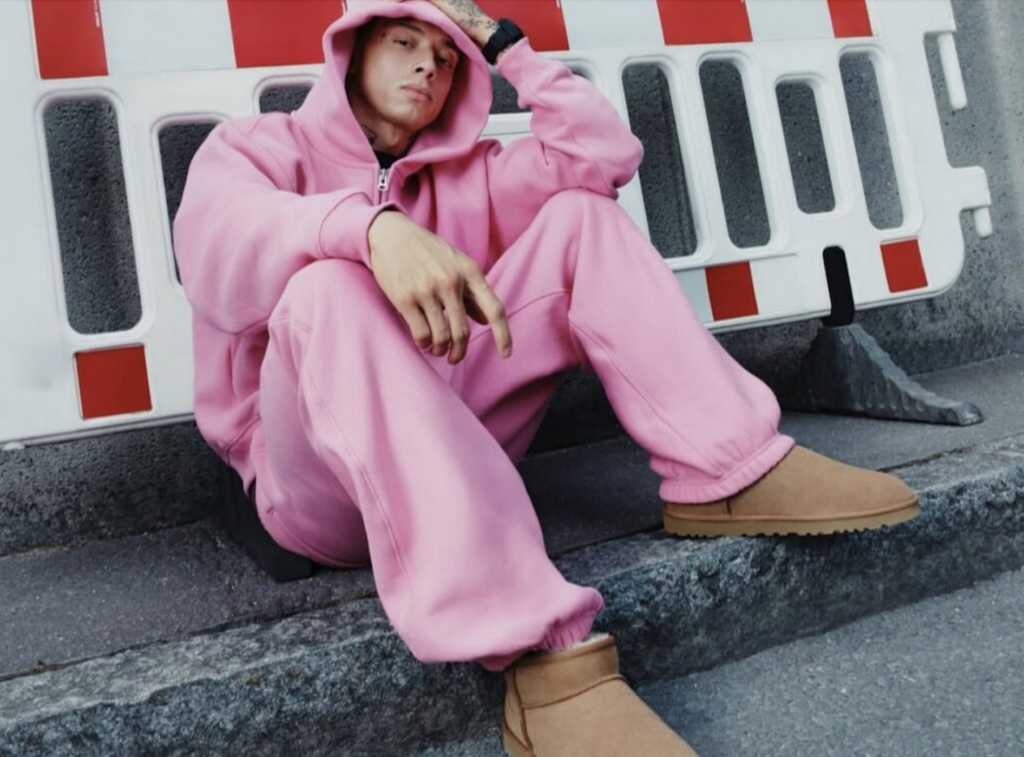
A closely watched dispute between Deckers Outdoor Corporation and Last Brand, Inc. is scheduled to head to trial in June, but the case that remains is far narrower than the one that the Ugg-owner originally brought. With Deckers’ trade dress claims no longer in play, lost profits precluded, and Deckers not seeking a reasonable royalty, the litigation now centers on a single design patent and a core question: how far design patent law can reach in a category that Quince characterizes as defined by longstanding, function-driven designs.
The Case in Brief: Deckers Outdoor Corporation sued Last Brand, Inc. in June 2023, alleging that Quince’s “Australian Shearling Mini Boots” infringe its asserted UGG Classic Ultra Mini trade dress and U.S. Design Patent No. D927,161. The case has been narrowed considerably: the court deemed the asserted Classic Ultra Mini and Tasman trade dresses generic, and Deckers dismissed its remaining trade dress and related claims, leaving only the patent claim for trial.
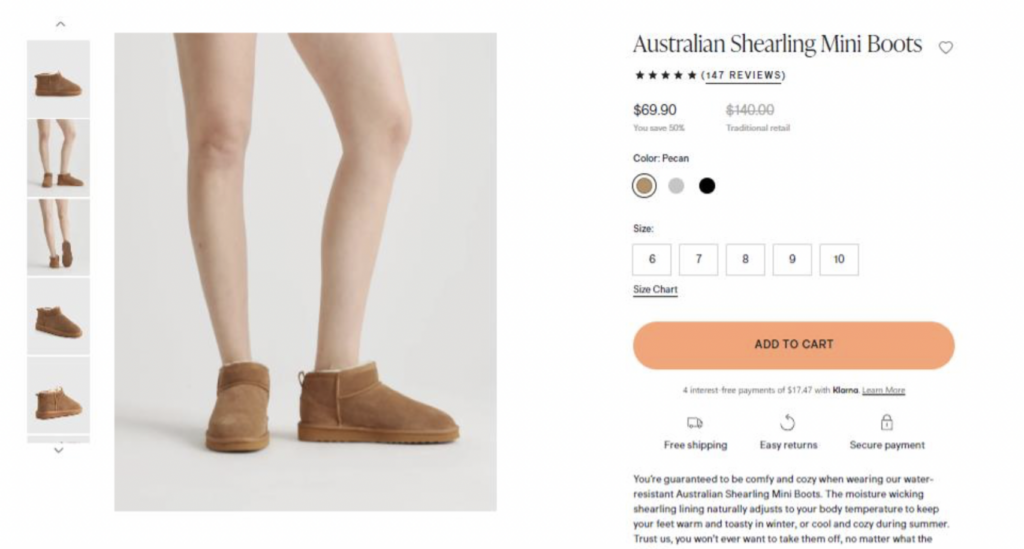
With lost profits precluded and Deckers not seeking a reasonable royalty, the case now turns on design patent liability with any recovery limited to the alleged infringer’s profits or the statutory minimum.
Quince’s Take on the Case
In a trial brief on May 4, Quince advances a three-part defense that targets both liability and remedy: the patent is invalid, the accused product does not infringe – and even if liability is established, Deckers cannot prove recoverable profits …
> Patent Validity: Quince’s arguments center on the boundary between ornamentation and function. It contends that the claimed design is dictated by sheepskin construction – seams, reinforcement, and structure – rather than protectable ornamentation. It also asserts indefiniteness, pointing to inconsistencies in Ugg design drawings (including differing line types and features that appear in some views but not others), and argues that the design would have been obvious in light of a crowded field of prior art.
As Quince puts it, Deckers is attempting to “own fundamental, basic product designs” rooted in longstanding footwear conventions.
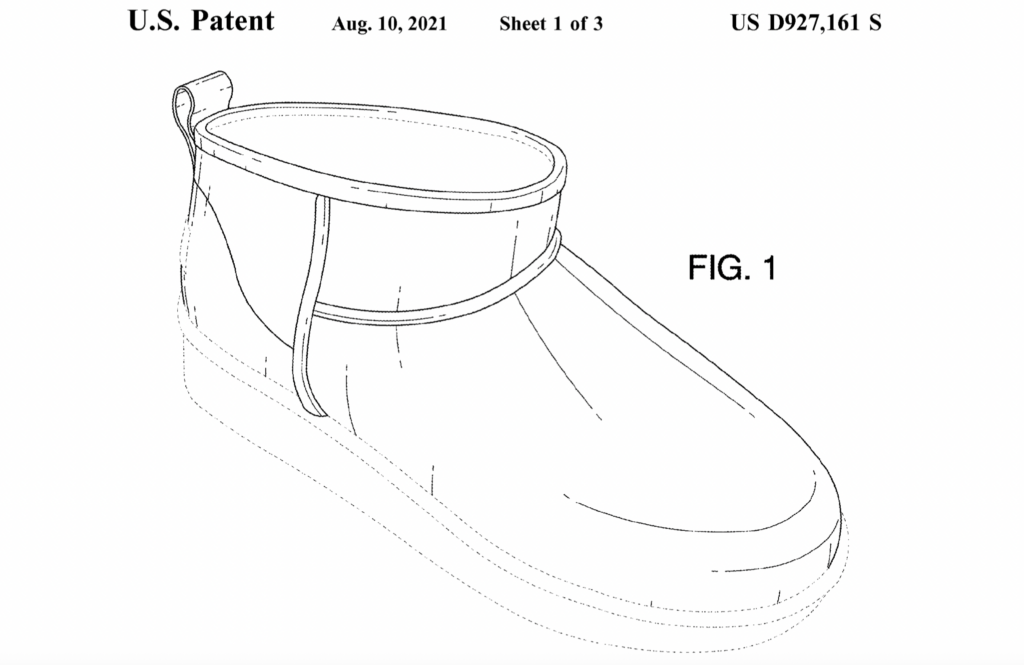
> Infringement: Even if the patent is valid, Quince argues that Deckers cannot satisfy the “ordinary observer” test, as the designs are not substantially similar in light of differences in silhouette, structure, and surface detail. Quince highlights a looser overall shape, reduced or absent seams and pleats, and differences in proportions and collar construction in its design. In a category defined by a crowded field of similar designs, Quince contends that these distinctions would be readily apparent to an ordinary purchaser familiar with the prior art and weigh against a finding of infringement.
> Damages: The damages issues are also unusually constrained. With lost profits precluded and Deckers representing that it is not seeking a reasonable royalty, the only remaining monetary avenue is recovery of Quince’s alleged infringer’s profits under 35 U.S.C. § 289. Quince maintains that no recoverable profits exist, which, if accepted, would limit recovery, in Quince’s view, to the statutory minimum – raising questions about the practical value of design patent enforcement in cases where monetary relief is constrained.
THE BOTTOM LINE: While narrow in scope, the case does more than just test a single design patent. It highlights some of the challenges design patent protection can face in fashion, particularly where products are shaped by functional constraints and longstanding design conventions. As the case heads to trial, it may offer a useful read on how courts and juries assess similarity in crowded product categories and the extent of the practical leverage design patents can provide when trade dress claims and significant damages theories fall away.
The case is Deckers Outdoor Corp. v. Last Brand, Inc., 3:23-cv-04850 (N.D. Cal.).
Share