


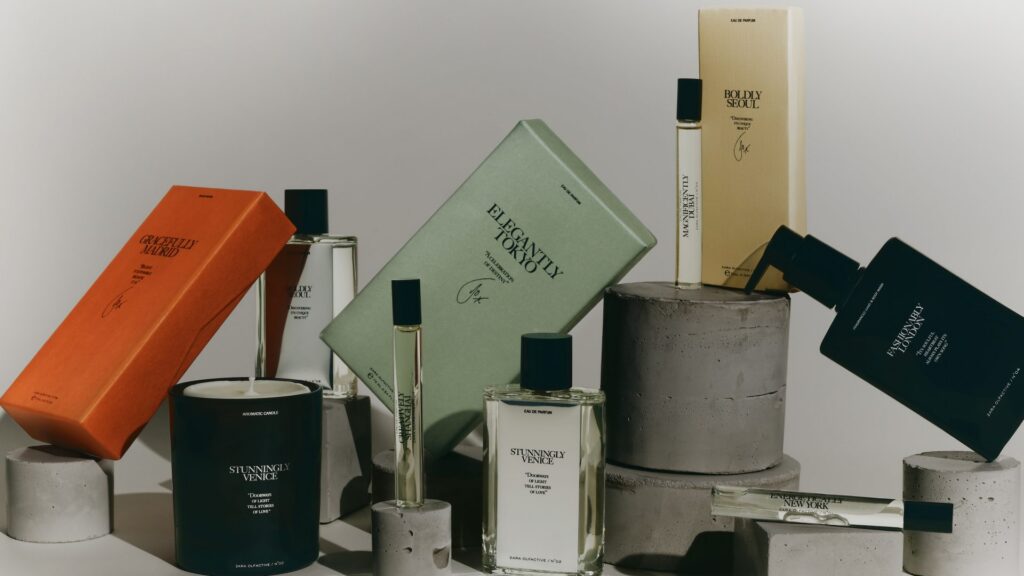
The Estée Lauder Companies has filed a lawsuit in the United Kingdom against British perfumer Jo Malone, her fragrance brand Jo Loves, and the UK arm of fast-fashion retailer Zara, with the cosmetics group alleging that the use of Malone’s name on certain fragrance products violates longstanding contractual and trademark rights. Malone sold her eponymous fragrance brand to Estée Lauder in 1999, and under the terms of that deal, Malone agreed not to use the “Jo Malone” name in certain commercial contexts, including fragrance marketing.
In the newly-filed complaint, Estée Lauder points to a recent collaboration between Malone’s brand Jo Loves and Zara. According to the filing, the packaging and online product descriptions for several fragrances include the phrase “Created by Jo Malone CBE, founder of Jo Loves.” Estée Lauder claims that the appearance of “Jo Malone” on the products goes beyond what Malone is permitted to do under the agreement she signed when she sold her original brand to the company.
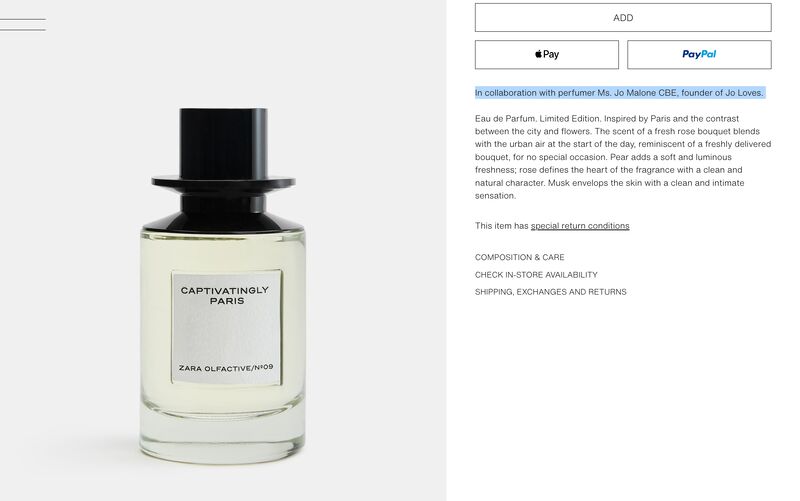
While Estée Lauder and Malone have largely coexisted without dispute since she left her namesake label in 2006 and launched Jo Loves in 2011 (after her five-year non-compete period expired), the cosmetics group argues that the Zara collaboration crosses a contractual line. According to Estée Lauder, the marketing of the collaboration improperly trades on the reputation of the Jo Malone brand that it now owns, pointing to product listings on Zara’s UK website that reference Malone by name in descriptions of the Jo Loves fragrances, which the company says could lead consumers to associate the products with the Estée Lauder-owned label.
In a statement, the company said Malone’s recent use of her name “goes beyond that legal agreement” and undermines the brand equity it has spent decades building around Jo Malone London. “When Ms Jo Malone sold the brand to The Estée Lauder Companies in 1999, she agreed to clear contractual terms that included refraining from using the Jo Malone name in certain commercial contexts, including the marketing of fragrances,” a spokesperson for Estée Lauder said. “She was compensated as part of this agreement, and for many years, she abided by its terms. Ms Malone’s use of the name ‘Jo Malone’ in connection with recent commercial ventures goes beyond that legal agreement and undermines Jo Malone London’s unique brand equity.”
The lawsuit alleges breach of contract, trademark infringement, and “passing off,” a doctrine under English law that addresses situations where consumers may be misled into believing goods are connected to another company.
Zara’s parent company, Inditex, and Jo Loves did not immediately comment on the lawsuit.
THE BIGGER PICTURE: The dispute arrives as fragrance becomes one of the fastest-growing segments of the beauty industry, with younger consumers driving demand for both luxury and accessible scents. Fast-fashion retailers such as Zara have increasingly moved into the category through collaborations and lower-priced fragrance launches.
The case also highlights a recurring issue in founder-led beauty brands: the sale of name rights. Malone is not alone in this regard, as the sale of eponymous brands – and the assignment of the commercial rights to a founder’s own name – is a common feature of deals in the fashion and beauty sectors. Makeup artist Bobbi Brown, for instance, sold her namesake brand to Estée Lauder and later launched a separate venture, Jones Road. Similarly, designer Kate Spade relinquished rights to her name when selling her brand to Liz Claiborne, later adopting the name Kate Valentine for new projects.
As the lawsuit proceeds, it will test the limits of how founders can reference their own identities after selling trademark rights tied to their names. For beauty companies built around personal branding, that question continues to carry significant legal and commercial weight.
Share