

Fashion’s social media call-out culture never really went away. Designers and brands have long used Instagram and other platforms to accuse competitors of copying their work, sometimes prompting product withdrawals or public apologies. But a recent cluster of disputes involving fashion and beauty brands is putting the practice back in the spotlight, illustrating how public pressure can produce results even when the underlying legal claims are far from straightforward.
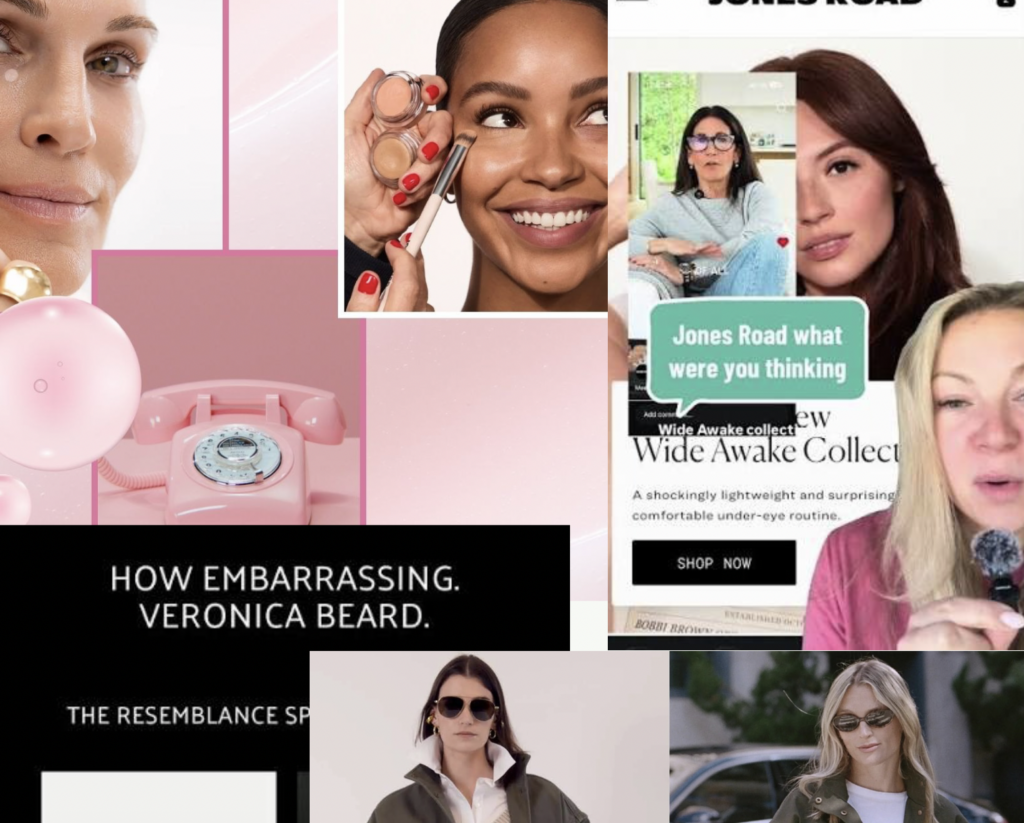
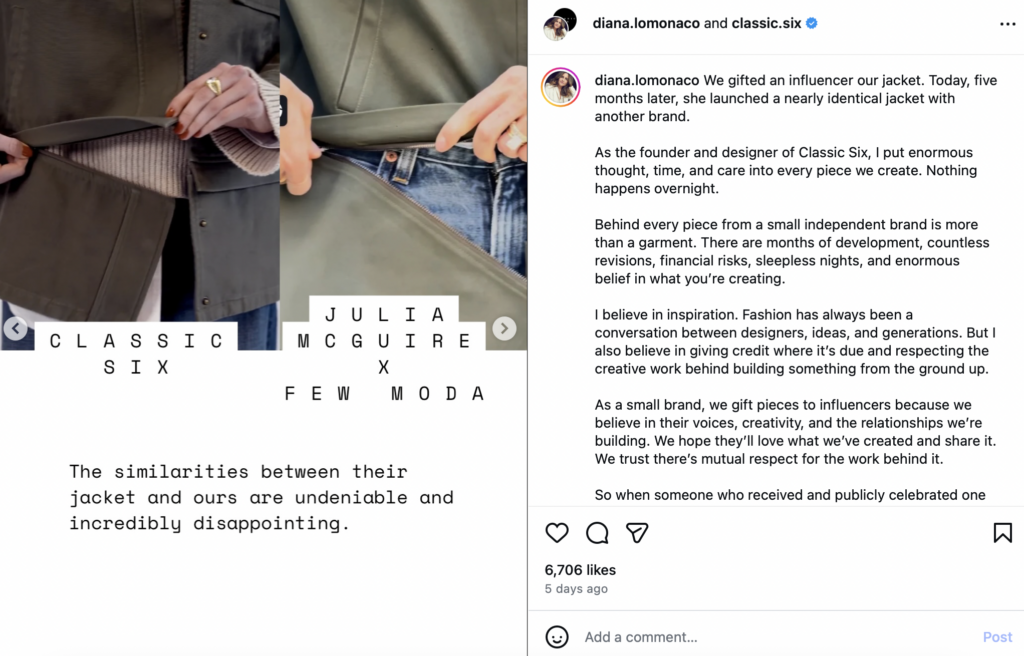
Recent examples come by way of jewelry designer Sara Beltrán, founder of Dezso, who publicly accused Veronica Beard of copying her designs, pointing to similarities between pieces from her collections and jewelry offered by the contemporary fashion brand. Fashion label Classic Six raised concerns about a collaboration between influencer Julia McGuire and Few Moda, citing similarities with designs it says it previously gifted to McGuire.
And beauty entrepreneur Molly Sims challenged Bobbi Brown-founded Jones Road Beauty over its use of the name “Wide Awake,” which Sims’ brand, YISE, had already been using for an eye cream.
These brands took their grievances directly to consumers, putting their allegations of copying squarely in the court of public opinion. And that is where things get interesting: while determining infringement requires applying established legal principles to often nuanced, fact-specific questions, social media audiences are not bound by those standards.
Copying vs. Infringement
In reality, copying is not inherently unlawful under U.S. intellectual property law, and whether a company can prevent competitors from adopting similar designs, product names, or other elements of its offerings and branding depends on the specific features at issue and the scope of its legal rights.
Copyright law protects original expression, subject to important limitations for useful articles; trademark law protects source-identifying designations and, under certain conditions, product configurations; and design patents protect qualifying ornamental designs. Even where enforceable rights exist, establishing infringement requires more than pointing to similarities between competing products. Each area of IP law imposes distinct requirements concerning the applicable protections and the conduct that constitutes infringement.
Social media audiences, however, often approach these matters very differently. For the average consumer, the distinction between copying and actionable infringement may be largely irrelevant. A side-by-side comparison of similar products can generate accusations of wrongdoing even where the allegedly copied elements are not protected by law.
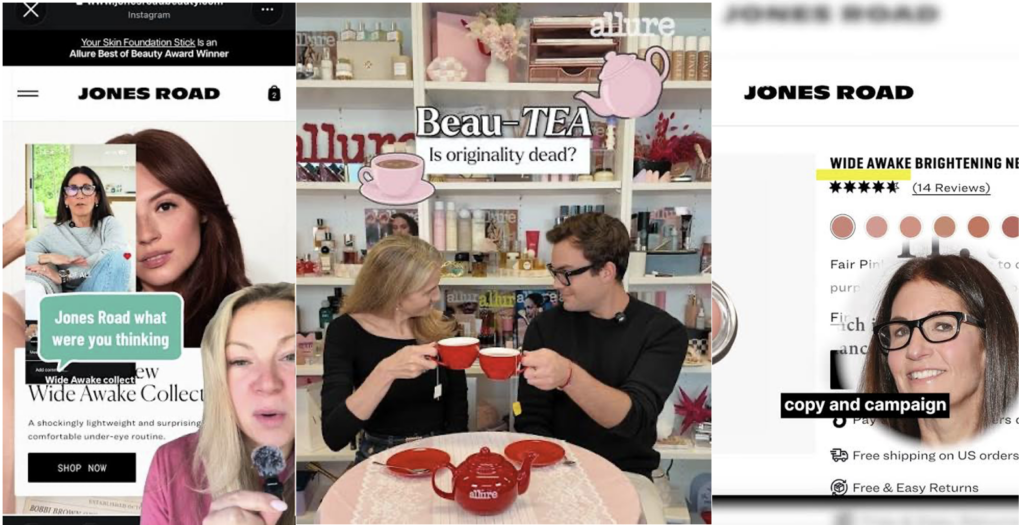
The YISE-Jones Road dispute illustrates the disconnect. After Sims publicly challenged Jones Road’s use of “Wide Awake,” citing YISE’s earlier use of the name, Brown apologized and agreed to change it, without any judicial determination of infringement. Yet earlier use of a product name does not, by itself, establish enforceable trademark rights. To prevail on a trademark infringement claim, YISE would need to establish that, among other things, “Wide Awake” functions as a trademark and that Jones Road’s use of the name is likely to cause consumer confusion.
The narrative circulating on social media was considerably simpler: A smaller beauty brand had used a name first, and then a larger, better-known competitor adopted it.
The Power of Public Pressure
The gap between legal standards and public perception is part of what makes social media call-outs so effective. For independent designers and emerging brands, litigation can be prohibitively expensive, time-consuming, and uncertain – assuming they have a viable IP claim to pursue in the first place.
A public accusation – complete with side-by-side imagery – can reach a broad audience almost immediately, without the need for a viable legal claim. And the perceived imbalance between a smaller creator and a larger business can make the accusation particularly compelling when consumers assess it through the lens of commercial fairness rather than IP law.
For companies facing such accusations, defending conduct they believe to be lawful comes with the risk of reputational fallout. Explaining that an indie brand’s design lacks copyright protection or that a product name does not function as a trademark is unlikely to resonate with the public as readily as an accusation of copying. As a result, an apology, product withdrawal, or name change may be commercially preferable to prolonging the controversy, without necessarily constituting an acknowledgment of infringement.
The result is a form of informal enforcement in which public perceptions of fairness can carry more weight than the legal merits. Consumers can pressure businesses to change course even when their actions do not violate IP law, prompting concessions they may have no legal obligation to make.
THE BOTTOM LINE: The legal merits of fashion’s copying disputes are often more complicated than the accusations circulating on social media suggest, and public call-outs may raise legitimate questions of infringement. Still, the latest wave of disputes underscores how public opinion can shape commercial outcomes independently of those legal questions.
For brands, establishing that a particular design, name, or product feature is legally available for use may be only part of the calculation. Whether consumers consider that use acceptable is another matter entirely.
Share