

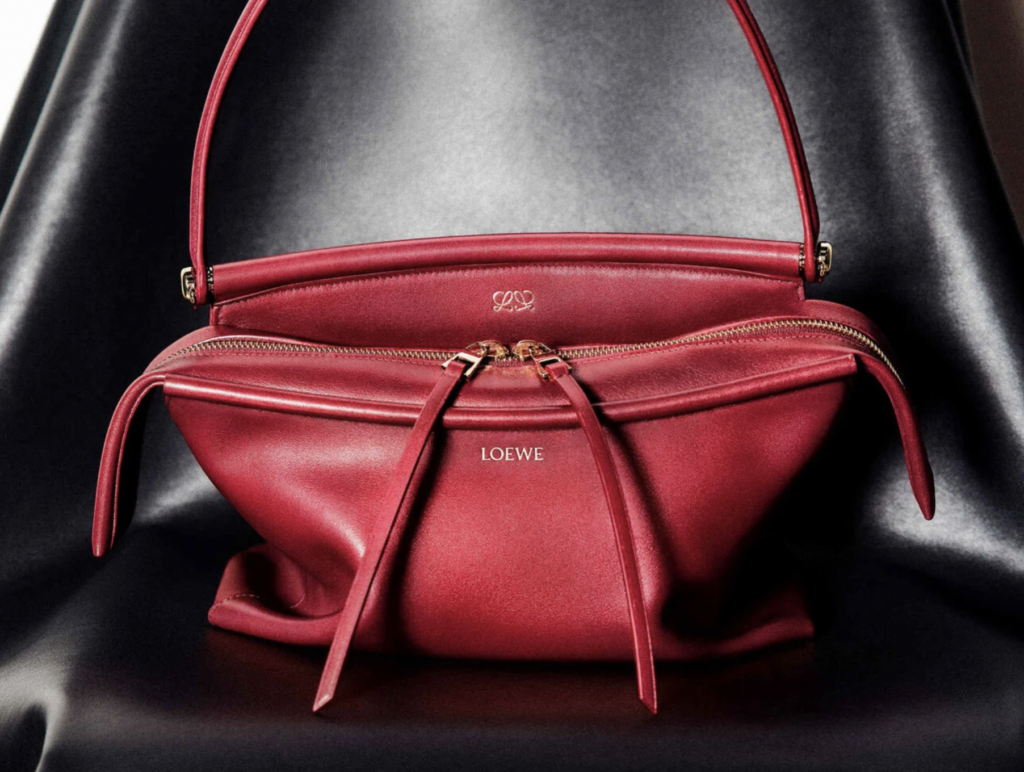
Loewe has prevailed in a copyright battle over the design of a handbag that a smaller rival claims it copied. In a new ruling, a Dutch district court rejected Wandler’s bid for a preliminary injunction to block the sale of Loewe’s Whisker bag in the Netherlands. While the court found that Dutch accessories brand Wandler’s Ida bag qualifies for copyright protection, it concluded that Loewe’s use of similar design elements reflected creative choices of its own and, therefore, was unlikely to constitute copyright infringement.
The dispute dates back to March 2026, when Loewe unveiled its Whisker bag during Paris Fashion Week. Wandler was quick to call foul, accusing the LVMH-owned brand of infringing its copyright-protected Ida bag, which it had presented to buyers more than a year earlier. After unsuccessful negotiations and the Whisker’s global launch in August, Wandler filed suit, arguing that consumers are likely to assume that it copied Loewe – rather than the other way around.
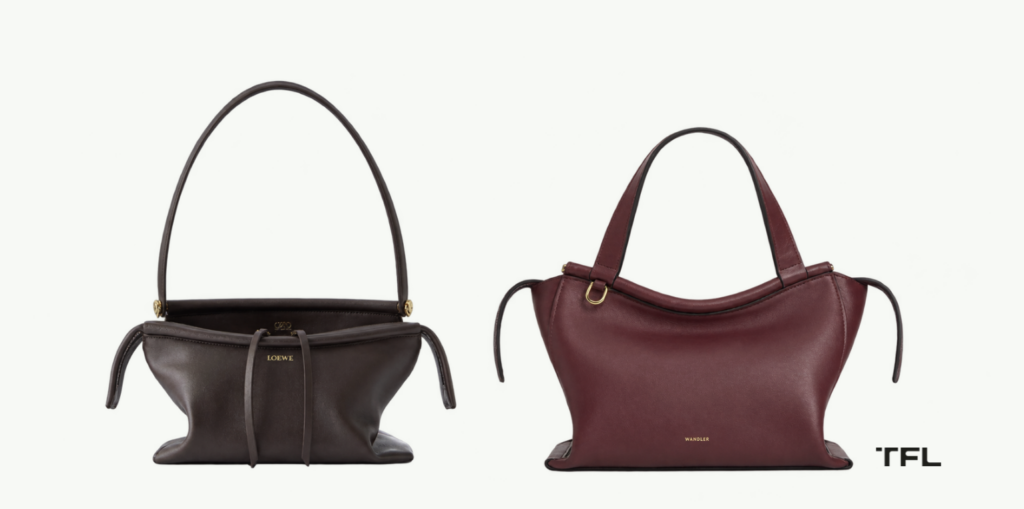
In its defense, Loewe argued that the design features of the Ida bag, both individually and in combination, were commonplace or functionally dictated – and therefore, not protectable. And in a counterclaim, Loewe accused Wandler of infringing its copyright in the overhanging zipper strip design of its Madrid bag and an early design of its Strip Shoulder Bag.
A Protectable Design But No Infringement
In its November 11 ruling, the District Court of Amsterdam sided with Wandler on the issue of copyright protection, finding that the combination of ten design elements that characterize the Ida bag reflects the free and creative choices of its designer. (The court did not address whether the individual design elements qualify for copyright protection.)
Applying the infringement standard set out by the Court of Justice of the European Union (“CJEU”) in its December 2025 ruling in Mio and konektra, the court examined whether original creative elements of the Ida design had been recognizably reproduced without authorization in Loewe’s Whisker bag. Under that standard, neither the overall visual similarity of the bags nor the degree of originality of Wandler’s design is relevant to establishing infringement. Comparing the parties’ marketing imagery, the court identified differences in the execution of those elements, including the Whisker’s more pronounced waist and asymmetrical construction, which causes the bag to tilt forward.
>> In a win for Loewe, the court found that the luxury brand had given the shared design elements its own creative expression. While it questioned Loewe’s claim that it was unfamiliar with Wandler’s work, the court said it did not need to decide whether Loewe drew inspiration from the Ida or designed the Whisker independently.
However, the court also rejected Loewe’s counterclaims. While it acknowledged that Wandler may have drawn inspiration from Loewe’s overhanging zipper strips, it found that Wandler had made creative choices of its own. As such, the court characterized the design as an “inspired work” – one that draws inspiration from an existing work without reproducing its protected creative expression and may itself qualify for copyright protection.
THE STRATEGY: For fashion brands seeking to claim copyright protection for their product designs, the ruling illustrates the limits of protection that rests on a combination of design elements. Even where that combination qualifies for copyright protection, competitors may incorporate similar design elements into their own products without incurring copyright liability, provided they do not recognizably reproduce the protected creative expression.
And perhaps even more interestingly, the dispute speaks to the reputational stakes of copying allegations in the luxury market, where perceptions of design originality help brands command premium prices – and accusations of copying can gain considerable traction in the court of public opinion. While Wandler was concerned that consumers would mistake it for the copycat, Loewe sought to prevent public accusations that it had copied a smaller, lower-priced competitor. For brands on either side of such disputes, managing the public narrative can be a strategic consideration in its own right, regardless of the merits of the underlying infringement claims.
The case is Wandler v. Loewe, C/13/793819 / KG ZA 26-820 LV/EB, ECLI:NL:RBAMS:2026:11138 (Amsterdam District Court).
Share